Your Cart is Empty


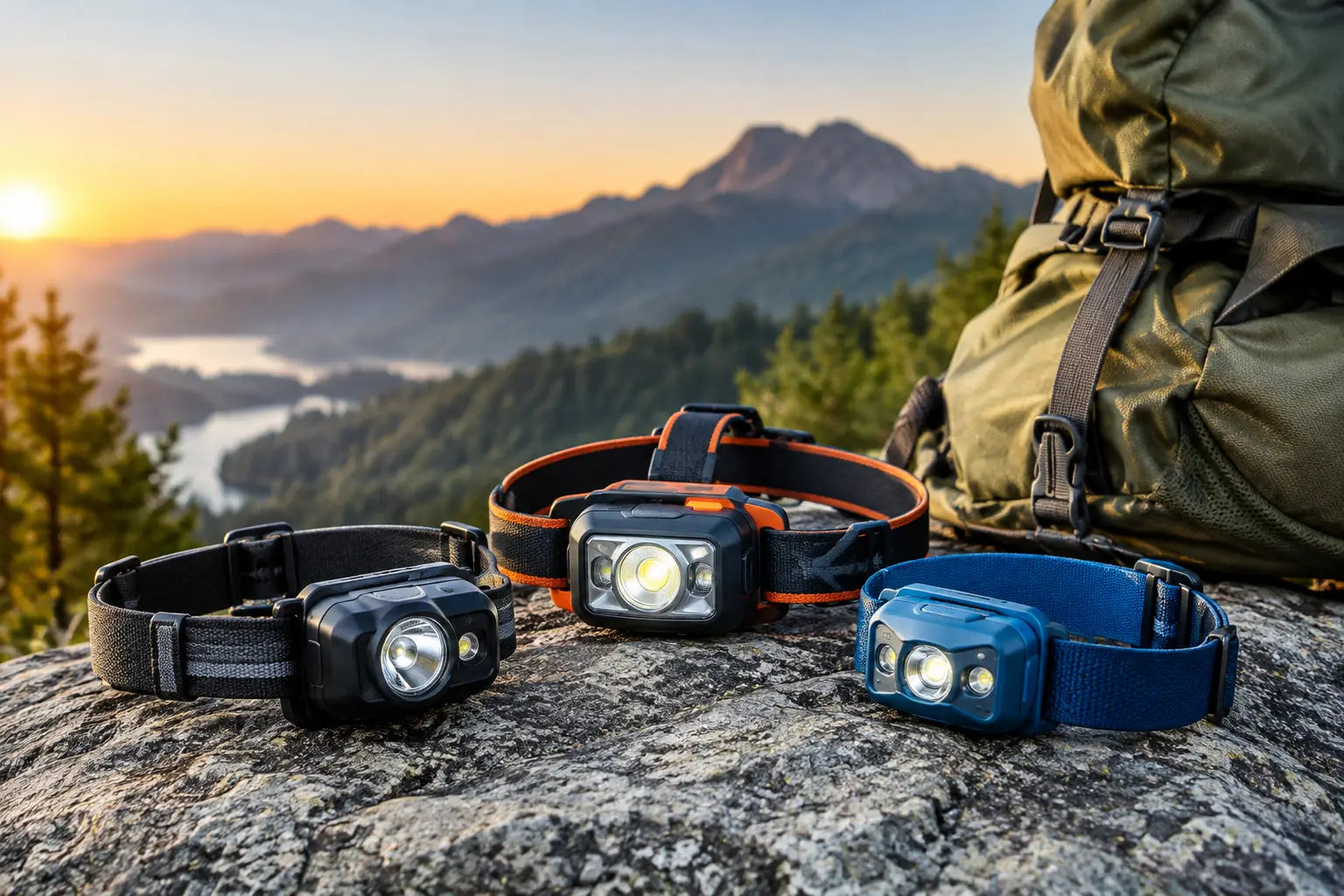

A headlamp earns its place in your gear bin the moment both hands matter. It can light up a tent zipper in the rain, help you retie a fishing line before sunrise, keep a trail visible after dark, or make a roadside repair less frustrating. The best headlamps are not always the ones with the biggest lumen number on the package. They are the ones that put useful light where you need it, stay comfortable for hours, and keep working when the weather turns.
For most outdoor trips, a dependable mid-priced headlamp is a smarter buy than an oversized, high-output model you only use on its lowest setting. Start with the activity, then match the beam, battery system, runtime, and weather protection to the job. Gear up for the conditions you actually face.
A good headlamp balances brightness with control. High lumens are helpful for scanning a trail, checking the shoreline, or finding a campsite marker from a distance. But too much light can wash out close-up detail, drain the battery quickly, and ruin night vision for everyone around you.
For camp chores, cooking, tackle setup, and reading maps, a wide flood beam in the 100-300 lumen range is usually plenty. Hiking after dark or moving over uneven ground calls for a stronger spot beam, often 300-600 lumens or more. Hunters and anglers may benefit from a model that offers both beam styles, plus a red-light setting for low-profile tasks.
Runtime deserves just as much attention as maximum output. A headlamp rated for 1,000 lumens may only hold that level briefly before stepping down to manage heat and battery life. Check the runtime at medium and low settings, because those are the modes most people use over a full evening at camp.
Comfort matters more than it seems. A heavy lamp that bounces while you walk or presses against your forehead will stay in the truck. Look for a stable adjustable strap, a housing that tilts downward, and a battery pack placement that makes sense for your planned use. Compact front-mounted designs work well for general recreation. Bigger rechargeable packs can be useful for long night hikes, work tasks, and repeated use.
Flood beams spread light across a broad area. They are the easy choice for setting up a tent, sorting gear in an RV compartment, cooking dinner, handling a fish, or walking around a familiar campsite. The even light makes it easier to see what is directly in front of you without sharp shadows.
The trade-off is limited distance. A flood beam is not the best tool for spotting trail markers far ahead or checking the tree line from a distance. If your outings include both camp tasks and travel after dark, choose a headlamp with separate flood and spot modes.
A spot beam concentrates light into a narrower, longer-reaching path. It helps hikers pick out roots, rocks, and turns in the trail, and it is useful when launching a boat before daylight or walking back to the dock after sunset.
A spot beam can create tunnel vision if used alone. Keep a lower, wider setting available for close tasks, especially when moving around other people. Bright white light pointed at a buddy's face is a fast way to end the relaxed part of camp.
Red light is not a gimmick when used for the right task. It is easier on night-adjusted eyes and less disruptive inside a tent or around a quiet campsite. Use it for finding gear, checking knots, reading a paper map, or moving around camp without blasting white light across the area.
Red mode is also a practical feature for hunting setups and early-morning fishing preparation. It will not replace a bright beam for hiking rough terrain, but it gives you a lower-impact option when you need to stay aware of the dark.
Rechargeable headlamps are convenient for frequent campers, hikers, and anyone who uses a light around the house, garage, or vehicle. Most use a built-in lithium-ion battery and recharge through a USB cable. They save money over time and make it easy to top off before a weekend trip.
Their limitation is straightforward: once the battery is empty, you need power to recharge it. On a multi-day backcountry trip, a power bank can solve that problem, but it adds another item to manage. Cold weather can also reduce battery performance, so keep a rechargeable lamp close to your body when temperatures drop.
Headlamps that run on AAA or AA batteries remain a solid choice for extended trips, emergency kits, hunting camps, and RV travel. Spare batteries are easy to pack, and you can swap them quickly in the field. Just bring quality batteries in a sealed pouch and avoid mixing old and new cells.
Hybrid models offer the most flexibility. They can run on a rechargeable battery pack for everyday use and accept disposable batteries as a backup. If you camp often, fish before dawn, or keep gear staged for storms and roadside problems, that extra flexibility can be worth it.
Outdoor gear gets wet. Rain, sweat, spray, snow, and a dropped lamp near the boat ramp can all test a headlamp's durability. Look at the IP rating, which describes resistance to dust and water.
An IPX4-rated headlamp can handle splashes and rain from different directions. That is enough for many camping, hiking, and general-use situations. IPX7 protection means the unit can withstand temporary immersion in water, making it a stronger choice for boating, kayaking, fishing, or wet-weather travel.
Weather protection does not mean you can ignore care. Dry the lamp after a wet trip, inspect the battery compartment for corrosion, and do not store it for months with depleted disposable batteries installed. Small maintenance habits help a dependable light stay dependable.
The feature list can get long, but a few details make a real difference outdoors. A lockout mode prevents the lamp from turning on inside a backpack and draining the battery before you need it. A battery indicator lets you recharge or replace cells before heading out. A hinged housing allows you to aim light at your hands instead of straight ahead.
Consider these useful features when comparing headlamps:
For car camping and family campgrounds, choose comfort, a wide beam, red light, and simple controls. You do not need extreme output, but you do need enough runtime to cover dinner, camp cleanup, and late-night trips to the restroom.
For hiking and backpacking, weight and runtime move higher on the list. A compact rechargeable model with 300-500 lumens, a usable low setting, and weather resistance is a strong all-around setup. If you regularly hike after dark, add a power bank or carry spare batteries based on the lamp style.
For fishing and boating, prioritize water resistance, hands-free comfort, and a beam that can switch from wide work light to distance light. You may be tying knots, loading gear, reading gauges, and watching your footing around slick surfaces in the same outing.
For hunting, a quiet, easy-to-operate lamp with red or green light options can be useful, depending on local regulations and personal preference. Keep the controls simple and test them before the trip. The time to learn a new button sequence is not when you are standing at the trailhead before daylight.
For emergency kits, select a lamp with long low-mode runtime and a battery system you can support. Store it where it is easy to reach, along with spare batteries or a charged power bank. A headlamp beats a handheld flashlight when you need to carry supplies, open a breaker box, or make repairs in the dark.
Start by asking one question: what will this light do most often? A camper who needs help around the site should not shop the same way as a trail runner, a night angler, or someone building a vehicle emergency kit. Once you know the primary use, narrow the choices by beam type, battery plan, runtime, and water resistance.
Do not pay for peak brightness you will never use. A comfortable headlamp with a useful medium setting, clear controls, and reliable weather protection will serve more adventures than a flashy model that burns through its charge in an hour. Pack it where you can reach it, check the battery before each trip, and let your hands stay free for the adventure ahead.