Your Cart is Empty


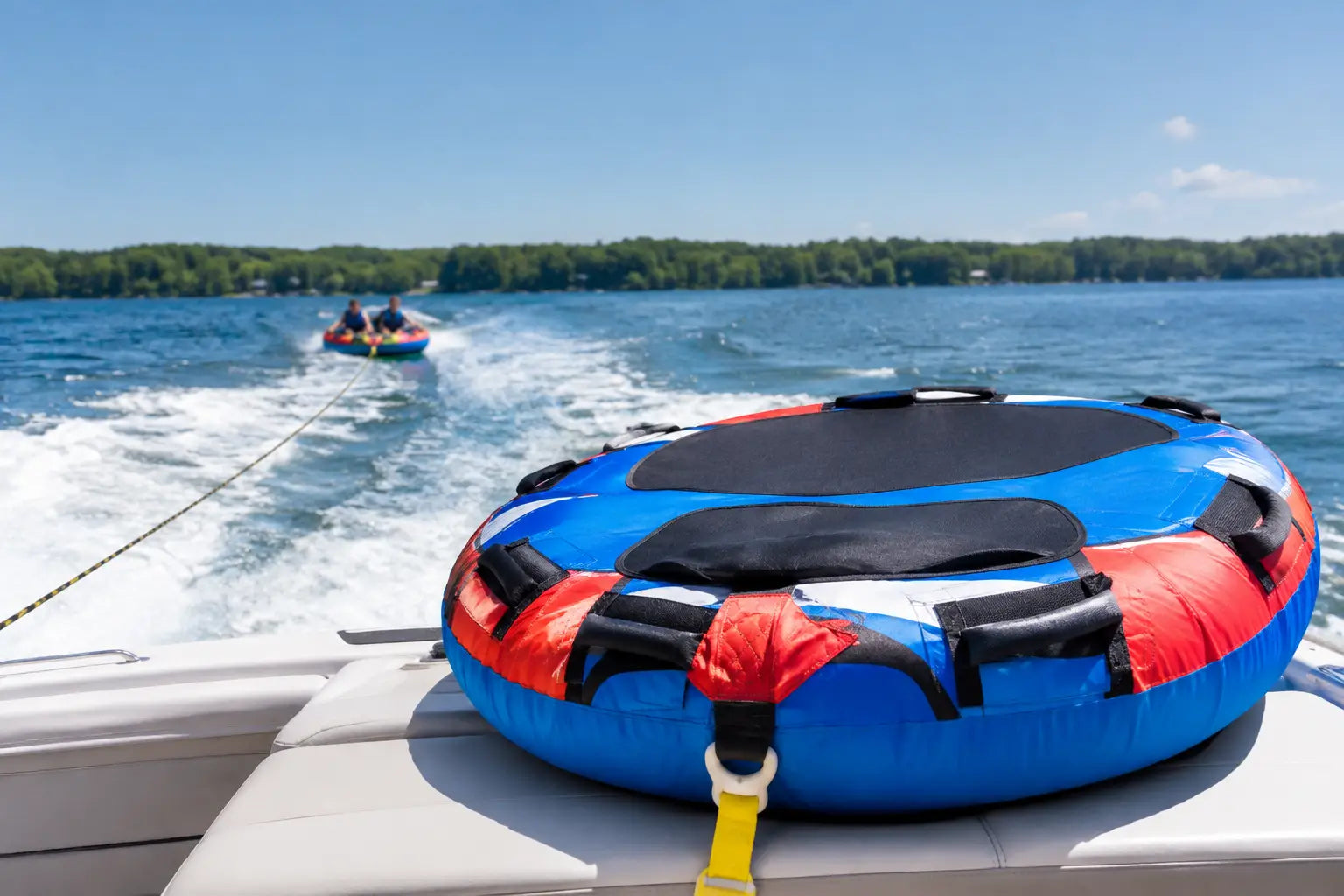

A tube that fits your crew can turn an ordinary afternoon at the lake into the part everyone talks about on the drive home. The best inflatable towable tubes are not always the biggest or fastest ones. They are the tubes that match your riders, boat power, water conditions, and the kind of day you want to have.
For families, that often means a stable ride with secure handles and room for more than one person. For thrill-seekers, it may mean a low-profile deck tube that skips across the wake. Start with the ride you want, then choose the build, capacity, and features that will keep it fun from the first pass to the last.
A two-person deck tube is one of the smartest first purchases for a boat-owning family. Riders lie on top, hold on tight, and enjoy a close-to-the-water position that feels quick without requiring an aggressive pull. The flat shape is easy to board from the swim platform, and it works well for kids, teens, and adults who want a dependable mix of speed and control.
Look for multiple padded handles, knuckle guards, and a tough nylon cover. Two-rider capacity gives families flexibility: one rider can spread out, or two friends can ride together. Keep in mind that deck tubes can spray riders more than cockpit styles, especially when the boat crosses its own wake.
Cockpit tubes place riders inside a raised, recessed seating area. That extra support makes them a strong choice for younger kids, cautious first-timers, and anyone who would rather sit in than hang on above the water. The upright position also gives riders a clearer view of where the boat is headed.
This design is usually calmer and more confidence-building than a flat deck tube. It is not built for the wildest whip turns, but that is exactly the point. Choose a model with high sidewalls, a comfortable backrest, and handles positioned where riders can use them naturally.
Sit-on-top tubes put riders in a more upright position, often with molded or inflated seats, backrests, and foot areas. They are made for laughing, bouncing, and holding on when the water gets choppy. These tubes bring a more social feel to the ride, especially for a pair of teenagers or adults who want to ride side by side.
The trade-off is that sit-on-top designs can catch more wind and put more strain on riders during sharp turns. They are best pulled at a controlled speed by a driver who understands that passenger comfort matters more than making the biggest wake.
Disc tubes have a round, low-slung shape that tends to skim and spin across smoother water. They are a favorite for riders who want a lively ride without stepping up to a more complicated multi-rider design. A disc tube can feel surprisingly quick because riders are close to the water and the tube reacts fast to the boat’s path.
This is a great option for older kids and adults with some towing experience. It is less forgiving than a cockpit tube, so save it for calm mornings or riders who are comfortable with a little more movement.
When the boat is full, a three- or four-rider towable keeps more people in the action. Larger deck tubes are ideal for family reunions, camping trips by the water, and holiday weekends when everyone wants a turn. They also give riders the choice of lying down, kneeling, or spreading out with extra space.
Capacity labels matter here. A tube rated for three riders is designed around a maximum number of people and a maximum total rider weight. Do not treat the rating as a suggestion. Overloading makes the tube harder to control, puts more stress on seams and handles, and can create an uncomfortable ride.
Long, narrow banana-style tubes line riders up one behind another. They create a different kind of challenge: balance, communication, and timing. Everyone feels the movement of the boat, so the crew has to lean, grip, and react together.
These tubes can be a blast for experienced groups, but they demand attention from both the driver and riders. They are better for open water with a clear path and a responsible spotter. If your group includes small kids or nervous riders, a wider, more stable tube is usually the better call.
A convertible tube offers more than one riding position, such as sitting, kneeling, or lying down. It is a practical pick for boaters who tow different ages and skill levels throughout the season. One ride can be mild and seated; the next can be a faster prone ride for the more adventurous passengers.
Versatility costs more than a basic round tube, but it can prevent you from buying separate towables for every member of the family. For a boat that hosts a mixed crew, that flexibility is worth serious consideration.
A towable takes repeated pulling force, sun exposure, wet storage conditions, and the occasional rough landing. Construction matters as much as shape. Look for a heavy-duty PVC bladder protected by a durable nylon cover. The cover reduces abrasion and helps shield the inflatable chamber from the wear that comes with launching, boarding, and towing.
Strong, reinforced tow points are another must. A quick-connect tow hook can make setup faster, while a properly designed tow point helps keep the tube tracking predictably behind the boat. Covered handles with neoprene knuckle guards are more than a comfort feature. They help riders maintain their grip when the water gets rough.
Also pay attention to the valve. A wide, secure valve speeds up inflation and deflation, which matters when you are trying to get from the ramp to the water without turning setup into a project. An electric inflator rated for towables is a worthwhile addition, especially for larger multi-rider models.
More riders do not automatically mean more fun. A large tube needs enough boat power to tow safely, and a larger footprint can feel cumbersome on a smaller boat or in tight coves. Check your boat manufacturer’s guidance, the tube’s rider rating, and the tow rope rating before every season.
Your typical crew should drive the decision. A couple with two young children may get more use from a stable two-rider cockpit model than a huge four-rider tube. A group of adults who spends weekends at the lake may prefer a larger deck tube or sit-on-top model that handles energetic rides.
Tow rope length changes the experience, too. A shorter line generally keeps the tube closer to the wake, while a longer line can create a smoother pull behind it. Use a rope made specifically for towables, sized for the number of riders, and inspect it for fraying before heading out.
The most memorable tubing days are the ones where everyone comes back smiling and ready for another pass. That starts with a designated driver and an alert spotter. The driver watches the water ahead; the spotter watches the riders and signals when they are ready, slowing down, or need help.
Before launching, make sure every rider has a properly fitted, Coast Guard-approved life jacket. Explain the plan for falls: let go, move away from the tube and rope, and raise a hand to signal they are okay. Keep the engine in neutral when riders are near the boat, and never tow in crowded swim areas, near docks, or after dark.
Speed should match the riders, not their bravado. Start slow, check that everyone is secure, and build gradually. Smooth turns and clear communication create plenty of excitement without turning the ride into a hard lesson.
After a day on the water, rinse the tube with fresh water, especially after use in saltwater. Let it dry fully before storing it. Folding a wet tube into a hot storage compartment invites mildew, odor, and premature fabric wear.
Store it away from direct sunlight, sharp objects, fuel, and harsh chemicals. Check seams, handles, the tow point, and valve before each outing. Small damage is easier to repair when you catch it early, and a simple inspection can keep a great boat day from ending at the dock.
The right towable is an easy way to get more out of the boat you already own. Pick the style that suits your crew, pack the safety gear, and give everyone a reason to ask for one more ride before heading home.