Your Cart is Empty




A steep boat ramp, a loaded utility trailer, and a long downhill grade all ask the same question: will your trailer brake when you need it to? The electric versus surge trailer brakes decision affects towing confidence, maintenance needs, and how easily your setup handles the trips you actually take. Neither system wins for every trailer. The right choice comes down to where you tow, what you haul, and how much control you want from the driver’s seat.
Electric brakes use a brake controller mounted in the tow vehicle. When you press the brake pedal, the controller sends power through the trailer plug to electromagnets inside the brake assemblies. Those magnets engage the brakes, slowing the trailer along with the tow vehicle.
Surge brakes are self-contained hydraulic systems. When the tow vehicle slows, the trailer pushes forward against a sliding coupler, called an actuator. That movement creates hydraulic pressure and applies the trailer brakes. There is no in-cab brake controller to adjust and, in most cases, no electrical brake signal running from the vehicle to the trailer.
That basic difference shapes nearly every buying decision. Electric brakes give the driver more direct control. Surge brakes keep the system simple and are especially common on boat trailers because they work well around water.
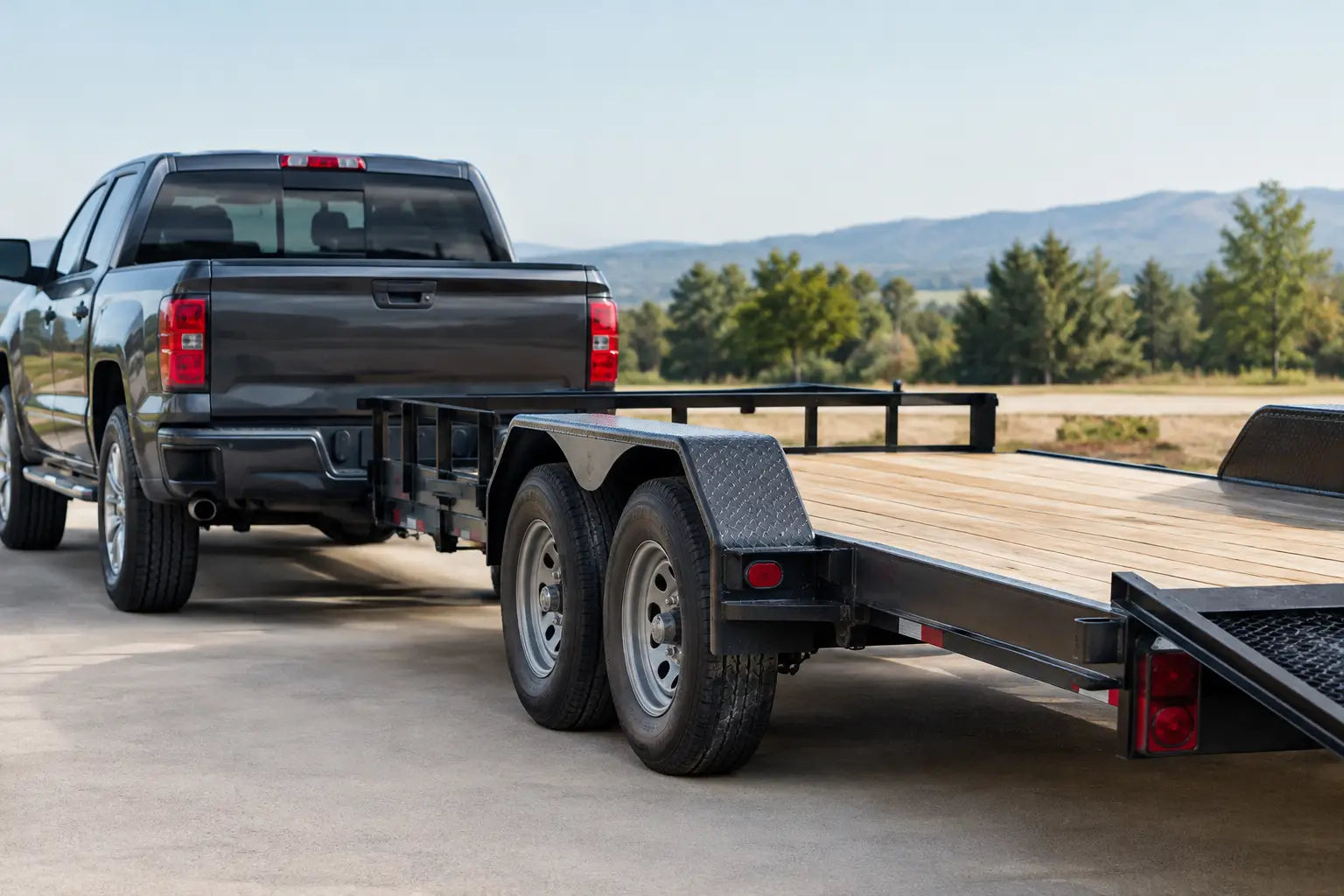
Electric trailer brakes are a strong fit for travel trailers, campers, enclosed cargo trailers, utility trailers, and many equipment haulers. Their biggest advantage is adjustability. A properly set brake controller lets you match braking force to your trailer’s load and road conditions.
Heading out with an empty utility trailer? You can reduce the gain so the trailer brakes do not grab. Loaded down with ATVs, camping gear, or a side-by-side? Increase the gain for more stopping support. Many controllers also offer manual activation, which can be useful if a trailer begins to sway. Applying the trailer brakes manually, without adding vehicle braking force, can help bring a swaying trailer back in line.
Electric brakes are also easier to monitor from the cab. Modern controllers may show connection status, output level, and diagnostic warnings. For frequent towers, that visibility can be reassuring before pulling onto the highway with a loaded rig.
The trade-off is added setup. Your tow vehicle needs a compatible brake controller, correct wiring, and a properly functioning trailer connector. Brake performance also depends on good grounds, clean electrical connections, and wiring that has not been damaged by road debris, corrosion, or age. A weak connection can leave you with inconsistent braking when you need dependable response.
Electric drum brakes are common and cost-effective. Electric-over-hydraulic systems are another option for larger trailers that use hydraulic disc brakes, though they require compatible components and usually cost more. For most standard RV and utility trailer setups, conventional electric brakes deliver solid performance when correctly sized and maintained.
Choose electric brakes when you tow an RV, enclosed trailer, car hauler, or utility trailer on varied roads and want control over how the trailer responds. They are particularly useful for drivers who regularly change loads, travel through hills, or put serious highway miles on their trailer.
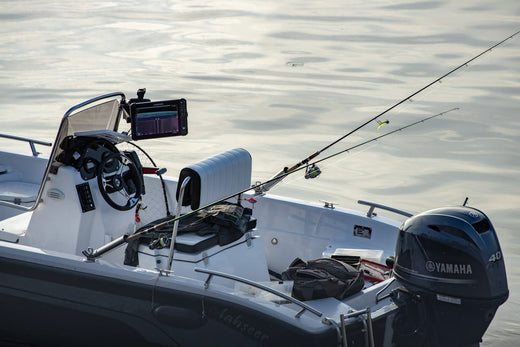
Surge brakes are a familiar sight on boat trailers, and for good reason. A surge actuator does not need an in-cab controller to operate. Connect the trailer, check the breakaway system and fluid level, and the brakes respond to the trailer’s forward movement during deceleration.
That simplicity is valuable if more than one vehicle tows the same trailer. You do not have to install and calibrate a brake controller in every tow vehicle. Surge brakes can also be a practical choice for drivers who want a straightforward system with fewer electrical components involved in braking.
For boat owners, hydraulic disc surge brakes are often the preferred setup. Disc brakes generally handle repeated wet use better than drum brakes and offer strong stopping performance. Saltwater still demands attention, though. Rinse the trailer after launch days, inspect brake lines and fittings, and watch for corrosion on calipers, rotors, and the actuator.
Surge brakes do have limits. Since the system applies braking force based on trailer push, the driver cannot adjust brake gain from the cab or manually apply the trailer brakes to correct sway. Braking feel can also be less immediate than a well-tuned electric system. On a stop-and-go road, some drivers notice the coupler compressing and extending as the trailer transitions between braking and acceleration.
Backing up is another consideration. Many surge brake setups need a reverse lockout to prevent the actuator from applying brakes while backing. Depending on the trailer, that may be an electric solenoid tied to the reverse-light circuit or a manual lockout feature. If you routinely back into tight campsites, storage spots, or launch ramps, make sure the reverse function works before you need it.
Surge brakes are a practical match for boat trailers, especially those frequently launched in freshwater or saltwater. They also make sense for trailers shared among several vehicles or for owners who prefer a hydraulic system without the need for a brake controller.
A great brake system cannot compensate for an overloaded trailer, poor weight distribution, worn tires, or an undersized tow vehicle. Before choosing electric or surge brakes, confirm your trailer’s gross vehicle weight rating, axle ratings, and the towing and braking limits for your vehicle.
Trailer brakes should be rated for the axle capacity and the real loaded weight of the trailer. Do not choose based only on an empty trailer sitting in the driveway. A fishing boat gains weight with fuel, batteries, coolers, tackle, and gear. A camping trailer gains weight fast once you add water, propane, food, recovery gear, and supplies for the weekend.
Breakaway protection matters, too. Many braked trailers require a breakaway system under state law, but requirements vary by location and trailer weight. An electric brake breakaway kit typically uses a dedicated battery that activates the brakes if the trailer separates from the tow vehicle. Hydraulic systems may use a cable-operated breakaway device that applies pressure through the actuator. Check the rules where you register and travel with your trailer, then inspect the system as part of regular towing prep.
Electric brakes need periodic adjustment on many drum-brake setups, along with inspections of magnets, shoes, drums, wiring, and connectors. Keep the trailer plug clean and protected, especially if you travel wet roads or store the trailer outdoors. Test brake function and controller output before longer trips, not after you are already loaded at the trailhead.
Surge brakes need fluid checks, line inspections, and periodic bleeding like any hydraulic brake system. Look closely at the actuator, master cylinder, flexible hoses, calipers or wheel cylinders, and brake fluid condition. On boat trailers, rinse thoroughly after every saltwater launch and avoid putting the trailer away wet.
For either system, inspect bearings, tires, suspension hardware, lights, safety chains, coupler components, and the breakaway cable. Brakes work as part of the full towing package, not as a standalone upgrade.
If you pull a camper, cargo trailer, equipment trailer, or multi-use utility trailer, electric brakes usually offer the better blend of control and versatility. The ability to set gain from the cab is a real advantage when your load, weather, and terrain change from trip to trip.
If your main mission is getting a boat to and from the water, surge brakes are often the more natural choice. A hydraulic disc surge system is purpose-built for that environment, provided you stay ahead of corrosion and routine service.
There is no prize for choosing the more complicated system. Choose the one that fits your trailer, tow vehicle, and outdoor plans, then keep it maintained. A few minutes spent checking brakes before departure can protect the gear, the people in your vehicle, and the adventure waiting at the other end of the road.