Your Cart is Empty


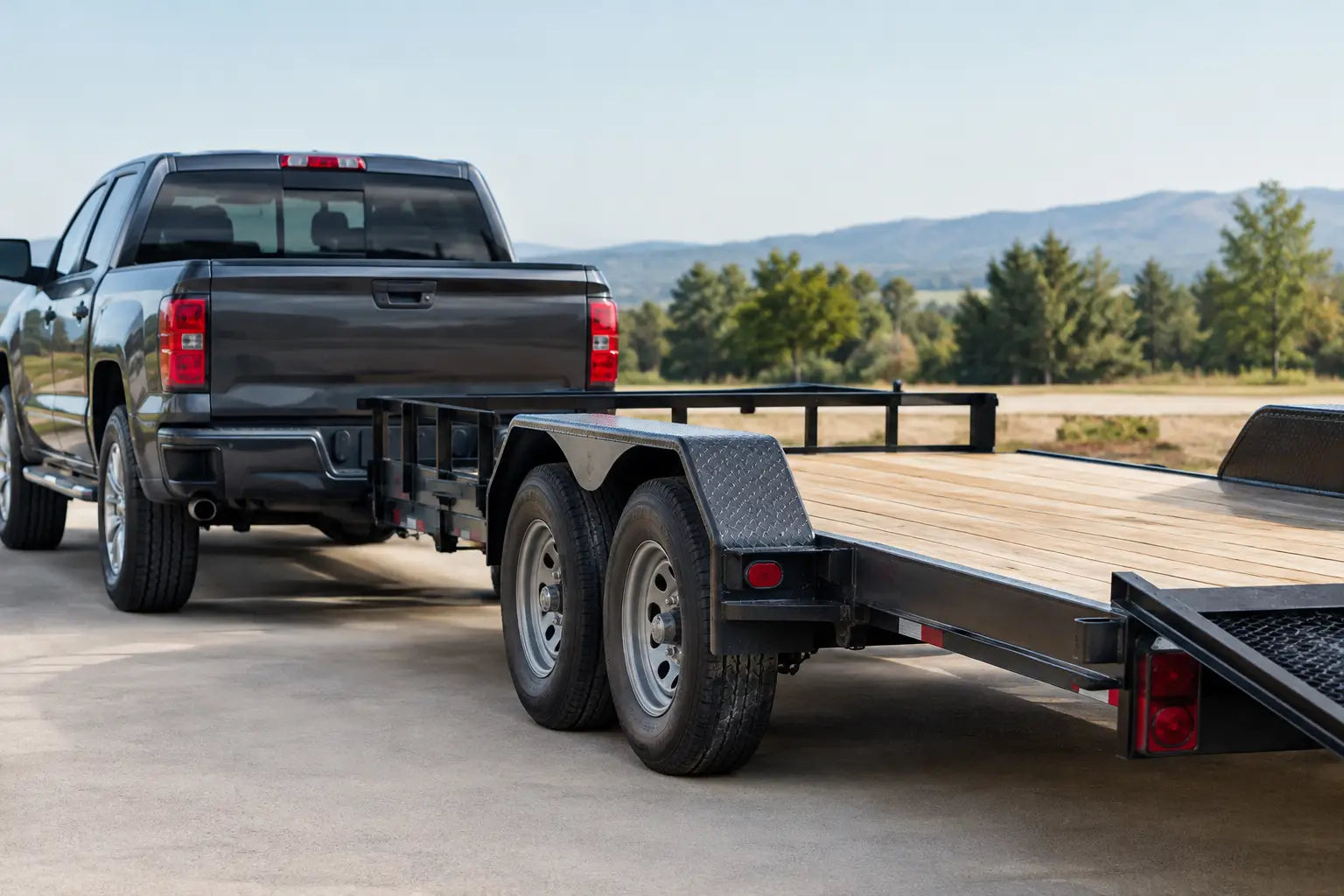

A tight campground loop, a busy boat ramp, or a narrow driveway can make even experienced outdoor people pause. Learning how to back a trailer is less about having perfect instincts and more about slowing down, setting up correctly, and making small corrections before a small problem becomes a jackknife.
The good news: trailer backing is a skill that improves quickly with focused practice. Whether you are pulling a utility trailer, travel trailer, boat trailer, or side-by-side trailer, the same fundamentals apply. Get the rig ready, look far ahead, move at a crawl, and give yourself permission to pull forward and reset.
Before shifting into reverse, take a minute to prepare the vehicle and trailer. That extra minute can save a damaged fender, bent jack, scraped campsite post, or tense exchange at the launch ramp.
Walk around the full rig. Check that the coupler is latched and secured, safety chains are properly connected, the breakaway cable is attached, and the trailer lights are working. Make sure cargo is tied down and distributed correctly. A poorly loaded trailer can sway on the road and react unpredictably while backing.
Next, study the space. Look for low branches, rocks, utility pedestals, parked vehicles, soft ground, people, pets, and overhead clearance. Boat ramps deserve extra attention because algae, wet pavement, and changing water levels can create slick footing. If you cannot see the route clearly, stop and get out before moving.
Set your mirrors so you can see down both sides of the trailer. Your side mirrors are more useful than the rearview mirror once the trailer blocks the view behind your tow vehicle. Extended towing mirrors can make a major difference when pulling a wider RV or enclosed trailer.
Put one hand at the bottom of the steering wheel. Then move that hand in the direction you want the trailer to go.
Want the trailer to move left? Move your hand left. Want it to move right? Move your hand right. This simple hand position removes the mental reversal that makes backing feel confusing when both hands are at the top of the wheel.
The tow vehicle will initially turn the opposite direction from the trailer. That is normal. As the trailer begins moving where you want it, straighten the wheel or make a gentle correction to keep the angle under control.
The key is to use very small steering inputs. Most new drivers turn the wheel too far, then chase the trailer with larger and larger corrections. That is how a calm backing job turns into a sharp angle and a possible jackknife. Move the wheel a little, wait for the trailer to react, then adjust again.
Do not make a packed campsite or crowded public ramp your first training ground. Find an empty parking lot with plenty of room, ideally when traffic is light. Bring a few traffic cones, buckets, or other soft visual markers.
Start by backing in a straight line. Pick a point behind the trailer and keep both sides evenly visible in your mirrors. If the trailer begins drifting, make a small correction immediately. Straight backing teaches you how quickly your trailer responds and how much room the rig needs.
Then practice wide left and right turns. Set up two markers as a pretend campsite entrance or parking space. Pull forward past the opening, then back in while watching the trailer tires, trailer corners, and your vehicle's front swing. Practice from both directions because the view and steering feel different depending on which way you are turning.
Finally, practice the reset. Let the trailer get slightly out of line, then pull forward, straighten the rig, and try again. Pulling forward is not failure. It is the smart move when your approach is off, your sightline disappears, or you are nearing an obstacle.
A good spotter can make backing easier and safer, especially around trees, docks, other vehicles, or campers. But a spotter only helps when both people know the plan.
Before you start, agree on hand signals or use simple verbal commands. Decide which side the spotter will stand on and make sure they remain visible in your mirror at all times. If you lose sight of your spotter, stop immediately. Never assume they moved to a safe location.
The spotter should focus on clearance and obstacles, not rapid-fire instructions. One clear signal at a time works best: stop, trailer left, trailer right, or pull forward. The driver should remain responsible for the vehicle and should not keep moving simply because someone is waving them on.
At busy boat ramps, a spotter can also watch the trailer as it enters the water. This is useful for preventing the trailer from dropping off the edge of a narrow ramp or backing too deeply into the water. Keep the area clear, move deliberately, and avoid blocking ramp traffic longer than necessary.
Good trailer backing starts with the approach. You need room to swing the tow vehicle and guide the trailer toward the target rather than trying to force a sharp turn from a bad angle.
For a campsite or driveway on your right, pull forward far enough that the trailer wheels are just past the entrance. Move slightly left to create a wider angle, then begin backing slowly while guiding the trailer right. Once the trailer is pointed into the space, turn the steering wheel back gradually to follow it in.
A left-side backing approach often gives the driver a better view because the trailer can be seen more clearly through the driver's side mirror and window. If the site allows it, choose the approach that gives you the cleanest sightline. Still, do not ignore the passenger side. Check both mirrors often, especially for trailer tail swing and nearby obstacles.
Longer trailers respond more slowly and need wider turns. Short utility trailers react quickly and can jackknife faster. There is no one steering input that works for every setup. Your wheelbase, trailer length, hitch position, load, terrain, and space available all affect the maneuver.
Speed is the biggest mistake. Backing should happen at a walking pace or slower. Cover the brake, let the trailer roll a few feet at a time, and pause whenever you need to reassess.
Another common problem is staring at only one mirror. The trailer may look perfect on the driver's side while the passenger-side corner is closing in on a post, tree, or parked vehicle. Scan from one mirror to the other and glance forward, too. Your tow vehicle's front end can swing wide as the trailer turns.
Do not wait too long to correct a drift. Small corrections early are easier than big corrections late. At the same time, avoid overcorrecting. Give the trailer a moment to respond before turning more.
Also, do not let an audience rush you. Campsites and boat ramps can attract people waiting for their turn, but pressure causes mistakes. Use your flashers if appropriate, work carefully, and reset if needed. Most experienced trailer owners would rather wait an extra minute than watch someone hit an obstacle.
A few practical upgrades can improve visibility and control. Towing mirrors help you see farther down the trailer sides, while a backup camera can reveal obstacles directly behind the trailer. A camera mounted at the rear of a travel trailer or enclosed trailer adds even more confidence when lining up with a campsite or parking area.
Wheel chocks are essential once you are parked, especially on uneven ground. Trailer leveling blocks can help at a campsite, and a properly rated trailer jack makes unhitching safer and less frustrating. For nighttime arrivals, keep a bright flashlight or work light within reach so you can inspect the site and trailer connection before backing.
For outdoor trips, readiness matters as much as skill. Keep your towing essentials organized: gloves, chocks, hitch lock, spare pins, electrical adapters, tire pressure gauge, and basic tools. Outdoor Up is built around the kind of practical gear that helps you spend less time wrestling with setup and more time enjoying the water, trail, or campground.
You do not need to nail every approach in one move. Even seasoned RV owners, anglers, and trailer haulers pull forward to reset when the angle is wrong. The goal is not to impress anyone watching. The goal is to put the trailer exactly where it needs to be without rushing, guessing, or damaging your gear.
Practice before the trip, use your mirrors, trust small corrections, and stop whenever the view is unclear. A little patience at the ramp or campsite is what gets the real adventure started right.