Your Cart is Empty


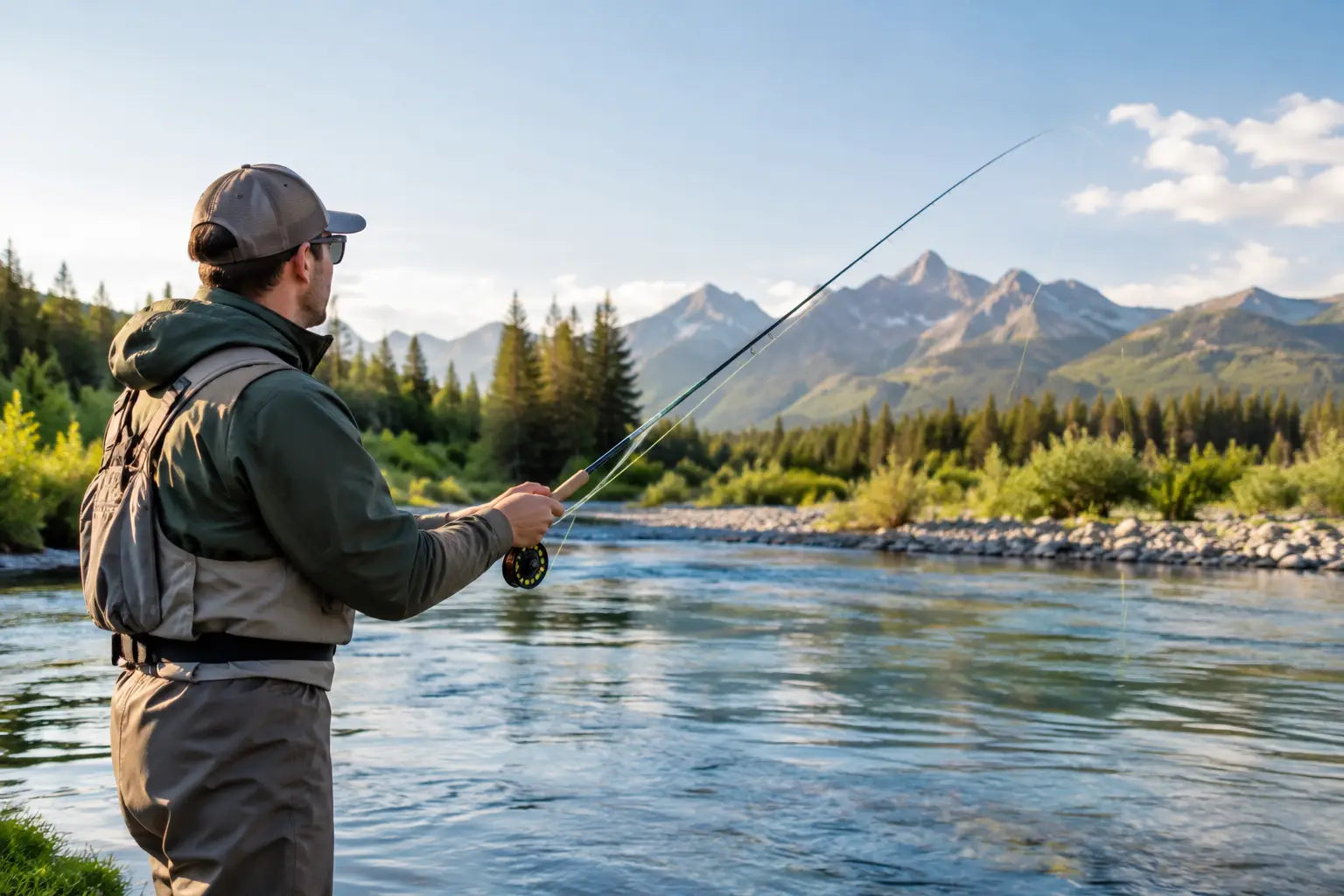

A trout rises once near the shaded bank, then disappears. That is the moment most first-time fly anglers realize fly fishing is less about throwing farther and more about putting the right fly in the right place without spooking the fish. Start simple, stay observant, and your first day on the water can be a lot more productive than it looks.
This beginner fly fishing guide focuses on the gear and skills that matter most: a balanced setup, a dependable cast, a few useful flies, and the ability to read moving water. You do not need a vest full of gear or a perfect loop to get started. You need a practical plan and enough time to make thoughtful casts.
For most freshwater beginners, a 9-foot, 5-weight rod is the all-around choice. It has enough backbone for small bass and windy ponds, while still being light enough to enjoy trout in streams and rivers. A medium-fast action rod is forgiving during the learning phase because it loads more easily than an extra-fast rod.
Pair it with a 5-weight reel, weight-forward floating line, backing, and a 9-foot tapered leader in 4X or 5X. The reel matters less for small trout than it does for large fish, but it should balance the rod and have a smooth, reliable drag. A pre-matched rod-and-reel combo removes a lot of guesswork and lets you spend your budget on the rest of your outing.
Your tippet is the thin material added to the end of the leader as it gets shorter from changing flies. Carrying 4X and 5X tippet covers a wide range of early trout fishing situations. Use 4X when water is slightly stained, flies are larger, or you need more abrasion resistance. Use 5X for smaller flies and clearer, calmer water. Lighter tippet gets more bites at times, but it also breaks more easily and makes knots harder to tie.
Waders and wading boots are useful, not mandatory. On warm days, you can learn on a pond bank, a dock, or a shallow stream in quick-drying clothes and secure water shoes. If you wade, avoid sandals and slick-soled footwear. Felt or rubber-soled wading boots with good traction protect your feet and provide a more stable stance on wet rocks.
A few well-chosen tools make the day smoother. There is no need to pack every accessory available, but do not head to the water without the basics:
A fly cast uses the weight of the line to carry the nearly weightless fly. If you try to force the rod forward like a conventional spinning rod, the line usually collapses in a pile. The goal is a smooth acceleration followed by a complete stop.
Start with 20 to 30 feet of line outside the rod tip. Lift the rod smoothly to about the 1 o'clock position, pause long enough for the line to straighten behind you, then move the rod forward and stop around 10 o'clock. Let the line unroll in front of you. The pause is not a break in the cast. It is what allows the line to transfer energy.
Practice on grass before you fish, using a small piece of yarn instead of a fly if possible. Grass gives you room to learn without trees, currents, or a fish watching your mistakes. Focus on keeping the rod tip moving in a straight path and keeping your casting stroke compact. Longer casts require more line speed and a wider stroke, but short accurate casts catch plenty of fish.
False casting means repeatedly moving the line back and forth through the air before delivering it. Use it sparingly. It can dry a dry fly, change direction, or extend line, but excessive false casting tires your arm and can alert fish. Whenever you can, make one or two controlled false casts and lay the fly down.
Fly selection can feel overwhelming because there are thousands of patterns, colors, and sizes. Early on, think in categories rather than trying to match every insect perfectly. Fish eat insects on the surface, insects below the surface, baitfish, leeches, and other easy meals.
A small dry fly, such as a parachute-style mayfly imitation or an attractor pattern, is exciting because you can watch the take. Use one when you see fish rising or insects on the water. Let it drift naturally, with as little drag as possible. If the fly skates across the current when it should drift freely, the fish may refuse it.
Nymphs represent aquatic insects below the surface, where trout feed much of the time. A bead-head nymph under a small strike indicator is one of the most dependable beginner methods. Set the indicator so the fly travels near the streambed without snagging constantly. In fast or deep water, add a small amount of split shot 8 to 12 inches above the fly to help it sink.
Streamers imitate minnows, leeches, and larger prey. They are useful in deeper pools, stained water, lakes, and when targeting bass as well as trout. Cast across or slightly downstream, let the fly sink if needed, then retrieve it with short strips. A streamer asks you to cover water and create movement, while dry-fly fishing often rewards patience and precise presentation.
Fish rarely hold in random places. They choose areas that bring food close while keeping them out of the strongest current. In a stream, look for current seams where fast and slow water meet, the softer water behind boulders, the heads of pools, and the edges of deep runs.
The obvious deep pool can hold fish, but do not ignore shallow riffles with broken surface water. Riffles carry oxygen and drifting insects, and the uneven surface helps conceal an angler. Approach slowly from downstream whenever possible. Fish face upstream to feed, so they are less likely to see you coming from behind.
In ponds and lakes, focus on structure and transitions. Weed edges, drop-offs, shaded shorelines, submerged logs, and places where a creek enters the water are all worth attention. Early morning and evening often provide better fishing during hot weather, but cloudy days can keep fish active longer.
Make your first cast count. Work close water before throwing to the far bank, and cast to likely holding water in a logical order. Many anglers step past fish while trying to reach the spot that simply looks best from shore.
A natural drift is one of the biggest differences between a fly that gets ignored and one that gets eaten. Current moves at different speeds across a river, so it can pull your fly line faster than your fly. That creates drag.
After the cast, lift and reposition small sections of line upstream with a mend. A mend is not a hard pull. It is a controlled move that gives the fly more time to drift naturally. If you are using an indicator, watch it closely. Any pause, twitch, sideways movement, or unexpected dip may be a fish. Lift the rod firmly but not violently to set the hook.
With dry flies, wait until you see the fish close its mouth or the fly disappear before lifting. Setting too early is common, especially when the take is sudden. With streamers, keep the rod tip low and use a strip set by pulling the line with your line hand. This helps maintain contact with the fly and drives the hook home.
Check local regulations before every trip. Seasons, catch limits, allowed hooks, special catch-and-release sections, and bait restrictions can change from one body of water to another. Regulations protect fisheries and help keep access open for everyone.
When you land a fish, wet your hands before touching it and keep it in the water as much as possible. Avoid squeezing its body or lifting it by the jaw unless the species and situation call for it. Barbless hooks make releases quicker and easier, especially while you are learning.
Wading demands its own caution. Move slowly, use a wading staff if the current is strong, and shuffle your feet rather than taking big steps across slick rocks. If the water is above your knees and pushing hard, there is no prize for crossing it. Fish the water you can reach safely.
Your first fly fishing trips will include tangled leaders, missed strikes, and casts that land in bushes. That is part of the process. Keep your setup simple, spend time watching the water, and build confidence one clean drift at a time. Gear up for a local stream or pond, get outside, and let each cast teach you something useful.