Your Cart is Empty


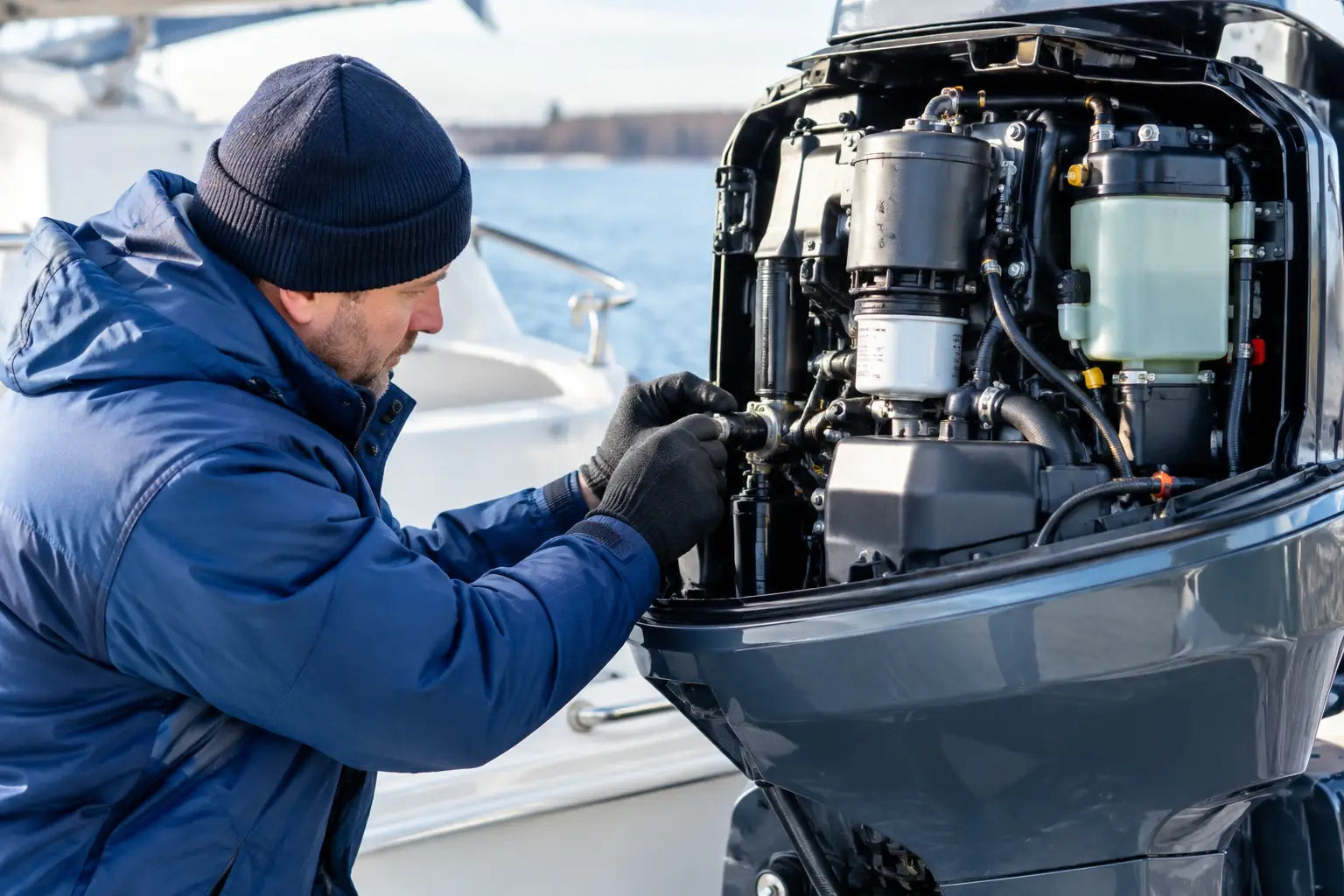

That first hard freeze can turn a great boating season into an expensive spring repair. Learning how to winterize boat engine systems correctly protects the parts you cannot see - cooling passages, seals, cylinders, fuel components, and lower-unit gears - while your boat waits for warmer weather. Set aside an unhurried afternoon, use the fluids specified for your engine, and treat winterization like the last good day on the water: preparation now means fewer surprises at launch.
A winterizing routine depends on what powers your boat. An outboard, sterndrive, inboard, personal watercraft engine, and generator all have different cooling and draining requirements. Freshwater-cooled inboards also differ from raw-water-cooled engines. The closed side of a freshwater cooling system usually contains permanent coolant, but the raw-water side still needs attention.
Your owner’s manual is the final word on drain locations, fluid types, fogging procedures, and service intervals. If you do not have the manual, identify the engine model before buying supplies or removing plugs. A missed drain point or the wrong gear lube can cost far more than a few minutes of research.
Winterize before temperatures stay near freezing, not after. If the boat is stored where it may freeze overnight, drain or protect the cooling system as soon as the season ends. Boats kept in a heated garage have more flexibility, but fuel, oil, batteries, and corrosion protection still need off-season care.
Keep the job simple by staging your supplies before you begin. Most boat owners need these basics:
Gasoline starts changing while it sits. Ethanol-blended fuel can attract moisture, and untreated fuel can leave varnish in carburetors, injectors, and small passages. Add the correct amount of marine fuel stabilizer to the tank, then run the engine long enough to pull treated fuel through the fuel system.
Whether to store the tank full or partially filled depends on the boat, fuel type, and manufacturer guidance. For many gasoline boats, a nearly full tank with room for expansion reduces condensation in humid climates. For portable tanks, follow the tank and engine instructions, and store them upright in a well-ventilated area away from ignition sources. Avoid topping off a tank so completely that temperature changes force fuel out of the vent.
If your engine has a water-separating fuel filter, inspect it for water and contaminants. Replacing the filter before storage is smart when it is due for service or shows any sign of water. Diesel systems need their own procedure, including attention to water separators and tank condition, so follow the engine manual closely.
Run the engine until it reaches normal operating temperature using a proper water supply. For an outboard or sterndrive, that usually means quality flushing muffs attached securely to the lower unit or a manufacturer-approved flush connection. Never run a water-cooled marine engine dry.
Warm oil drains more completely and carries away moisture, acids, and combustion byproducts collected during the season. Change the engine oil and filter according to the manufacturer’s procedure. On an inboard or sterndrive, inspect the old oil for a milky appearance, which may indicate water contamination. If you find it, do not simply refill and forget it. Have the cause checked before spring.
Some engines also require transmission fluid, power steering fluid, or drive lubricant service. Mark each completed task on a winterization checklist. It is easy to forget what was handled once covers are back on and the boat is tucked away.
This is where freeze damage happens. Water expands as it freezes, and that pressure can crack a block, exhaust manifold, hose fitting, pump housing, or lower-unit component.
For raw-water-cooled inboards and sterndrives, first locate and remove every drain plug or petcock identified in the manual. Drain the block, manifolds, hoses, water pump, and any coolers as required. Use a small pick or piece of wire carefully to clear sediment from drain openings. Catch and label the plugs so they return to the correct locations in spring.
After draining, many systems should be filled or circulated with non-toxic marine antifreeze. Feed antifreeze through the correct intake connection while the engine runs only as directed by the manufacturer. Watch for pink antifreeze exiting the exhaust, but do not assume that alone proves every passage is protected. A thermostat may not open during a quick run, which is why the proper drain-and-fill sequence matters.
Outboards are often designed to self-drain when stored vertical, but they still need manufacturer-specific flushing and care. After flushing with fresh water, let the engine drain fully in the vertical position. Do not tilt it up and assume trapped water cannot remain. In freezing climates, follow the exact instructions for your brand and model.
Fogging oil coats internal engine parts to reduce corrosion during storage. It is especially useful for many carbureted two-stroke engines and certain older four-strokes, but not every modern fuel-injected engine uses the same process. Follow the manual rather than spraying fogging oil into an intake by habit.
If the procedure calls for fogging, run the engine as instructed and apply the product until the engine stalls or until the stated amount has been used. Some engines require removing spark plugs and applying a measured amount directly into each cylinder. If you remove plugs, inspect their condition and reinstall or replace them at the correct torque.
Spray an appropriate corrosion protectant on exposed metal linkages, electrical connections, and steering components. Keep sprays away from belts, friction surfaces, electrical contacts not intended for treatment, and hot exhaust parts. Wipe off excess product so it does not collect grit over the winter.
Lower-unit gear lube deserves attention even if it was changed midseason. Drain it into a clean container and look for water or metal flakes. Milky gray lube can indicate water intrusion through seals, while significant metal debris points to a problem that should be inspected before next season.
Refill with the manufacturer-specified lubricant and replace drain and vent screw seals. On sterndrives, also inspect bellows, propeller condition, and the prop shaft for fishing line. A little line behind the prop can damage seals and create the very water intrusion you want to prevent.
Fully charge the battery, clean the terminals, and disconnect it if recommended for your boat and storage arrangement. A smart maintainer is usually the best way to keep a stored battery healthy, but use one sized for the battery type and follow its directions. Store batteries in a dry, protected location where they will not freeze after being discharged.
Clean the bilge and make sure it is dry. Leaving water, leaves, oil residue, or damp gear below deck encourages corrosion, odor, and mildew. Check hoses, clamps, belts, and wiring while access is easy. A cracked hose or loose clamp found in fall is an easy fix compared with discovering it at the ramp.
Cover the boat with a breathable, well-supported cover that sheds water and allows airflow. Do not wrap the engine compartment so tightly that moisture stays trapped inside. If the boat is stored outside, check the cover periodically after rain, wind, and snow.
The biggest mistake is assuming one method works for every engine. Running antifreeze through a system without draining the correct points may leave plain water trapped in a low spot. On the other hand, removing random plugs without a diagram can lead to missing hardware in spring.
Another common miss is skipping the fuel stabilizer because the tank is nearly empty. A small amount of untreated fuel still sits in lines, pumps, bowls, and injectors. Finally, do not postpone an oil change until spring. Used oil has all winter to hold moisture and contaminants against internal surfaces.
Take a few photos before removing hoses or plugs, label parts with painter’s tape, and keep a written record of fluids and service dates. Those small habits make de-winterizing faster and give you a better picture of what your boat needs before the next season.
When the last task is checked off, leave yourself a simple spring note: reinstall drain plugs, inspect belts and hoses, reconnect batteries, check fluid levels, test safety gear, and run the engine on a proper water supply before launch day. A well-winterized engine lets you spend that first warm weekend backing down the ramp with confidence, not chasing a preventable repair.