Your Cart is Empty


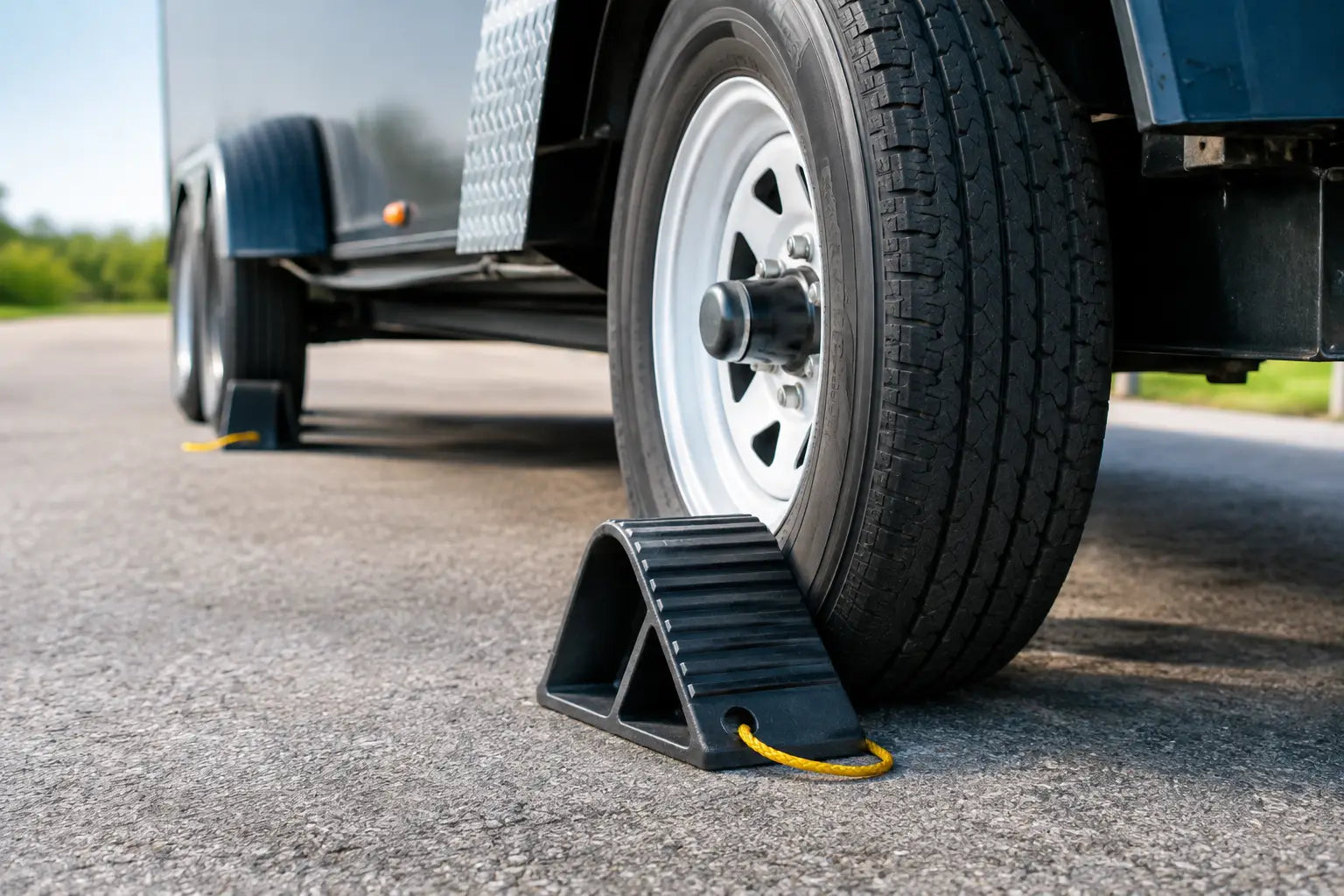

A trailer can look perfectly settled while it is still one small roll away from a bad afternoon. That is why the best wheel chocks for trailers are not an afterthought to toss in the storage compartment. They are basic safety gear for setting up the camper, loading a utility trailer, parking a boat trailer at the ramp, or working around your rig at home.
A parking brake holds the tow vehicle, not the trailer. Even a trailer that seems level can shift when people climb inside, gear gets loaded, or the ground softens after rain. A good pair of chocks adds a simple mechanical stop at the tire, giving you more confidence before you unhitch or start moving equipment.
The right chock depends on your tire size, trailer weight, surface, and how you use the trailer. A small plastic chock may be enough for a lightweight utility trailer on level pavement. It is a poor match for a loaded travel trailer parked on gravel with a downhill grade.
Start with fit. The chock should sit firmly against the tire tread and be tall enough to create a meaningful barrier. A chock that is too short can let a large tire climb over it. A model that is too narrow may shift or sink when the trailer settles. Check the product's stated tire-size and weight guidance rather than choosing by appearance alone.
Material matters because every campsite and driveway asks something different of your gear. Hard rubber delivers strong grip and weight without being fragile. Dense plastic is lighter, often less expensive, and resists water, but quality varies widely. Metal chocks are durable and useful for certain commercial applications, although they can slide on smooth surfaces unless they have a grippy base or teeth designed for the ground.
Grip on the ground is just as important as contact with the tire. Wide bases spread the load better on dirt and gravel. Aggressive tread or molded teeth can help keep a chock from skating on loose surfaces. On polished concrete, rubber or a textured underside usually provides better bite than bare metal or slick plastic.
There is no one best design for every parking situation. Match the chock style to the job instead of paying for features you will never use.
For most RV, boat, and travel trailer owners, heavy-duty rubber wedges are the dependable all-around choice. Their weight helps them stay in place, and the rubber grips both tire and ground well. They are especially useful on paved pads, packed dirt, and gravel where a light chock can move around.
The trade-off is bulk. Rubber chocks are heavier to carry and can collect mud, sand, and road grime. That is rarely a deal-breaker when you are securing a larger trailer, but it is worth considering if storage space is tight.
Molded plastic chocks work well for smaller utility trailers, pop-up campers, and occasional use. They are easy to rinse off, inexpensive, and light enough to keep a backup pair in the truck. Look for thick, reinforced construction with a broad footprint, not thin hollow plastic that can crack under pressure or heat.
Plastic is a sensible value pick when conditions are mild and the trailer is light. For a fully loaded RV or a steep, loose site, step up to a larger rubber model or use a more secure system.
If your trailer has tandem axles, an interlocking chock that fits between two tires can be an excellent addition. These chocks lock against both tires and help limit fore-and-aft movement. They are popular with travel trailer and fifth-wheel owners because they can reduce the rocking feeling that happens when people walk inside.
They are not a replacement for standard chocks when parking on a grade. Use wheel chocks on the downhill side of the trailer tires first, then add an axle-to-axle chock for extra stability. The system works best when tire spacing matches the chock's adjustment range.
Metal wheel chocks make sense for heavier work trailers, equipment trailers, and situations where abrasion resistance is a priority. Some designs use serrated edges for grip in dirt or on job sites. They can last a long time, but make sure the design is rated for your trailer and practical for the surface you use most.
For a weekend camper, metal is not automatically better. A well-built rubber chock is often quieter, easier on finished pavement, and more secure on slick concrete.
A chock should be large enough to meet the tire, not merely touch its bottom edge. Larger trailer tires need taller, wider chocks. If you run oversized tires or carry substantial cargo, choose a chock specifically built for that load rather than relying on a compact accessory meant for a small single-axle trailer.
Think about where you park most often. On a level concrete driveway, a standard pair of rubber wedges may be all you need. At uneven campgrounds, bring chocks with wide bases and a strong tread pattern. For boat ramps, water-resistant materials and grippy surfaces are valuable because wet pavement can turn a small mistake into a serious slide.
Grade changes the equation. The steeper the slope, the more you should prioritize large, high-traction chocks and careful placement. If a site feels questionable, choose another spot when possible. Wheel chocks add safety, but they cannot make an unstable parking location safe.
Place the chocks before unhitching. Keep the trailer connected to the tow vehicle while you get it positioned, set the tow vehicle's parking brake, and then snug the chocks firmly against the trailer tires. On level ground, place chocks on both sides of at least one tire or axle when practical. On a slope, chock the downhill side first, then add chocks to the opposite side for additional security.
Do not kick a chock loosely under a tire and call it done. It should sit squarely against the tread, centered where it has full contact. If the ground is loose, press the chock into the surface so it is not resting on top of gravel or soft dirt. Recheck after you unhook, level the trailer, or load heavy gear, since the trailer can settle and create a small gap.
When it is time to leave, hook up the tow vehicle and confirm the coupler and safety connections are secure before removing the chocks. Never stand downhill from a trailer while pulling them out. A pull rope on the chock is useful because it keeps your hands and feet out of the danger zone.
For most outdoor travelers, the practical setup is two substantial wheel chocks sized for the trailer, plus an interlocking pair if you own a tandem-axle RV. That gives you a dependable answer for campgrounds, driveways, storage lots, and boat launches without carrying unnecessary gear.
Inspect chocks a few times each season. Replace plastic that is cracked, rubber that is badly split or hardened, and hardware that is bent or corroded. It is a small piece of maintenance that protects a much bigger investment.
Outdoor Up customers gear up for real miles, changing weather, and campsites that are rarely as flat as the reservation photo. Choose wheel chocks with the same mindset: buy for the trailer you have, the terrain you actually use, and the margin of safety that lets you relax once the wheels stop rolling.