Your Cart is Empty


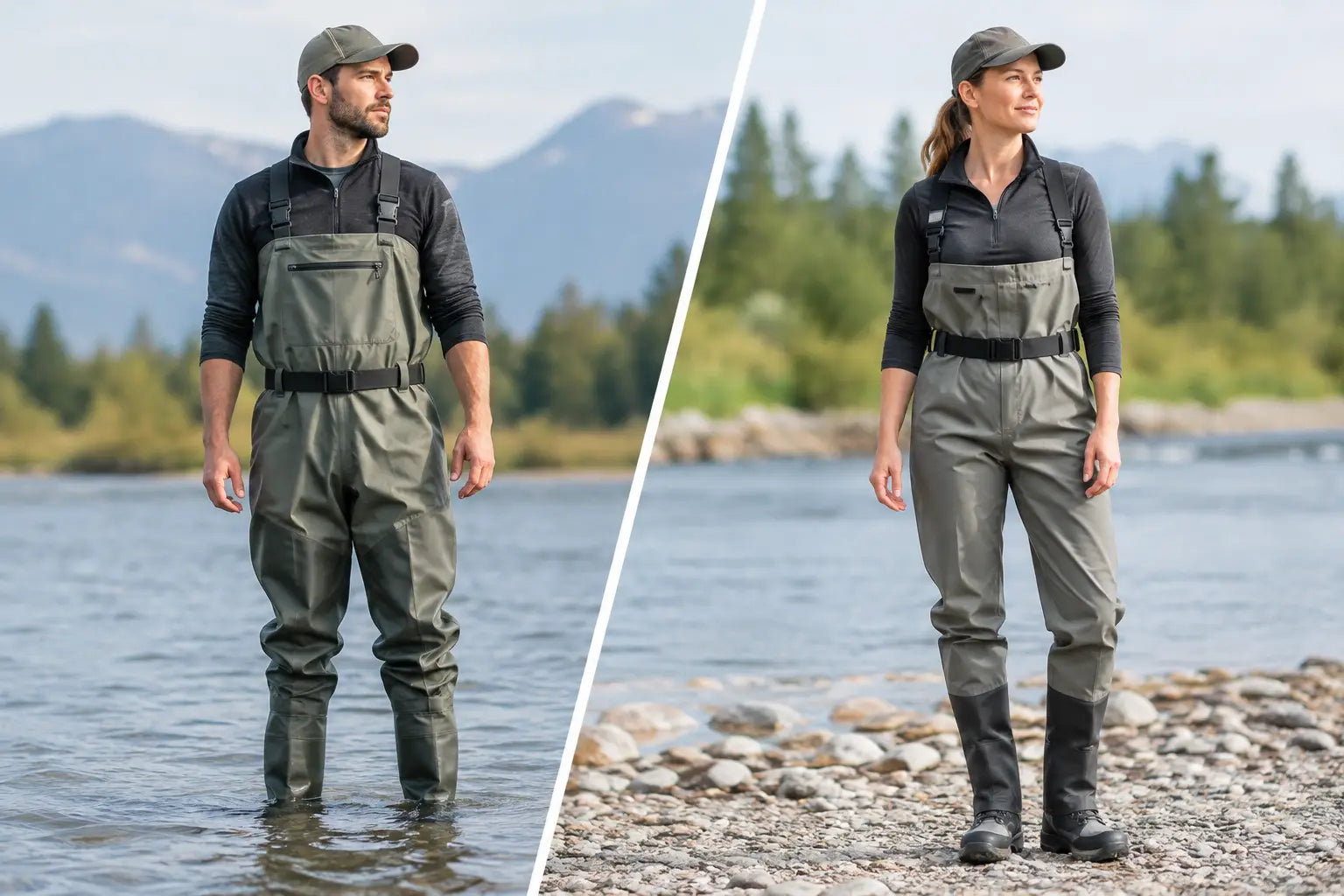

A shallow creek can turn deep fast when you step off a gravel bar. That is the real decision behind chest waders versus hip waders: not which style looks tougher, but how much water you expect to meet, how far you will walk, and what happens when conditions change. The right pair keeps you dry and moving. The wrong pair can leave you soaked, overheated, or stuck on shore when the bite picks up.
Both styles earn a place in an outdoor gear lineup. Hip waders are quick, light, and practical for controlled shallow water. Chest waders offer the coverage and confidence needed for deeper river crossings, changing current, marsh work, and long days chasing fish or game. Start with the water, then match the wader to the job.
Hip waders are individual, boot-like waders that extend from the foot to the upper thigh or hip. They commonly attach to a belt or loops on your clothing to stay in position. They are made for water that stays below the top of the wader, usually around knee to mid-thigh depth depending on the model and your height.
Chest waders connect both legs to a full bib that reaches your chest. Adjustable suspenders hold them up, and most include a belt that should be worn around the waist. This design gives you far more usable depth, which matters when you need to wade across a river channel, work a flooded bank, launch a small boat, or step into uneven water where the bottom drops away.
Coverage is the obvious difference, but mobility and heat management are just as important. Hip waders usually feel less restrictive and are easier to put on for a short task. Chest waders cover more of your body, hold more warmth, and can feel bulkier, especially if you are hiking a long distance before reaching the water.
Hip waders are built for straightforward shallow-water work. If you know the water will stay low, they offer a simple, affordable way to keep your feet and legs dry without wearing a full set of waders.
They work especially well for creek fishing, pond-edge access, ditch and drainage work, shoreline cleanup, and early-season hunting setups in dry fields with occasional mud or shallow water. They are also useful around a campsite or property after heavy rain, when you need waterproof coverage beyond a standard boot but do not expect to stand in deep water.
For anglers, hip waders make sense on small, clear streams where you can read the bottom and stay near shore. They are also a solid option for warm-weather fishing, when chest-high coverage can feel like too much gear for a few hours on shallow water.
The trade-off is simple: hip waders have a hard limit. One unexpected hole, one deep mud pocket, or one misjudged step can send water over the top. Once that happens, the outing gets uncomfortable quickly. Hip waders are best when the water depth is known and predictable, not when you are testing new stretches of river.
Hip waders are generally faster to pull on and take off, lighter to carry, and less expensive than full chest waders. They also provide better ventilation because your upper body remains uncovered. For short, shallow jobs, that convenience is hard to beat.
Look for a secure adjustment system at the top of the wader. A loose hip wader can slide down while walking, which is irritating on dry ground and potentially unsafe in moving water. Bootfoot models are often the easiest choice for muddy shorelines, while stockingfoot options can make sense for anglers who already own wading boots.
Chest waders are the more versatile choice for anglers and hunters who deal with variable water. A river that looks shin-deep from the bank may have a waist-deep channel. A calm marsh can hide soft bottomless mud. Chest waders provide the extra margin that lets you adapt without ending the day early.
They are the go-to option for fly fishing, river fishing, duck hunting, working around boats, crossing creeks, and fishing cold water in spring or fall. They are also a smart purchase for anyone who fishes multiple waters rather than one familiar local spot. More coverage means more options when you arrive.
That does not mean chest waders make deep water automatically safe. Even chest-high designs can flood if you lose balance, fall, or wade above their intended level. Strong current, slippery rocks, and unknown bottoms demand caution regardless of what you are wearing. A wading belt helps reduce the amount of water that enters if you take a fall, and it creates a cleaner, more secure fit.
The biggest benefit is confidence in changing conditions. Chest waders allow you to reach better casting angles, move around structure, and cross shallower channels that would be off-limits in hip waders. In cold weather, they also provide room for layering, which can make a long day on the water much more comfortable.
They do take more effort to manage. Full waders are warmer, take up more storage space, and require more care after a trip. If you only need waterproof footwear for ten minutes of shallow creek work, a chest wader can be overkill. But for frequent fishing, hunting, or water access, their flexibility often delivers better value over time.
The material matters as much as the height. Neoprene waders are insulated and warm, making them a dependable choice for cold water, cold weather, and stationary hunting. They are useful when staying warm matters more than hiking comfort. The downside is heat. In mild or warm conditions, neoprene can feel heavy and sweaty.
Breathable waders are typically the better all-around option for active anglers. They allow moisture from perspiration to escape more effectively, helping you stay more comfortable while walking riverbanks or covering ground between fishing spots. They are not automatically warm, though. Their advantage is that you can add base layers underneath as temperatures drop and wear lighter clothing when it is warm.
PVC and rubber waders are often tough, waterproof, and budget-friendly. They are a practical fit for farm chores, occasional shoreline work, and messy conditions where abrasion resistance is a priority. They are usually less breathable than premium fishing waders, so they are best suited to shorter jobs or cooler weather.
This decision applies to both chest and hip waders, although chest waders offer more choices. Bootfoot waders have boots attached, making them convenient for mud, marshes, boat ramps, and quick outings. They are easy to gear up with and reduce the number of pieces you need to remember.
Stockingfoot waders end in neoprene socks and are worn with separate wading boots. This setup is popular with anglers because dedicated boots provide better ankle support and traction on rocky riverbeds. They also allow you to replace boots separately when they wear out.
For uneven streams, prioritize traction and stability over speed. Felt soles can grip well on slick surfaces where permitted, while rubber soles with aggressive tread are versatile for mixed terrain, mud, and hiking. Check local regulations before choosing a sole style, since some waters restrict felt due to invasive species concerns.
A wader should let you bend, step high, crouch, and layer clothing without pulling tight across the knees or shoulders. Waders that are too small restrict movement and can wear out faster at stress points. Waders that are far too loose can snag, bunch up, and make walking less secure.
Try to match inseam, chest, and boot size rather than buying solely by your usual pants size. If you fish in cold weather, account for the layers you will wear underneath. Adjustable suspenders, a waist belt, reinforced knees, and a durable gravel guard are useful features, but they cannot compensate for a poor fit.
Wading safety deserves the same attention as comfort. Use a wading staff in fast or unfamiliar water, move sideways or slightly upstream when crossing current, and keep your feet low rather than taking big steps. Never assume waterproof gear makes a crossing safe. It only keeps you dry within its limits.
Choose hip waders when you want light, quick coverage for dependable shallow water. Choose chest waders when depth may change, conditions are cold, or you want the freedom to fish and hunt more water with one setup. For many active anglers, chest waders are the more useful long-term investment. For occasional chores and shallow creek access, hip waders may be all you need.
Before your next trip, think less about the deepest water you hope to reach and more about the water you may have to cross to get back. Gear up for that moment, check your fit at home, and you will spend more time enjoying the water instead of worrying about it.