Your Cart is Empty


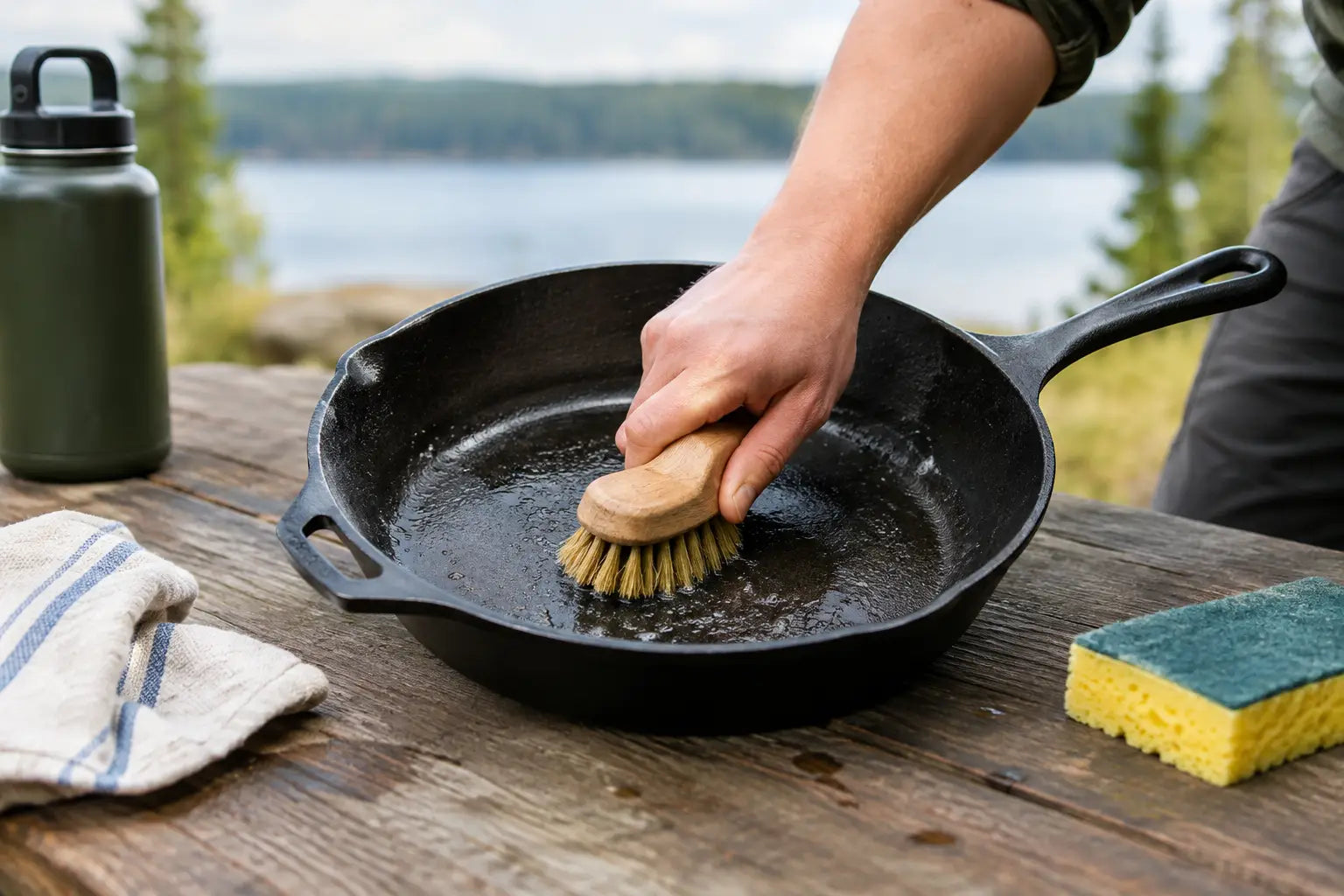

Bacon grease popping over a campfire, fresh-caught fish crisping at the edge, cobbler bubbling after sunset - cast iron earns its spot in camp kitchens because it can take real heat and keep cooking. Cleaning a cast iron skillet does not need to be complicated, but it does need to happen the right way. A few minutes after each meal protects the seasoning, prevents rust, and keeps your skillet ready for the next breakfast at the trailhead, campsite, or cabin.
The big idea is simple: clean off food, use water without soaking the pan, dry it completely, then leave behind a very thin layer of oil. That routine works whether you cook on a stove at home, a campfire grate, or a portable propane setup.
Let the skillet cool until it is safe to handle, but do not leave food baked onto it overnight if you can help it. A warm pan releases residue more easily than a cold one. Pour out excess grease into a safe container rather than down a campground drain or onto the ground, where it can attract animals.
Rinse the pan with hot water and scrub away food with a stiff nylon brush, a chain-mail scrubber, or a nonmetal pan scraper. For most meals, that is all it takes. Use enough pressure to remove cooked-on bits, but do not attack the pan as if you are stripping paint off a trailer. The goal is to clean the cooking surface while preserving the dark, slick seasoning underneath.
Modern cast iron can handle a small amount of mild dish soap when it needs it. The old warning about never letting soap touch cast iron came from stronger soaps and lye-based cleaners that could remove seasoning. A quick wash with a little mild soap is useful after especially greasy meals, fish, or anything with a strong odor. The trade-off is that frequent heavy scrubbing and soap can gradually dull the seasoning, so save it for when water and a brush are not enough.
Never soak the skillet in water, and skip the dishwasher entirely. Cast iron is bare iron beneath its seasoning, which means lingering moisture is an open invitation for rust.
When eggs, potatoes, or campfire chili leave a stubborn layer behind, put the skillet back over low heat with a small amount of water. Let it simmer for a minute or two, then use your scraper or brush to lift the softened food. Pour out the water and wipe the pan clean.
Coarse kosher salt is another solid option when you do not want to use soap. Add a handful to the warm, dry skillet and rub it around with a folded paper towel or clean camp cloth. The salt gives you gentle abrasion without sitting water in the pan. Discard the salt well away from your cooking area, then wipe the skillet clean.
Avoid steel wool for everyday cleanup. It works, but it can remove a lot of seasoning along with the burned food. Keep it for rust removal or a serious restoration job.
The most common cast iron mistake happens after washing: putting the pan away while it is still damp. Towel-drying is a good first step, but it can leave moisture in the cooking surface, around the handle, and along the rim.
Set the skillet over low to medium-low heat for a few minutes until every trace of water has evaporated. This is especially valuable outdoors, where humid air, morning dew, and limited counter space make a wet pan easy to overlook. Do not walk away and blast it over high heat. An empty skillet can get extremely hot quickly, and excessive heat can weaken its seasoning.
Once the pan is dry, let it cool just enough to handle safely. Add a few drops of a neutral, high-smoke-point cooking oil such as canola, vegetable, grapeseed, or avocado oil. Wipe it across the interior with a paper towel, then use a clean section of the towel to buff away the excess. The skillet should look lightly polished, not wet or sticky.
That thin coat is what keeps oxygen and moisture away from the iron between trips. It also builds the easy-release surface that makes cast iron so dependable for camp breakfasts, skillet cornbread, burgers, and one-pan dinners.
A good cleanup setup takes up very little room in a chuck box or camp kitchen tote. Bring a pan scraper, compact scrub brush, a few paper towels or dedicated cotton cloths, mild biodegradable dish soap, and a small bottle of cooking oil. A chain-mail scrubber is worth adding if cast iron is a regular part of your camp menu.
Keep a heat-safe glove or skillet handle cover nearby, too. Handles stay hot long after the food comes off, particularly when you cook over coals or a fire grate. Reliable gear makes cleanup safer and faster, so you can get back to the water, the trail, or the fire.
If you are camping where water is limited, scrape and wipe the pan while it is warm before using any rinse water. This reduces waste and makes the final cleanup much easier. Follow local campground rules for disposing of gray water and food scraps. A clean camp protects wildlife and makes the next crew's stay better.
A little discoloration is normal. Black, brown, and gray patches often show that seasoning is still developing or that the pan has been used over uneven heat. You do not need to strip and reseason a skillet every time its finish looks less than perfect.
Rust is different. If you see orange spots, scrub the affected area with steel wool or a stiff scrubber and warm water until the rust is gone. Dry the skillet immediately over heat, then oil it. If the cooking surface looks patchy afterward, reseason it with a very thin film of oil in an oven or covered grill. Heat the pan until the oil bonds into a dry, dark finish, then repeat as needed.
Flaking seasoning can also call for a reset. This usually happens when thick layers of oil were left on the pan and turned gummy rather than bonding to the iron. Scrub away loose material, clean and dry the pan, then rebuild with several very thin coats of oil. Thin coats matter more than using a lot of oil.
Acidic foods require a little judgment. A well-seasoned skillet can handle a short tomato sauce, a splash of wine, or a squeeze of citrus. Long simmers of acidic food, especially in a newer pan, can weaken seasoning and leave a metallic taste. For chili, tomato-heavy stew, or hours of braising, an enameled Dutch oven may be the better camp-cooking tool.
Before packing the skillet, make sure it is completely cool and dry. Store it in a dry place, not sealed while warm inside a damp plastic tote. If stacking cookware, place a paper towel or clean cloth inside the skillet to absorb humidity and protect the finish from scratches.
For RV travel, boat storage, or long periods between trips, check the pan occasionally. Temperature swings and moisture can create surface rust faster than you expect. A quick wipe with oil before storage gives you cheap insurance for a piece of cookware built to last decades.
Cast iron rewards simple habits. Clean it soon after cooking, dry it over heat, and oil it lightly. Do that consistently, and your skillet will be ready when the next fire is lit and dinner is still an idea waiting in the cooler.