Your Cart is Empty


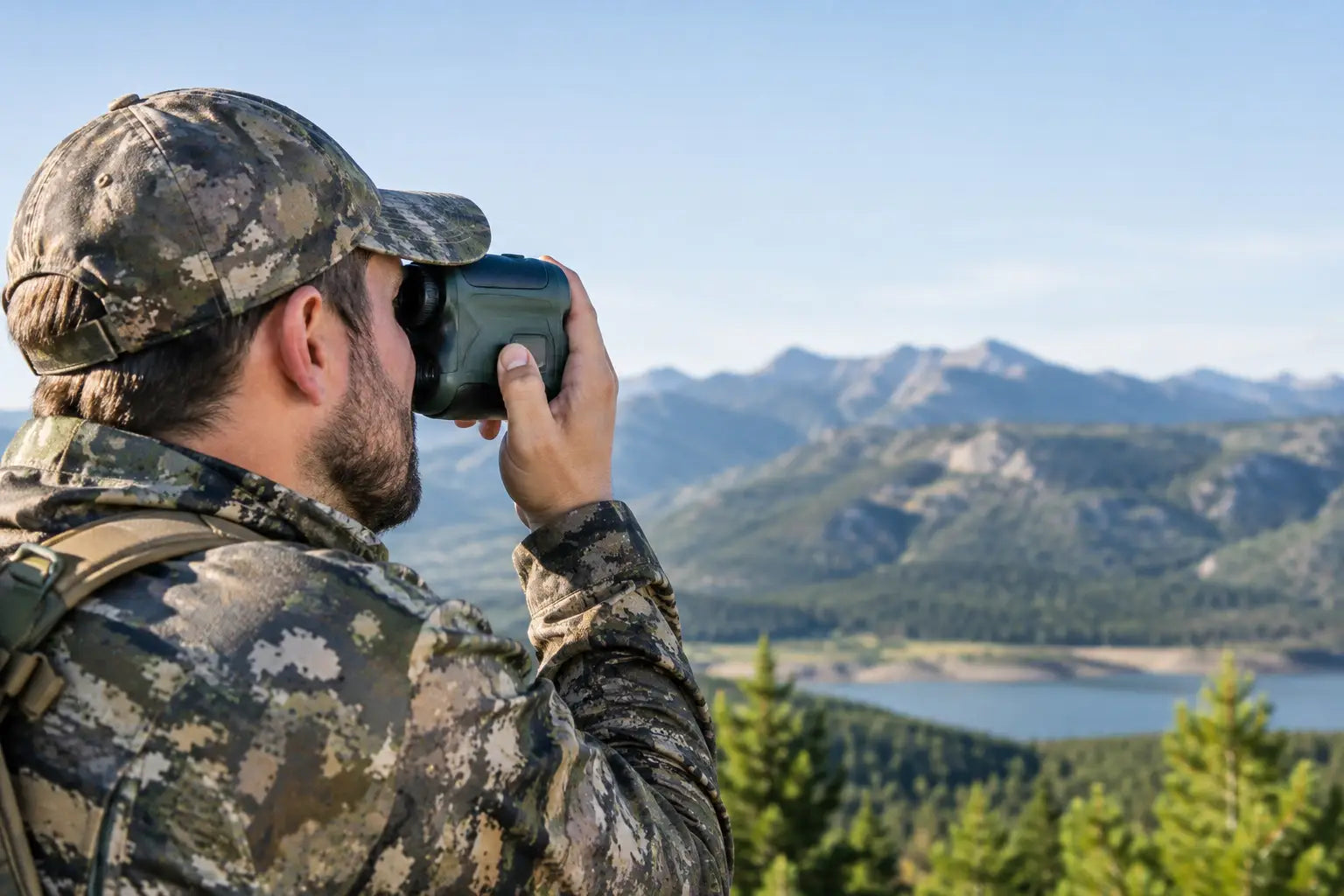

A buck steps out at the far edge of a cut cornfield, and the difference between 210 and 260 yards is no small detail. The best hunting rangefinders give you a fast, trustworthy number before the animal moves, helping you make a cleaner decision when the moment counts. But the right model is not always the one with the biggest yardage claim or the highest price tag. It is the one that works in your kind of country, with your weapon, in the light and weather you actually hunt.
For many hunters, a quality rangefinder is one of the most useful upgrades they can carry. It takes guesswork out of stands, blinds, ridgelines, and open fields. Choose well, practice with it before opening day, and it becomes part of your routine as quickly as binoculars or a headlamp.
A hunting rangefinder needs to do more than read a reflective sign at extreme distance. It should pick up a deer-sized target through brush, return a reading quickly, fit securely in your hand, and stay useful when temperatures drop and daylight fades.
Manufacturers often advertise maximum range, but that number can be misleading. A unit rated to 1,500 yards may only range a deer reliably at a fraction of that distance. That does not make it a poor tool. It simply means hunters should pay attention to the stated range on game, trees, or other non-reflective targets. For a whitetail hunter shooting inside 300 yards, dependable performance on a deer at 400 to 600 yards matters more than an impressive maximum claim.
Optical clarity matters just as much. A rangefinder can deliver an accurate number, but it will not help much if you struggle to find the animal in the viewfinder at first or last light. Look for a clear display, useful brightness settings, and magnification that fits the terrain. Most hunters do well with 6x magnification. It provides enough detail for longer shots without making close-range targets difficult to hold steady.
The best hunting rangefinders are not identical because hunting conditions are not identical. Start with where and how you hunt, then narrow the feature list from there.
In thick timber, speed and target priority are the big concerns. Branches, grass, and foreground brush can interfere with a laser beam, especially when a deer is standing behind cover. A rangefinder with a strong target mode helps you isolate the animal instead of reading the nearest twig.
Angle compensation is especially valuable for treestand hunting. A deer may be 25 yards away in a straight-line measurement, but the steep downward angle changes the effective shooting distance. A model with archery-focused angle compensation provides the corrected distance you need for a more confident shot. If you hunt from elevated stands with a bow, make this a priority rather than an optional extra.
Longer country calls for better optics, a stable grip, and more range than most wooded hunts require. Mule deer, pronghorn, elk, and coyotes may appear hundreds of yards away, often in changing light and uneven terrain. Here, a rangefinder that reads animal-sized targets beyond your practical shooting range gives you room to plan a stalk, confirm landmarks, and make responsible decisions.
Ballistic compensation can also be useful for rifle hunters in open terrain. Some models calculate holdover based on a selected ballistic profile, while others work with an app to deliver more detailed solutions. These features are helpful only if you take the time to set them up correctly and verify your rifle at the range. A basic compensated-distance model is often enough for hunters who keep shots within moderate distances.
Archery rangefinders should be quick at close distances and easy to read with one hand. A scan mode is useful when deer are moving through a shooting lane because it continuously updates the distance as you track the animal. Bright, uncluttered displays are also a major advantage in low-light blind conditions.
Avoid paying for extreme-distance capability you will never use if it means giving up simple controls or angle compensation. For most bowhunters, a compact rangefinder that reads reliably from 10 to 100 yards is a better field tool than a complicated long-range unit.
The right feature set makes a rangefinder easier to trust under pressure. Focus on practical performance before premium extras.
Angle compensation: Often called angle-modified range or horizontal distance, this feature adjusts for uphill and downhill shots. It is a smart choice for treestands, mountain hunts, and bowhunting. For rifle use, check whether the model offers a mode designed for your preferred ballistic approach.
Target and scan modes: First-target modes can help when brush is close to you, while distant-target modes may help pick up a farther animal beyond foreground clutter. Scan mode updates readings as you pan. Names vary by brand, but the goal is the same: get the distance to what you intend to range.
Display color and brightness: Black displays are usually clear in bright daylight. Red or OLED displays can be easier to see at dawn, dusk, and against dark timber. Adjustable brightness is worth having, since an overly bright display can flare in low light.
Weather resistance: Hunting gear gets wet, dusty, and cold. Look for a water-resistant or waterproof housing, covered buttons, and a case or lanyard that keeps the unit handy. A compact model is easier to carry, but it still needs enough grip to use with gloves.
Battery type: Many rangefinders use CR2 batteries, while some use rechargeable power. Either can work well. CR2 batteries are easy to swap in the field, while rechargeables reduce spare-battery clutter. Whatever you choose, carry a backup on multi-day trips and replace batteries before a major hunt.
Ballistic rangefinders can be excellent tools, but they are not mandatory for every hunter. Their value rises as shot distances increase and terrain becomes more variable. At longer ranges, a few yards of ranging error, a steep angle, or changing air conditions can affect impact enough to matter.
A standard angle-compensating rangefinder is often the better buy for bowhunters and hunters who limit rifle shots to familiar, moderate distances. It is simpler, faster to use, and less expensive. Put the savings toward range time, quality ammunition, or other gear that improves your overall setup.
If you regularly hunt wide-open country and shoot at longer distances, ballistic capability can be worthwhile. Just remember that technology does not replace field skills. You still need a confirmed zero, a known load, a stable shooting position, and the discipline to pass on a shot when wind, animal movement, or your own limits say no.
When shopping, begin with your maximum ethical shooting distance, then buy a rangefinder that performs beyond it on game-sized targets. That extra margin helps when rain, fog, dark coats, or distant cover make readings more difficult.
Next, check the display and button layout. Can you activate it without looking down? Is the reading clear against dark timber? Can you operate it while wearing the gloves you hunt in? These small details matter more in the field than a long feature list.
Weight and size deserve a practical look, too. A micro rangefinder disappears in a chest pocket and works well for mobile hunters. A larger unit may offer a steadier hold, more comfortable grip, and easier controls. Neither is automatically better. Match it to how you carry binoculars, calls, a bow, or a rifle.
Price should reflect use, not bragging rights. A reliable mid-range unit is often the best value for hunters who need fast readings inside normal hunting distances. Spend more when the added optical quality, low-light display, advanced ballistic support, or extended game-range capability will solve a real problem in your hunting style.
A new rangefinder should not go straight from the box to your pack on opening morning. Use it around home and at the range. Read a fence post, a tree trunk, a target, and an object behind some light brush. Compare regular distance with angle-compensated distance from an elevated position. Learn which mode gives you the reading you expect.
Practice ranging landmarks before animals appear. From a deer stand, range likely trails, the edge of your shooting lane, and the base of key trees. From a blind, range the decoys, field edges, and approach routes. When an animal steps in, you will already know the distances and can stay focused on a calm, ethical shot.
A rangefinder is a small piece of gear with a big job: turning an uncertain estimate into useful information. Choose one that fits your hunt, keep a fresh battery in it, and put in a little practice. Then gear up, get outside, and let every measured yard support a better day in the field.