Your Cart is Empty


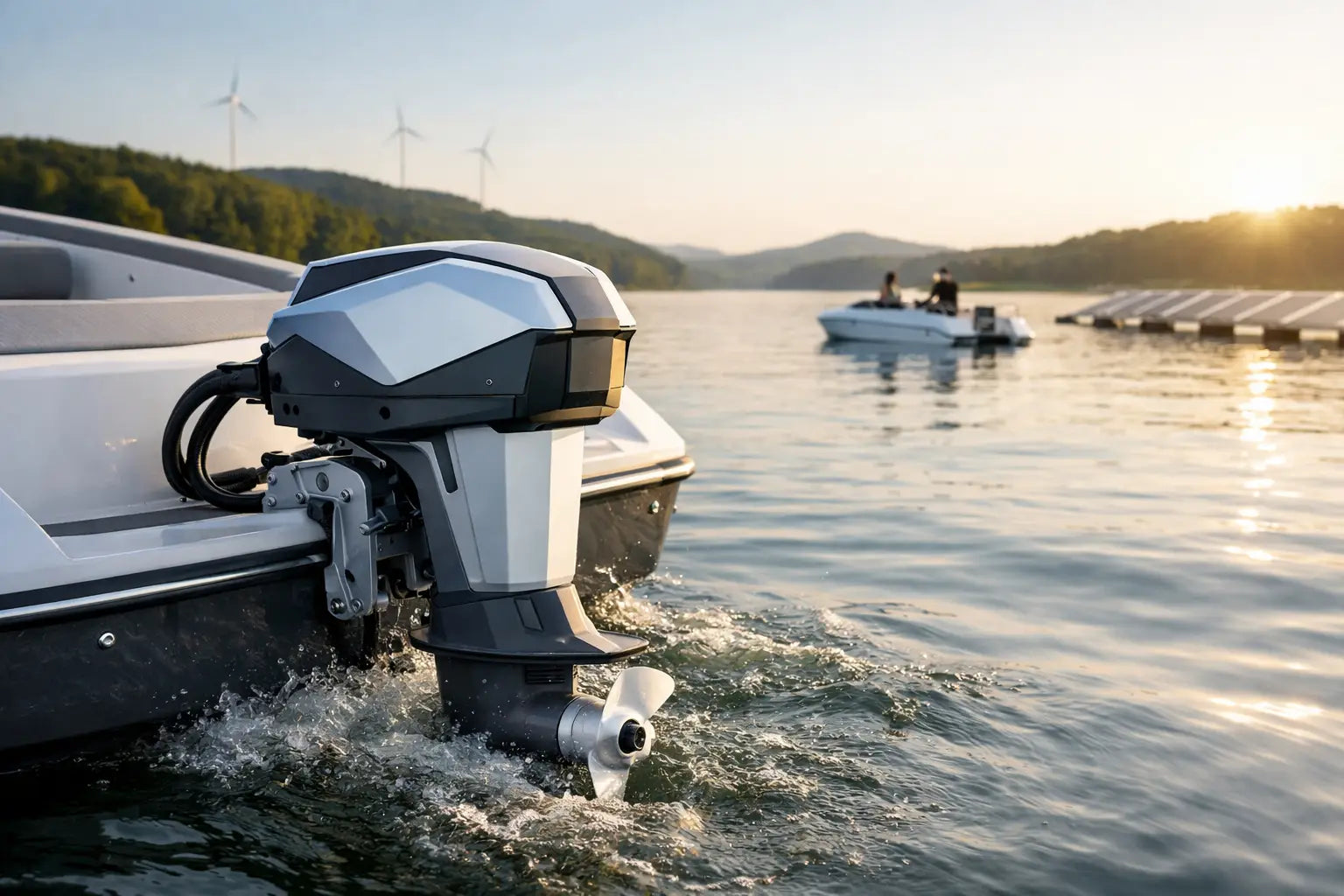

The best test of an electric outboard is not how quietly it runs at the dock. It is whether it gets you across the lake, through a long trolling pass, and back to the ramp with power to spare. That is why electric outboard motor trends matter to anglers, pontoon owners, dinghy users, and anyone looking for a cleaner, quieter way to get on the water.
Electric propulsion is moving beyond the small backup motor category. Better battery systems, more usable power options, and smarter controls are making electric outboards a realistic fit for more boats. They are not a universal replacement for gas, especially on long runs or heavy offshore rigs. But for the right boat and trip, the advantages are getting harder to ignore: instant torque, low maintenance, quiet operation, and no fuel fumes in the garage or boat shed.
Early electric outboards were largely seen as low-thrust tools for small tenders and protected-water trolling. That market still matters, but the category is stretching in both directions. Compact units are becoming easier to carry, while larger systems are being built for aluminum fishing boats, pontoons, skiffs, and day cruisers.
For small craft, integrated batteries are a major convenience. A motor with a removable battery can be carried to a vehicle, cabin, or campsite for charging rather than leaving the entire boat near an outlet. This setup works well for kayaks, canoes, inflatables, and lightweight dinghies, where simple rigging and easy transport matter as much as top speed.
At the other end, higher-voltage battery banks are supporting stronger motors and longer run times. That opens the door for boaters who use an outboard as their primary propulsion on shorter routes. The trade-off is weight and cost. Bigger electric setups need substantial battery capacity, durable cabling, proper mounting, and enough room aboard to keep the boat safely balanced.
Horsepower gets attention, but range is usually the number that decides whether an electric outboard fits your trip. Manufacturers are improving efficiency, and battery capacities are climbing, yet no motor can get around the basic equation: more speed and more load use more energy.
A lightly loaded jon boat idling along a calm lake may run for hours. The same boat with three adults, fishing gear, a livewell, wind, and a strong current will consume power much faster. Running at full throttle can shorten usable run time dramatically. For that reason, many experienced buyers size their system around a normal day on the water, not the best-case range shown in ideal conditions.
Plan for the route out, the route back, and a reserve. If you fish several miles from the launch, work against river current, or spend time in open water where conditions can change, extra battery capacity is more valuable than an extra mile per hour. This is one area where gas still has an edge for remote, high-speed travel. Electric power is strongest when the day’s distance, charging access, and boat load are predictable.
Battery technology is the engine behind nearly every meaningful improvement in electric boating. Lithium batteries are lighter than traditional lead-acid options for a given amount of usable energy, hold voltage more consistently, and can handle repeated charging cycles well when matched with the right equipment.
That does not mean every lithium battery is interchangeable. An electric outboard needs a battery system with the correct voltage, capacity, discharge capability, and battery management protection. Using an undersized or incompatible battery can limit performance, shorten run time, or create a safety problem.
A complete setup also needs the right charger and a secure installation. Marine-grade connections, protected wiring, and a battery box or mounting system appropriate for the boat help prevent trouble when spray, vibration, and rough ramps are part of the routine. Saving money on the battery side can be tempting, but it is usually the wrong place to cut corners.
Electric outboards are gaining more refined throttle response, digital displays, and app-connected battery monitoring. These features are not just dashboard extras. They help boaters manage the most important resource on board: remaining energy.
A clear display can show speed, power draw, remaining run time, and battery percentage. That information lets you make practical decisions early. Slow down for the ride home, move to a closer fishing spot, or decide whether conditions call for ending the trip before your reserve gets thin.
Remote throttles and tiller controls are improving as well. A tiller remains simple and effective for compact fishing boats and tenders. Remote steering and throttle systems make more sense on larger boats where the operator needs a conventional helm layout. When comparing motors, consider how you actually run your boat. A strong motor with a control setup that feels awkward will not improve the day.
The appeal of electric power goes beyond reduced noise. On calm mornings, a quiet outboard can make a fishing trip feel less intrusive. It is useful for approaching shoreline structure, working a dock line, moving through a marina, or taking family and friends on a relaxed cruise without conversation competing with engine noise.
Quiet running is also valuable where local rules restrict gasoline engines or where lakes have low-wake and electric-only zones. These waters are a natural match for electric boating, but rules vary by location. Check lake regulations before you launch, especially if you plan to use a motor in a managed reservoir, city lake, or protected waterway.
There is a practical side to the quiet experience, too. Operators need to stay alert because other boaters, swimmers, and paddlers may not hear the boat approaching. Use a proper lookout, respect no-wake zones, and give people on the water more room than you think you need.
Charging used to be a major concern for boaters considering electric propulsion. It is still a planning factor, but more users are building it into their routine much like charging a fish finder battery or packing a cooler the night before.
For many weekend boaters, overnight charging at home is enough. A smaller removable battery can be charged inside and loaded before departure. Larger boats may need a dedicated onboard charger, shore-power access, or a trailer setup that makes charging between trips straightforward.
Portable solar panels can help maintain accessory batteries or extend time away from shore at low power draw, but they are not a quick replacement for plugging in a large propulsion battery. Weather, panel size, sunlight, and energy use all affect the result. Treat solar as a helpful supplement unless your boat and usage pattern are designed around it.
The trend to watch is not charging speed alone. It is better charging visibility and easier system integration. Boaters want to know when a battery is full, what condition it is in, and whether the entire setup is ready before the trailer leaves the driveway.
The right electric outboard starts with the hull, not the marketing headline. Consider your boat’s weight, capacity plate, transom rating, typical passenger load, and the type of water you run. A motor that is perfect for a 10-foot inflatable may be frustrating on a loaded 16-foot utility boat.
Think through your usual trip in plain terms. Are you trolling all afternoon on a small lake? Running a tender from a dock to a moored boat? Cruising a quiet cove? Making repeated long runs between fishing spots? Your answer determines whether you should prioritize portability, thrust, speed, battery capacity, or a hybrid setup with a gas kicker for extra range.
Also account for total system cost. The motor is only one part of the purchase. Batteries, chargers, cables, mounting hardware, and possible steering or control upgrades all belong in the budget. A complete system that fits the boat and the trip is a better value than a bargain motor that leaves you underpowered or short on run time.
Electric outboards are likely to keep improving in useful, practical ways: more efficient motors, stronger battery integration, clearer energy monitoring, and power levels that suit more recreational boats. The biggest change is not that every boater will switch from gas. It is that more boaters can now choose electric without treating it as an experiment.
Before you gear up, map out one honest day on the water: the distance, the load, the conditions, and where you will charge afterward. Match the motor and battery system to that real trip, leave a healthy power reserve, and quiet mornings on the water become much easier to plan for.