Your Cart is Empty


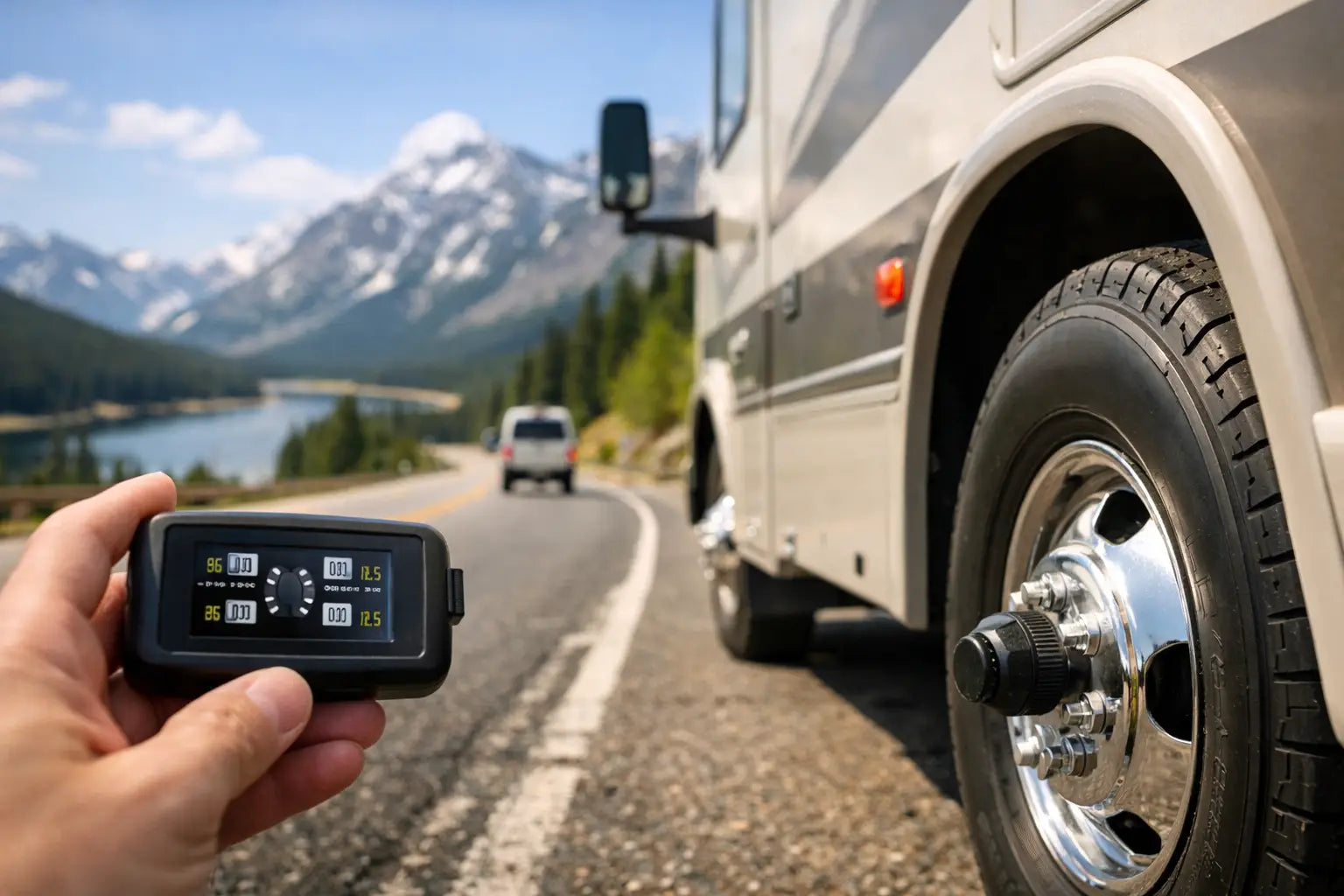

A tire problem rarely starts with a dramatic blowout. More often, it starts as a slow pressure loss on a hot interstate, a damaged valve stem after a fuel stop, or an overloaded trailer tire working harder than it should. The best rv tire monitors give you an early warning while there is still time to pull over safely, protect your rig, and keep the trip moving.
For motorhomes, travel trailers, fifth wheels, and tow vehicles, a tire pressure monitoring system (TPMS) is practical road-trip gear. It does not replace regular inspections or proper tire maintenance, but it gives you a live view of pressure and temperature that a walk-around cannot provide at 65 mph.
RV tires carry serious weight, spend long stretches in the sun, and can sit unused between trips. That combination makes pressure checks non-negotiable. Underinflation builds heat, affects handling, and can lead to tire failure. A sudden loss of pressure can damage a tire before you notice anything unusual from the driver's seat, especially on a trailer behind a large motorhome or pickup.
A quality TPMS places a sensor on each tire and sends its reading to a monitor in the cab. When a tire drops below or rises above your selected pressure range, heats up beyond a preset limit, or loses air quickly, the monitor sounds an alert. That warning is the main benefit. You can slow down, find a safe place to stop, and address a small issue before it becomes a ruined wheel well, damaged RV sidewall, or a trip-ending roadside repair.
The right system depends on your setup. A Class B camper with four tires needs something different from a diesel pusher towing a car. A long fifth-wheel combination may need a signal repeater, while a compact trailer may not. Buy for the rig you have now, but leave room to add sensors if your travel setup may grow.
The best RV tire monitors are not always the most expensive models. The best choice is the one that reads reliably across your full rig, gives alerts you can understand quickly, and makes routine checks easy rather than frustrating.
The TST 507 line is a familiar choice among frequent RV travelers because it is built around expandable sensor counts, configurable alerts, and a dedicated in-cab display. It is a strong fit for larger motorhomes, fifth wheels, and trailer combinations where you want to watch every tire, including a towed vehicle or spare.
Many TST kits are available with cap-style sensors, and some configurations offer flow-through sensors. Cap sensors are simple to install and remove, while flow-through designs can make adding air more convenient without taking off the sensor. The trade-off is that flow-through sensors are larger, so confirm they fit your wheel and valve-stem setup. For long rigs, choose a kit with a repeater or add one if signal strength is inconsistent.
TireMinder systems are popular with RV owners who want a straightforward display and clear alerts without turning setup into a weekend project. The i10 is commonly chosen for travel trailers, fifth wheels, and motorhomes because it can monitor multiple tires and is designed for RV use rather than just passenger vehicles.
Its strength is practical usability. A good monitor should let you see readings at a glance when you stop for fuel or settle in at camp. TireMinder kits also commonly include a signal booster for longer RV and trailer combinations. As with any system, verify the included sensor count and pressure range before ordering. The right kit should cover every rolling tire on your setup from day one.
EEZTire TPMS systems are a solid option for owners who want more control over their warning thresholds. The monitor lets users set high- and low-pressure parameters based on the recommended cold inflation pressure for their tires, rather than forcing a one-size-fits-all range.
That matters when you move between different vehicles or tire classes. A trailer with higher-pressure tires and a tow vehicle with lower-pressure tires should not be treated the same way. EEZTire systems are also offered in kits sized for everything from smaller campers to multi-axle trailers. Take time to program each sensor position accurately. A monitor is much more useful when the alert tells you exactly which tire needs attention.
GUTA TPMS kits are worth a look when you need broad coverage without paying for extras you will not use. Many kits support multiple sensors, come with a solar-assisted monitor, and include a repeater for stronger communication on longer rigs. This makes them a practical match for families outfitting a travel trailer or fifth wheel for regular weekend use.
Budget systems still need to clear a few non-negotiables: readable pressure and temperature data, adjustable alarms, replaceable sensor batteries, and a pressure range that matches your tires. Do not choose solely by the number of sensors in the box. A lower-cost system that loses signal at highway speed or cannot support your tire pressures is not a bargain.
Start with tire count. Include the motorhome or tow vehicle, every trailer tire, and any towed vehicle you want to monitor. A travel trailer behind a pickup may need eight sensors. A motorhome towing a vehicle can need ten or more. An expandable system gives you flexibility, but confirm the monitor can actually display the number of positions you need.
Next, check the pressure rating. Your system must support the normal operating range of your RV tires, not just the tires on your daily driver. Compare the monitor's supported range with the cold inflation pressure listed for your specific tires and load. Set alert thresholds according to your tire manufacturer's guidance and your RV's weight requirements.
Then consider sensor style. Cap sensors screw onto the valve stem and are the easiest option for most owners. They are compact, quick to install, and easy to move when replacing tires. Flow-through sensors let you add air without removing the sensor, which can save time on large rigs. They are usually bulkier, and some owners prefer cap sensors for their simplicity.
A signal repeater is another key feature. It boosts the connection between the sensors and the monitor, particularly on long fifth wheels, motorhomes with a towed vehicle, and rigs with metal construction that can interfere with signal. Even if a system appears to work without one in the driveway, a repeater adds confidence when you are moving down the road.
Finally, look at monitor power and readability. A solar-powered monitor can be convenient, but it should also have a reliable charging option. Choose a display you can read in changing light and an alert sound loud enough to cut through road noise. You should not need to squint at a tiny screen or hunt through menus during a fuel stop.
Install sensors on properly inflated, cold tires. Before programming the monitor, inspect valve stems, tighten caps, and make sure each tire is in good condition. A TPMS cannot fix a cracked sidewall, aging tire, loose lug nut, or worn suspension part. It simply helps you catch pressure and temperature changes earlier.
Label each sensor position carefully, then check the readings against a quality handheld tire gauge. A small difference is normal, but you want to confirm every sensor is communicating and assigned to the correct wheel. If your kit includes a repeater, mount it according to the manufacturer's directions in a protected location with dependable power.
Keep spare sensor batteries on hand for longer trips, along with your tire gauge, portable inflator, and basic roadside tools. That small kit turns a warning into a manageable stop instead of a stressful surprise.
When the monitor alarms, do not assume it is a false reading. Reduce speed smoothly, avoid abrupt steering or braking, and find a safe place to inspect the tire. A pressure rise can be normal as tires warm up, but an unusually high temperature or a rapid change deserves attention. The monitor gives you information. Your job is to use it before the issue gets bigger.
Before your next departure, set your cold tire pressures, walk the rig, and make sure every sensor is reporting. The miles ahead are more fun when your tires are one less thing to worry about.