Your Cart is Empty


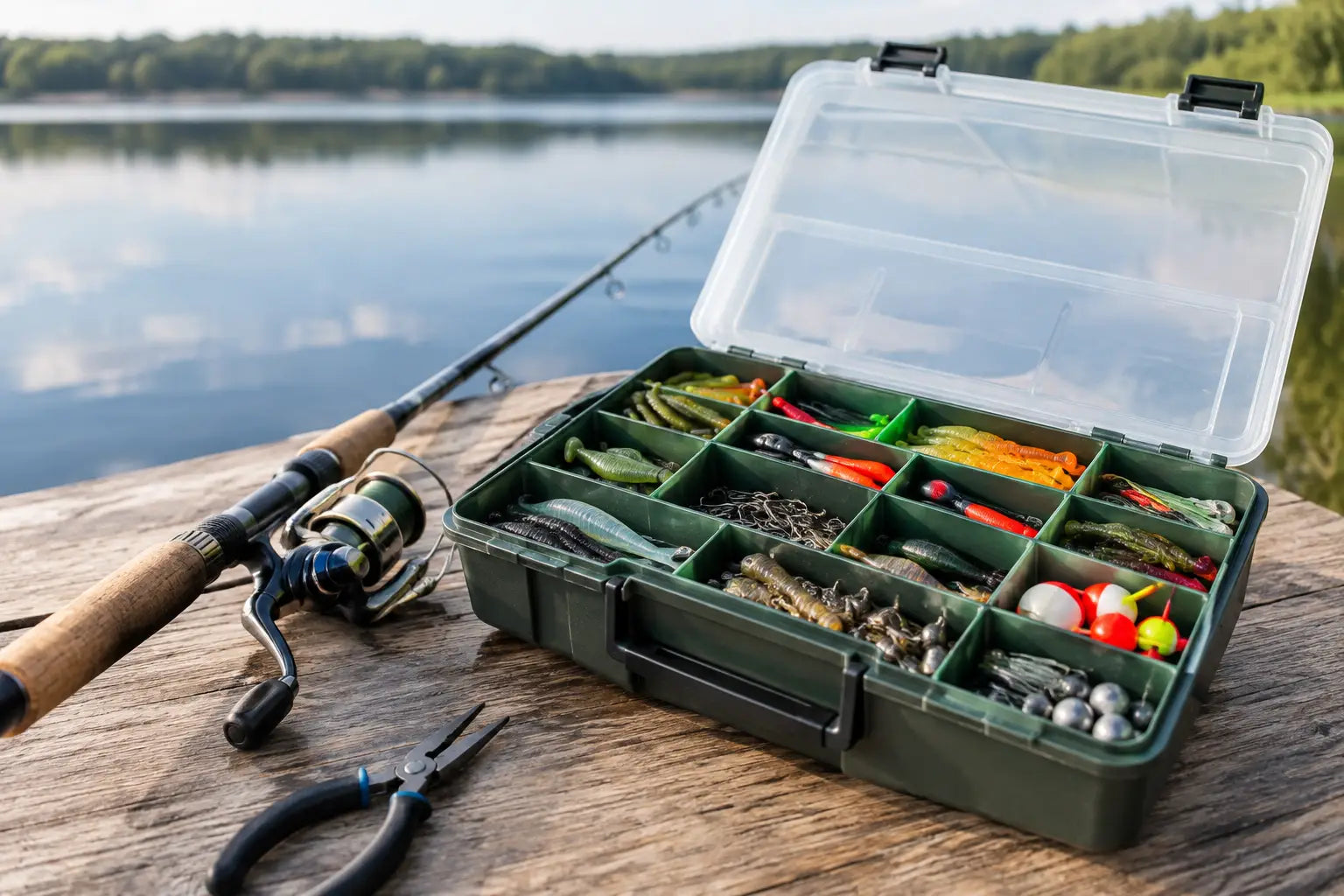

A good bite can turn quick, especially when fish are feeding around cover or the weather is changing. Knowing how to organize fishing tackle box gear means less time digging through tangled hooks and more time making the next cast. The goal is not to carry every lure you own. It is to pack the right tools, keep them protected, and find them without taking your eyes off the water.
Empty the box, bag, or storage system before you try to reorganize it. Lay everything out on a clean surface and separate usable gear from items that are rusty, bent, cracked, or simply no longer part of how you fish. A tackle box packed with worn-out baits and duplicate terminal tackle becomes heavy fast, and it makes good gear harder to find.
Sort the remaining tackle into broad groups first: hard baits, soft plastics, hooks, weights, line, tools, and fish-handling gear. From there, organize by the way you actually fish. A bass angler who spends weekends around shallow cover may want separate groups for jigs, worms, spinnerbaits, and topwater lures. An angler targeting panfish, trout, or saltwater species will need a different layout.
This is where many tackle boxes go wrong. They are organized by what looks neat at home, not by what is useful on the water. Build around your most common trips first, then leave room for specialty gear.
A traditional hard tackle box works well for anglers who want one grab-and-go kit for pond banks, docks, and short outings. It protects gear well and keeps essentials together. The trade-off is that fixed trays can become crowded, and larger lures may not fit cleanly.
For most anglers, adjustable utility boxes offer more flexibility. Movable dividers let you create compartments for crankbaits, terminal tackle, soft-plastic packs, or tools. Clear lids make it easier to see what is inside before you open a box, which is a major advantage when you carry several trays in a tackle backpack or boat compartment.
A tackle backpack or soft-sided bag is often the better choice for longer days because it can hold multiple utility boxes, extra line, rain gear, snacks, and a water bottle. It also keeps your hands free while walking a shoreline. If you fish from a boat, consider using several smaller boxes instead of one oversized container. You can bring only the trays that fit the day’s conditions and keep the rest protected at home.
Once you have the right storage setup, give every type of tackle a home. Keep categories consistent so you do not have to relearn your system before each trip.
Hard baits work best when arranged by style and running depth. Put topwater baits together, then shallow, mid-depth, and deep-diving plugs. Store jerkbaits separately from lipless crankbaits if you use both regularly. Leave enough space between treble-hook lures to prevent them from catching one another when the box gets bumped around.
Soft plastics need a little more care. Keeping them in their original bags helps preserve their shape, scent, and color. It also prevents different plastic formulas from melting together. Store bags upright in a larger compartment or dedicated soft-plastic binder, grouped by type such as worms, creature baits, swimbaits, and trailers. You do not need every color on every trip. Carry proven basics and add a few confidence colors for changing water conditions.
Use small, divided containers for terminal tackle. Hooks, bullet weights, split shot, swivels, snaps, beads, and jig heads should be separated by size. Labeling the lid or compartment is worth the few minutes it takes. When the wind picks up or the bite gets active, you will be glad you can grab a 3/0 worm hook or a 1/4-ounce weight immediately.
Keep tools in one reliable location. Pliers, line cutters, a hook remover, a measuring device, and a small first-aid kit should not float loose among lures. Sharp tools and hooks deserve their own secure compartment, both for safety and for protecting the rest of your gear.
Category-based storage is the foundation, but technique-based trays make packing much faster. Think of these as ready-to-go modules for the kinds of fishing you do most.
For example, a finesse tray might hold drop-shot hooks, small weights, finesse worms, jig heads, and a few compact soft swimbaits. A shallow-water bass tray could include frogs, spinnerbaits, swim jigs, creature baits, and pegged bullet weights. A trout tray may carry small spinners, spoons, hooks, split shot, and a few dependable artificial baits.
This approach is especially helpful if you fish different waters. You might keep a pond kit, a lake kit, and a river kit, then move the right boxes into your bag before leaving. Saltwater anglers can do the same with inshore and surf setups, while taking extra care to rinse tackle after use. It is easier to prepare for a trip when your gear is already arranged around a purpose.
Do not over-specialize if you are still learning. A beginner can get a lot done with one versatile tray built around local fish species, a few quality lures, and the right terminal tackle. Add specialty boxes as your confidence and fishing styles grow.
Access matters as much as sorting. Place your go-to lures, hooks, and weights in the top tray, front pocket, or most reachable utility box. Reserve lower compartments and rear pockets for backup gear, extra line, spare tools, and less-used seasonal baits.
Think about the order of your fishing routine. If you often start with a moving bait at first light, keep those lures easy to reach. If you switch to worms or jigs after the sun gets high, build that change into your layout. This small bit of planning keeps you moving instead of unpacking half your bag every time conditions shift.
It also helps to keep a small “quick change” compartment for the basics you reach for all day: a few hooks, several weights, snaps if you use them, and a compact pair of pliers. That compartment should stay simple. Filling it with too many odds and ends defeats the purpose.
Organization will not help much if moisture turns your hooks rusty before the next trip. Let wet lures and tools air-dry before sealing them in a box. If rain or spray gets into your gear, open the containers when you get home and dry everything out. Small moisture-absorbing packets can help in storage, but they are not a substitute for drying wet tackle.
Avoid leaving soft plastics, line, and lure boxes in extreme heat for long periods. A hot truck bed or vehicle can warp plastic trays, weaken line, and damage soft baits. Keep sharp hooks covered or secured in compartments designed to prevent tangles. Hook bonnets can be useful for larger treble-hook baits, especially when they share space with other lures.
For saltwater fishing, rinse rods, reels, tools, and tackle with fresh water after each trip. Salt finds its way into hinges, split rings, hook points, and tool joints. A quick rinse and dry-down protects the gear you already paid for.
A tackle box is not a one-time project. Spend five to ten minutes checking it before each outing. Replace missing hooks and weights, remove damaged lures, check for dull hook points, and refill the baits you used last time. Match your selection to the season, target species, water clarity, and the weather forecast.
Keep a small note on your phone or in a fishing journal about what worked. Over time, you will see which baits earn a permanent spot and which ones only add weight. That makes your setup leaner, more personal, and more effective.
A well-organized tackle box should make you feel ready before the boat launches or your boots hit the bank. Pack with purpose, keep your best gear within reach, and leave enough room for the surprise that makes fishing worth the trip.