Your Cart is Empty



A trail can change fast. One minute your truck is climbing a rutted forest road; the next, a tire drops into soft sand, the frame settles into mud, and throttle only makes the hole deeper. This off road recovery guide helps you slow down, assess the situation, use the right gear, and get moving without turning a manageable setback into vehicle damage or an injury.
Recovery is not about yanking a vehicle free as quickly as possible. It is about controlling force, protecting people, and giving the tires the best possible chance to regain traction. Pack for the conditions you expect, but know how to use every piece before the trailhead.
The first move is not the gas pedal, a winch remote, or a recovery strap. Stop. Set the parking brake if the vehicle is stable, shift into park or neutral as appropriate for the task, and have everyone step out to inspect the scene. Passengers and bystanders should stand well clear of the recovery path.
Look for the reason the vehicle stopped moving. Are the tires spinning on loose sand? Is the differential, skid plate, or frame sitting on a rock or packed mud? Is one wheel hanging in the air? Is the route ahead actually safe, or will a successful pull simply put the vehicle into a worse spot?
Walk the intended exit line. Favor firm, level ground whenever possible, and plan a straight pull. A severe side pull can stress recovery points, recovery gear, and steering components. If the vehicle is high-centered, remove packed material from under the tires and chassis before applying force. A small folding shovel often saves more time than a powerful winch.
Check the vehicle before continuing. A damaged tire, leaking fluid, bent steering component, or loose bumper can change the plan. If a vehicle has rolled, is partly submerged, or has occupants with possible injuries, treat it as an emergency rather than a routine trail recovery.
Recovery gear works as a system. Buying a heavy-duty strap is not enough if your vehicle lacks rated attachment points or you do not have a safe anchor. Choose gear based on your vehicle's gross vehicle weight rating, expected terrain, and the type of recovery you are likely to perform. Mud, snow, deep sand, rocky trails, and remote hunting roads create different demands.
A practical kit should include these core items:
Your attachment points matter as much as the gear between them. Use factory-rated recovery points or properly engineered aftermarket points mounted to the frame. Never attach a strap or winch line to a trailer ball, suspension component, bumper skin, or random tie-down loop. Trailer balls can shear under recovery force and become dangerous projectiles.
The safest recovery is often the one that needs the least force. Begin by reducing resistance and improving traction. Clear mud, sand, snow, or rocks from in front of the drive tires. Straighten the wheels, select the proper four-wheel-drive mode if equipped, and ease out with smooth throttle. Spinning tires digs holes, overheats components, and polishes mud into a slick surface.
Traction boards are especially useful when the vehicle is not deeply high-centered. Dig a shallow ramp in front of each drive tire, slide the boards as far under the tread as possible, and drive gently onto them. Keep people away from the boards while the vehicle moves. A board thrown by a spinning tire can cause injury.
Lowering tire pressure can enlarge the contact patch and make a major difference in sand, snow, and certain loose trails. The right pressure depends on tire construction, vehicle weight, terrain, and the manufacturer's guidance. Make modest reductions, avoid sharp steering inputs at low pressure, and reinflate before returning to higher-speed pavement. Carrying an air compressor turns this technique into a practical option instead of a gamble.
If a vehicle is high-centered, solve that problem first. Dig under the frame or skid plates, build a ramp with traction boards or safe natural material, and remove rocks that are holding weight. Pulling hard while the chassis is sitting on an obstacle can damage underbody components and may not move the vehicle at all.
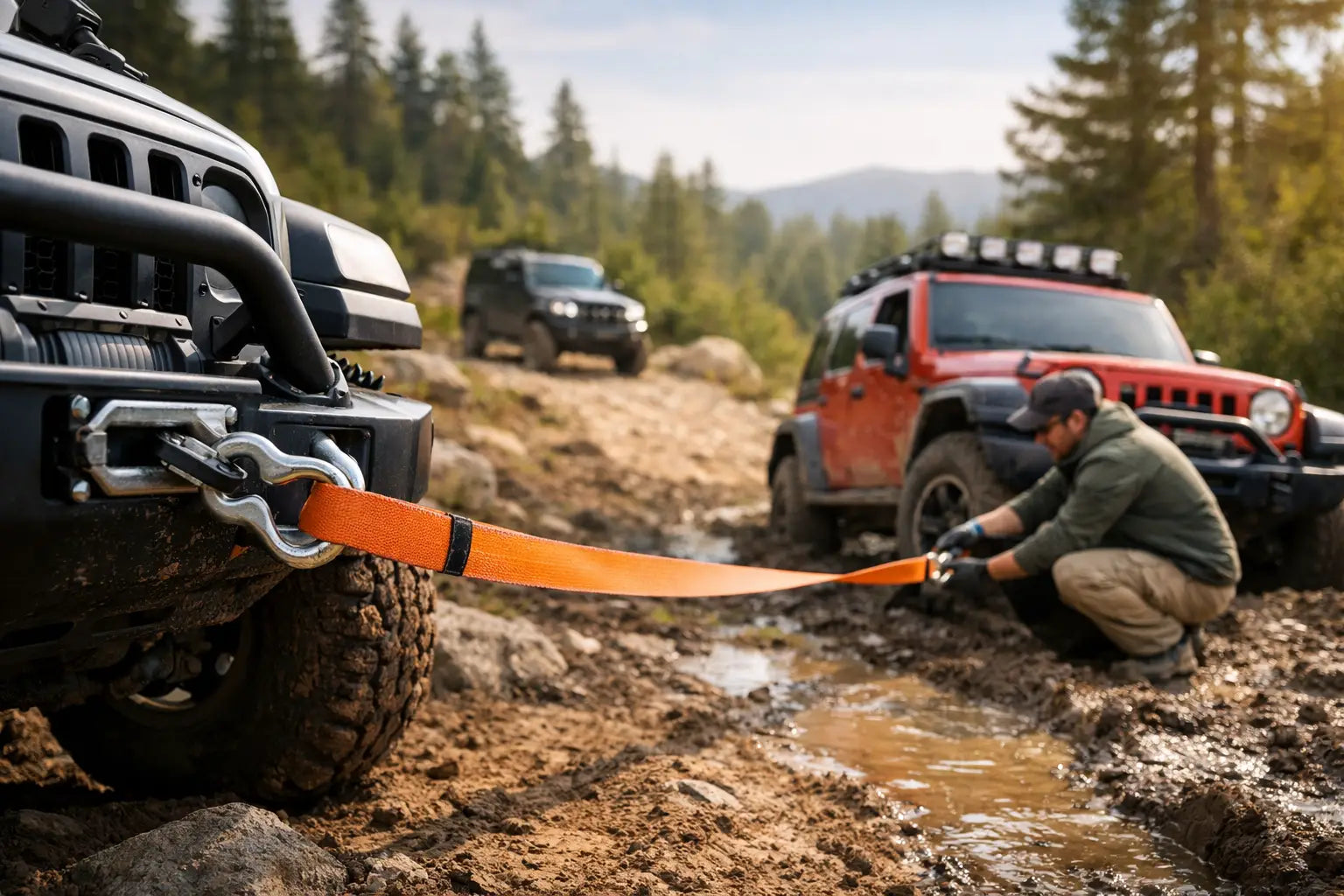
A recovery strap connects a stuck vehicle to a recovery vehicle for a controlled pull. Both vehicles should be aligned as straight as terrain allows, using rated recovery points at each end. Before starting, agree on simple signals or use radios. The driver of the stuck vehicle should know when to steer, when to apply gentle throttle, and when to stop.
Take up slack slowly. A gentle, steady pull is the preferred method because it is easier on both vehicles and the gear. Do not use a running start with a standard tow or recovery strap. That shock load can exceed the ratings of straps, shackles, mounts, and vehicle components.
Kinetic recovery ropes are designed to stretch and can help in some situations, but they demand more training, clearance, and discipline than a steady pull. They are not interchangeable with tow straps or winch extensions. If you are new to recovery, use low-force methods first and get hands-on instruction before attempting a dynamic pull.
Keep everyone outside the danger zone. No one should stand near the strap, between vehicles, or in line with a loaded connection. Place a recovery damper or heavy blanket over a line when appropriate, but do not treat it as a guarantee of safety. The real protection comes from rated gear, sound attachment points, controlled force, and distance.
A vehicle-mounted winch can be a reliable self-recovery tool, especially when traveling alone, but it introduces serious force and rigging risks. Inspect the synthetic rope or wire rope, hook, fairlead, remote, and mounting hardware before every trip. Use a tree saver strap around a healthy tree rather than wrapping winch line directly around bark or a trunk.
Choose an anchor that is strong, stable, and aligned with the pull. A large tree, properly installed ground anchor, or another vehicle on firm ground may work, depending on the terrain. Do not assume a small tree, fence post, or loose boulder will hold. If the anchor fails, the entire setup can move suddenly.
Winch slowly and stop often. Watch the line, anchor, vehicle position, and tire path. If the line begins to bunch unevenly on the drum, the angle becomes extreme, or the vehicle will not move, pause and reset. A snatch block can change pull direction or increase mechanical advantage, but it also increases rigging complexity. Use one only if you understand the load ratings and setup.
Never step over a loaded winch line, straddle it, or touch the line while it is under tension. Keep the engine running when winching if safe to do so, since winches draw substantial electrical power. Once free, disconnect methodically, inspect every item, and rewind the line under light tension according to the winch manufacturer's instructions.
Good judgment is a recovery tool. Stop if the recovery point is damaged, the vehicle is unstable, the pull requires an unsafe angle, the terrain is getting worse, or you cannot establish a reliable anchor. The same applies when water is rising, weather is deteriorating, or daylight is fading without adequate lighting and communication.
Before remote trips, share your route, travel with another capable vehicle when possible, and carry reliable navigation and communication equipment. A satellite communicator can be a smarter investment than trying to force a bad recovery miles from cell service. Experienced off-road clubs, trail guides, and professional recovery services can also be the right call when the stakes are high.
Practice your setup in a controlled area before you need it in deep mud or cold rain. Build a kit that matches your vehicle, inspect it after every use, and replace damaged gear without hesitation. Outdoor Up is built around that kind of practical readiness: gear up before the trail, drive within your limits, and venture further with a plan for getting home.