Your Cart is Empty


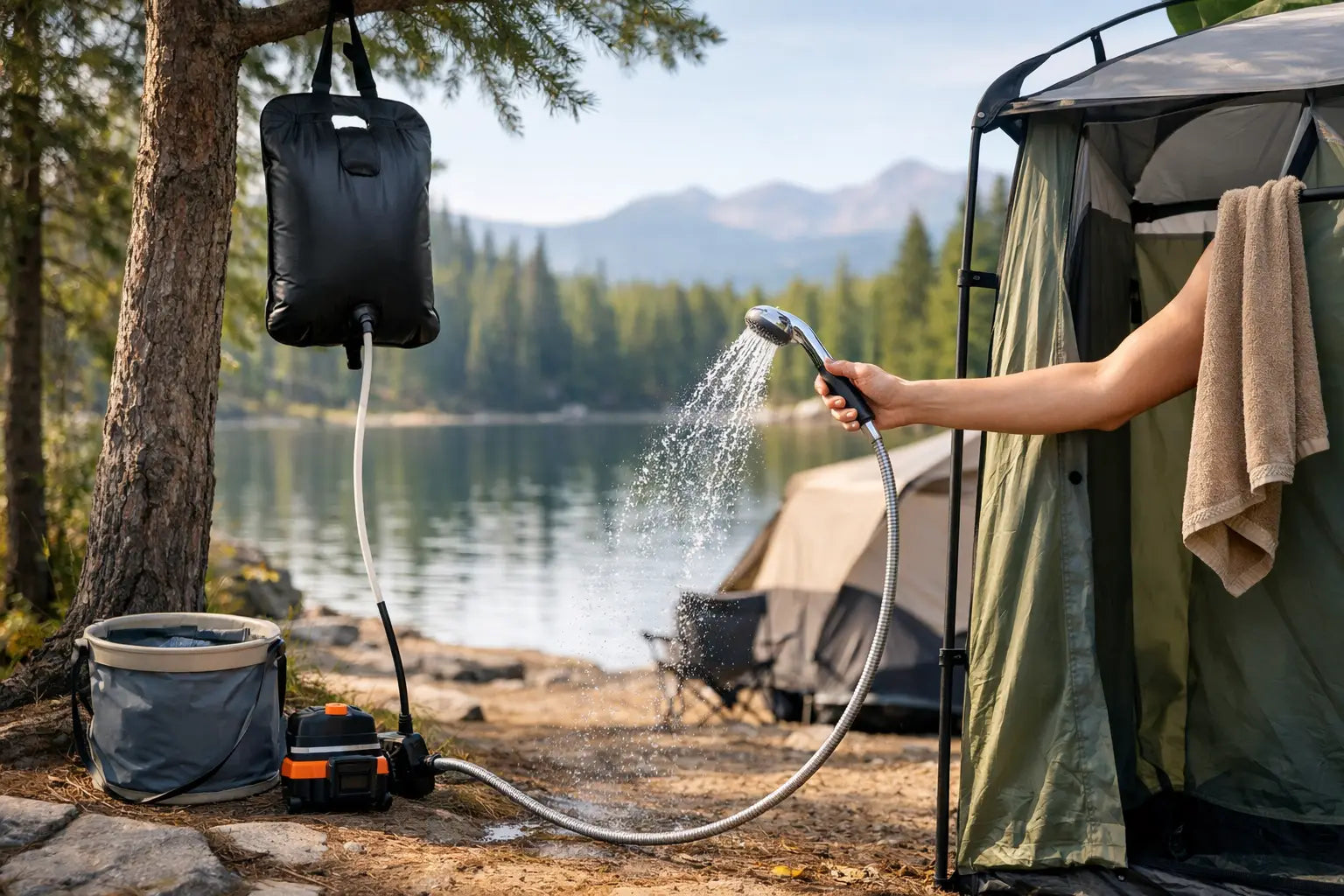

A shower after a dusty trail, a long day on the lake, or a muddy morning at camp can reset the whole trip. Learning how to set up a portable camp shower is less about building a luxury bathroom and more about choosing a safe spot, managing water, and keeping the setup simple enough to use every day.
The best camp shower setup depends on your campsite, weather, group size, and how far you are from a water source. A solo overnighter may only need a compact solar bag. Families, RV campers, and base-camp crews usually get more comfort from a pressurized shower or a 12-volt pump system.
Start with the shower style, because it determines nearly every other part of your setup. Gravity-fed solar showers are affordable, quiet, and easy to pack. Fill the bag, place it in direct sun, hang it high, and let gravity do the work. They are a solid choice for warm-weather camping, but water pressure is modest and a cloudy day can leave you with a cold rinse.
Pressurized showers use a hand pump, foot pump, or built-in battery to deliver a stronger stream. They are easier to use when there is no tree branch or rack available for hanging a bag. Some models can hold warm water, while others are designed to draw from a separate water container. These systems take more space, but they are often worth it for kids, longer trips, or anyone who wants a real rinse instead of a trickle.
A 12-volt shower pump is a practical option for vehicle camping, RV travel, boating, and established campsites. Drop the pump into a water jug, connect it to a vehicle power source or battery, and use the handheld sprayer. It offers dependable pressure, though it adds cords, parts, and battery planning to your camp routine.
Before leaving home, test every hose connection, nozzle, valve, and pump. A shower that leaks in the driveway is an easy fix. A shower that leaks after sunset at a remote site is a problem you did not need to pack.
Set up your shower on level ground where water can soak in without running toward your tent, fire ring, cooking area, or neighboring campsite. Avoid low spots that turn into puddles. A slightly open, sunny area is ideal for a solar shower, while a shady site may be more comfortable once the water is heated.
Privacy matters, especially in busy campgrounds. A pop-up privacy tent makes the setup more comfortable and gives you a dry place to keep your towel, clean clothes, and toiletries. If you do not have a privacy shelter, use the side of an RV, a screen room, or a naturally sheltered spot where permitted. Always follow campground rules and respect the space around other campers.
Keep your shower well away from lakes, streams, and shorelines. Even biodegradable soap should not go directly into natural water. Many public lands and campgrounds have specific rules for gray water disposal, so check local regulations before you go. At dispersed sites, use water sparingly and choose a location where runoff will not reach a water source.
If the ground is muddy, place a camp mat, rubber mat, or small raised platform under your feet. It keeps your toes out of the muck and makes it easier to stay balanced while rinsing. For RV or vehicle camping, a collapsible basin can help collect gray water when campground rules require it.
A gravity shower needs elevation to create usable pressure. Hang it from a sturdy tree branch, vehicle roof rack, awning frame rated for the load, or a dedicated shower stand. The shower head should sit above your head with enough hose length to move comfortably.
Do not hang a full water bag from a weak branch, lightweight tent pole, or unstable hook. Water is heavier than it looks. A five-gallon bag can weigh more than 40 pounds, and a falling shower can damage gear or injure someone. When in doubt, fill a smaller bag or use a ground-based pressurized system instead.
Use clean water from a reliable campground spigot, potable water container, or properly treated source. A camp shower is not a drinking-water system, but dirty water can still irritate skin, clog filters and nozzles, and leave your gear smelling rough.
For solar shower bags, fill the bag early in the day and lay or hang it in direct sunlight. Dark-colored bags absorb heat quickly, especially on clear summer days. Turn or reposition the bag occasionally if one side stays shaded. On a hot afternoon, check the temperature before stepping under it. Solar-heated water can become surprisingly hot.
For faster heating, mix heated water with cool water in a separate container before filling the shower reservoir. Never pour boiling water into a shower bag unless the manufacturer specifically says it is safe. Excessive heat can damage seams, hoses, and plastic fittings. It can also turn a refreshing camp shower into a painful mistake.
A simple rule works well: test the water on your wrist first, then start with a short rinse. Conditions change quickly outdoors. Water that felt perfect at 3 p.m. may feel cold by the time everyone returns from fishing at dusk.
A portable shower rewards good timing. Wet down, turn the water off, soap up, then rinse. This approach uses far less water than letting the shower run, and it gives a modest reservoir enough capacity for several people.
Choose a low-flow shower head or nozzle with a pause valve if your system does not already have one. The pause valve is one of the most useful small upgrades for camp hygiene because it reduces waste without making the shower feel weak. Bring a microfiber camp towel, too. It dries quickly, packs small, and does not stay damp in the back of the truck for days.
Keep soap, shampoo, and washcloths in a small hanging toiletry organizer or mesh bag inside the privacy tent. That prevents the familiar scramble of trying to find a bottle with wet hands while the water drains away. Use biodegradable products when appropriate, but remember that biodegradable does not mean safe to use directly beside a creek or lake.
For groups, set a shower order and refill plan before everyone gets dirty. One person can fill and warm the next batch of water while another showers. That small bit of camp organization keeps the evening moving, especially when daylight is limited.
When you set up a portable camp shower, plan for where the used water goes before you turn on the nozzle. For basic campsite showers, use minimal soap and disperse gray water according to local land-management guidance. At campgrounds or RV parks, use designated gray-water drains when available. Never dump soapy water into a storm drain, creek, lake, or marina.
After the last shower, empty the reservoir completely and open valves so hoses can drain. Wipe down the shower bag or pump body, then let it air dry before packing it away. Moisture trapped in a hose or bag can lead to mildew, unpleasant odors, and clogged components.
At home, rinse the system with clean water and inspect seals, caps, and hose fittings before storing it. If your shower uses batteries, remove them for long-term storage. Keep the unit somewhere protected from freezing temperatures, since trapped water can crack fittings and damage pumps.
A portable camp shower is one of those pieces of gear that earns its space fast. Set it up with enough privacy, safe drainage, and a dependable water plan, and the end of every hard day outside feels a whole lot better. Gear up for the next trip with comfort in mind, then stay out longer and enjoy every mile.