Your Cart is Empty


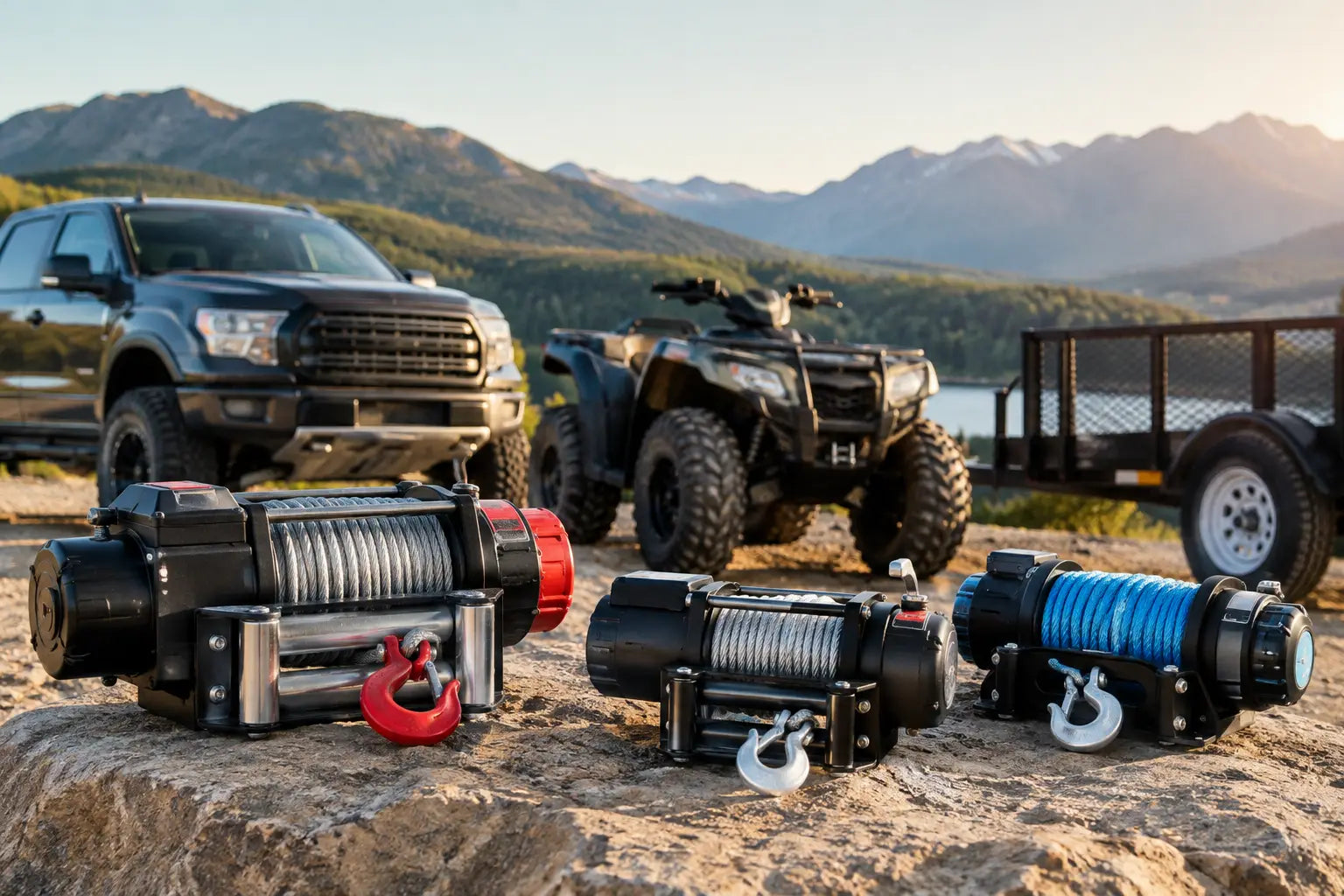

A winch can get a truck out of mud, pull an ATV up a steep trail, load equipment onto a trailer, or help recover a boat where ramps get slick. But buying the biggest model on the shelf is not always the right call. This winch selection guide helps you choose the pulling power, line type, power source, and mounting setup that fit the work you actually do.
The right winch is one you can trust when the weather turns, the trail gets rough, or the load refuses to move. Start with the vehicle or equipment, then build the system around real-world conditions.
Before comparing capacities, decide what you expect the winch to do most often. A trail recovery winch needs enough reserve power for a stuck vehicle and the uneven loads that come with mud, rocks, snow, and steep terrain. A utility trailer winch may spend its life pulling rolling equipment up ramps. An ATV winch may handle plow work, light recovery, and occasional trail obstacles.
Those jobs create different demands. A truck recovery winch needs high line pull, a strong mounting system, and dependable electrical power. A trailer winch may benefit from a wired remote and a setup that keeps the line aligned with the load. An ATV or UTV winch should be compact, weather-resistant, and appropriately sized so it does not overload the machine's electrical system.
Think beyond the best-case scenario. A vehicle rarely gets stuck on dry, level ground with a straight pull. Soft terrain, slopes, and a buried tire can make recovery much harder than the vehicle's curb weight suggests.
Winch capacity is usually listed as the maximum rated line pull on the first layer of rope or cable around the drum. As more line wraps onto the drum, the effective pulling power drops. That is why a winch should have a meaningful margin above the weight of what you plan to pull.
For truck and SUV self-recovery, a common starting point is a winch rated at least 1.5 times the vehicle's gross vehicle weight rating. For example, a 6,000-pound SUV with a 7,000-pound GVWR is generally better served by a 10,000- to 12,000-pound winch than an 8,000-pound model. The extra capacity helps account for terrain resistance, suction from mud, slopes, and the loss of pulling power on outer rope layers.
ATVs and side-by-sides need a similar mindset, though their winch ratings are much lower. A 2,500- to 3,500-pound winch works well for many ATVs, while larger UTVs and frequent recovery use may justify 4,500 pounds or more. If you use a plow, check the plow manufacturer's recommendation as well.
For trailers, calculate the actual rolling load, ramp angle, and surface condition. Pulling a wheeled machine onto a level trailer takes far less force than dragging a disabled vehicle with locked wheels up wet ramps. A 3,500-pound trailer winch can be plenty for one setup and undersized for another. When in doubt, size up within the limits of your trailer's structure, battery capacity, and mounting location.
Never treat a winch's rated pull as a lifting rating. Standard vehicle winches are designed for pulling, not suspending loads overhead or lifting people.
Most off-road and utility winches are electric, powered by a vehicle battery. They are convenient, widely available, and well suited to trucks, Jeeps, ATVs, UTVs, trailers, and boat applications. However, they draw serious current under load. A weak battery, undersized wiring, loose terminals, or a failing charging system can turn a simple recovery into a long wait.
For truck-mounted electric winches, confirm that your battery, alternator, cables, and connections are ready for high-demand use. If you run lights, a refrigerator, air compressor, or other accessories, battery health matters even more. Keep the engine running during recovery when safe to do so, helping the charging system support the load.
Hydraulic winches are typically found on work vehicles and specialized rigs. They can offer extended duty cycles, but installation is more involved and depends on the vehicle's hydraulic system. For most recreational buyers, an electric winch delivers the best balance of cost, simplicity, and capability.
Trailer winches can also run from a dedicated trailer battery. This keeps the setup flexible, but the battery must be maintained and charged before travel. A battery that sits all season without attention may not have enough reserve when you need it most.
The line on your winch affects handling, maintenance, weight, and recovery safety. Steel wire rope remains a practical choice for tough utility work. It resists abrasion well and can tolerate heat better than synthetic rope, which can matter around rocky ground, rough equipment, or repeated hard pulls. It is also usually less expensive.
Its trade-off is weight and handling. Steel cable can develop sharp broken strands, known as burrs or fishhooks, and should be handled with gloves. It stores more energy under tension than synthetic rope, so using a recovery damper remains a smart safety step.
Synthetic rope is lighter, easier to handle, and popular for trail recovery. It floats, which can be useful around water, and stores less kinetic energy if it fails. It does require more care. Dirt, sand, UV exposure, abrasion, and heat can shorten its service life. Inspect it after hard use, keep it clean, and protect it from sharp edges with a chafe guard or recovery sleeve.
Your fairlead must match your line choice. Steel cable generally uses roller fairleads, while synthetic rope works best with a smooth aluminum hawse fairlead. Mixing the wrong components can damage the rope or reduce its service life.
A winch is only as secure as the mount behind it. A properly rated winch plate, bumper mount, receiver mount, or trailer mounting plate must be designed for both the winch and the forces it will see under load. Avoid relying on thin sheet metal, light-duty brackets, or hardware that is not rated for recovery use.
On a truck or SUV, check the winch dimensions, bolt pattern, control box placement, fairlead opening, and bumper clearance before buying. Some full-size winches fit easily behind an aftermarket bumper but will not fit a stock bumper without a compatible mounting system.
Receiver-mounted winches are flexible because they can move between vehicles or be positioned at the front or rear receiver. That convenience comes with trade-offs: they are heavy to carry, more exposed to theft and weather, and still require a receiver and wiring setup rated for the work.
For trailers, keep the pull as straight as possible. A severe side pull can stack rope unevenly on the drum and put extra stress on the fairlead, line, and mount. If your loading setup requires frequent angled pulls, a snatch block or a better anchor position may make the job safer.
The winch is one part of the system. A few well-chosen accessories make it more useful and reduce avoidable risk. Carry properly rated recovery straps or tree saver straps, soft shackles or bow shackles, a snatch block, gloves, and a line damper. Use recovery points designed for pulling loads, not a trailer ball, thin bumper loop, or random suspension component.
A snatch block can change the direction of a pull or create a double-line pull. Doubling the line can increase pulling force while reducing strain on the winch, though it also slows the recovery and requires a strong anchor. This is a valuable option when you are deep in mud, working uphill, or pulling near the limits of the winch.
Remote controls matter, too. Wired remotes are simple and dependable, while wireless remotes let you stand farther from the vehicle and better observe the line. Whichever style you choose, keep people clear of the recovery path and never step over a tensioned line.
A smart winch selection guide looks beyond maximum capacity. Compare gear train design, motor power, line speed, amp draw, weather sealing, remote style, and duty cycle. A fast no-load line speed can look impressive, but loaded line speed and heat management matter more during real recovery work.
Also check the warranty and availability of replacement parts such as remotes, solenoids, rope, hooks, and fairleads. Outdoor gear earns its value over repeated trips, not just on installation day. A serviceable winch with readily available components can be the better long-term buy.
Run the winch periodically, even if you have not used it on the trail. Check battery terminals, wiring, mounting bolts, rope or cable condition, hook latch, and remote operation. Spool the line back onto the drum under light tension so it lays neatly instead of bunching on one side.
A winch is emergency gear, work gear, and adventure gear all at once. Choose one with enough capacity for your real loads, install it on a properly rated mount, and practice using it before you are axle-deep in mud or stuck at the ramp. Gear up with a plan, and your next recovery can stay a manageable setback instead of ending the day.