Your Cart is Empty



A cold morning at camp is not the time to discover your stove is too slow, too bulky, or too finicky in the wind. The best compact camp stoves earn their space in your pack by firing up fast, packing down small, and giving you enough control to make a real meal instead of settling for another lukewarm snack.
Compact does not mean one-size-fits-all. A solo hiker boiling water for coffee needs something different than a couple cooking chili at a lakeside campsite. Start with the way you travel, the meals you actually want to make, and how much room you can give up in your gear bin or backpack.
A compact stove should make camp easier, not add another chore to the setup. Size matters, but dependable performance matters more. The right stove brings water to a boil without wasting fuel, stays manageable when weather turns, and works with the pots and pans you plan to use.
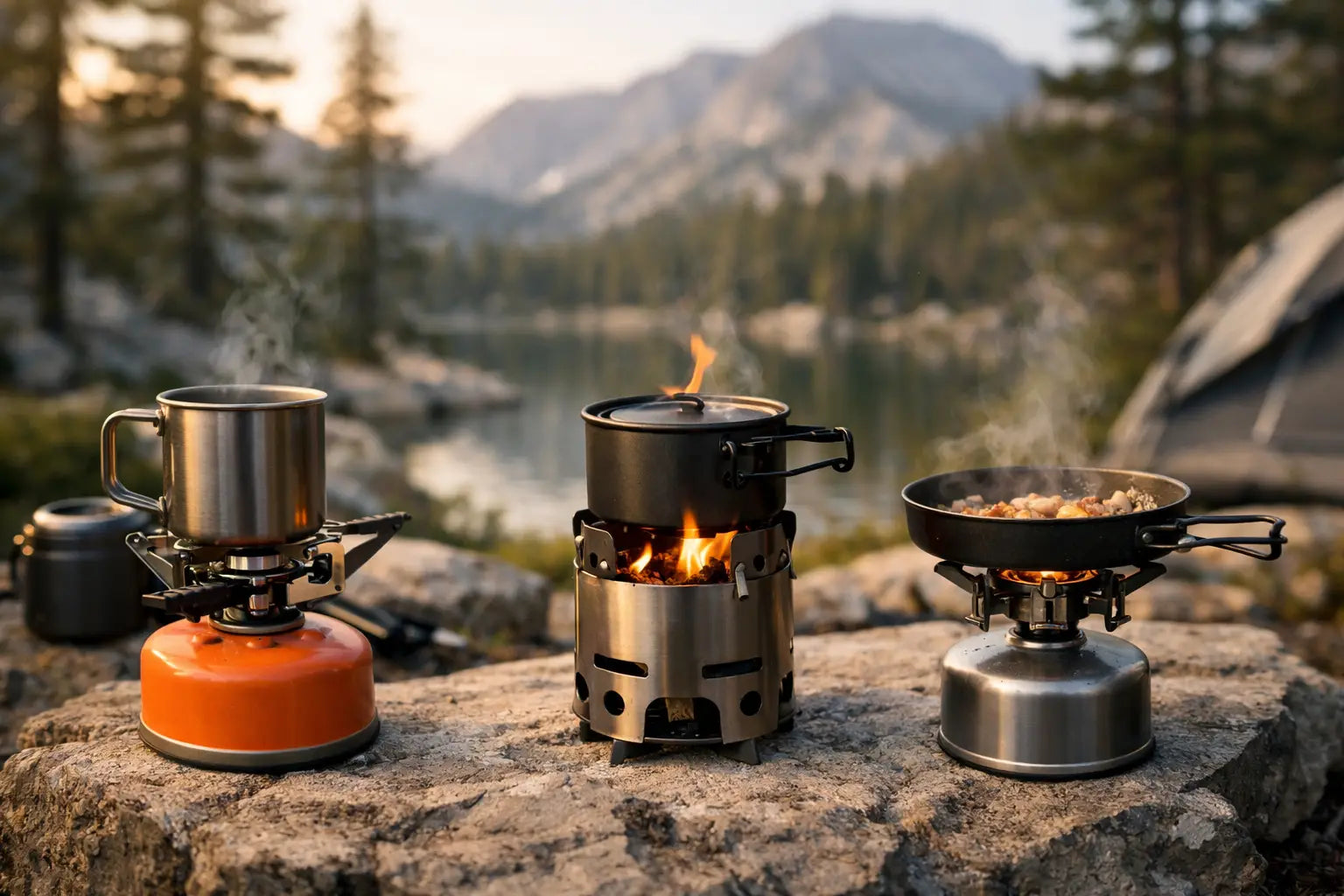
For most campers, the key decision comes down to fuel type. Canister stoves are popular because they are quick, clean, and simple to operate. Screw on the fuel canister, open the valve, ignite, and cook. They are an excellent fit for overnights, weekend hikes, and car-camping trips where fast setup is the priority.
Liquid-fuel stoves take more effort to operate, but they can be a smart choice for longer trips, colder weather, and remote destinations where standard fuel canisters may be hard to find. Some multi-fuel models can run on more than one type of liquid fuel, giving serious travelers more flexibility. The trade-off is extra weight, maintenance, and a learning curve.
For minimalists, ultralight alcohol stoves and solid-fuel options pack extremely small. They are quiet and simple, but boiling takes longer, flame control is limited, and their performance can suffer in wind or cold conditions. They make sense when every ounce counts and your meal plan is built around boiling water.
A small upright canister stove is often the easiest starting point. These stoves typically thread directly onto the fuel canister and can fit inside a cook pot with a lighter and a small fuel supply. They are ideal for dehydrated meals, oatmeal, coffee, and simple one-pot dinners.
Look for pot supports that feel stable with your cookware. The smallest stove is not always the best pick if your pot sits high above the flame or wobbles when full. A slightly wider burner head can also distribute heat more evenly, reducing scorched spots on small pans.
If you are hiking above tree line or expect exposed campsites, bring a windscreen only if it is designed for your stove setup. A windscreen placed too close to a canister can trap heat and create a safety hazard. Often, choosing a protected cooking spot and using your pack or natural terrain as a windbreak is the safer move.
When your vehicle carries the load, compact can mean portable rather than ultralight. A small tabletop propane stove with two burners gives you far more meal options than a single backpacking burner. You can heat coffee on one side while cooking eggs, fish, or a skillet breakfast on the other.
These stoves take up more room than a canister setup, but they reward campers who enjoy cooking at camp. Look for a folding lid or wind guards, reliable ignition, adjustable flame control, and a cooking surface that fits the pans you already own. A compact two-burner stove is often the sweet spot for couples, small families, and fishing weekends.
For larger groups, a compact stove still needs enough output and surface area to keep everyone fed. A low, wide stove with a remote fuel connection can provide better stability for bigger pots than an upright canister model. This matters when you are boiling water for several people or cooking a pot of stew after a long day on the trail.
Do not choose based on maximum BTU numbers alone. High output can boil water quickly, but it can also burn fuel fast and make low-and-slow cooking harder. A stove with dependable simmer control is more useful when meals go beyond freeze-dried pouches.
Fuel is part of the stove system, so consider availability before you leave home. Isobutane-propane canisters are convenient and widely used, but they do not perform equally in every condition. As temperatures drop, pressure inside the canister falls and stove output can weaken. Keeping a canister warm in a jacket pocket before cooking can help, but do not place it near open flame or excessive heat.
Propane performs well in moderate conditions and is easy to find for car camping. The downside is bulk. A one-pound propane cylinder is dependable for a weekend camp kitchen, but it is not something most backpackers want to carry for miles.
White gas and other liquid fuels can be more dependable in cold weather, especially for winter camping. They also require more attention. You may need to prime the stove, monitor seals, and handle fuel carefully. If your trips are mostly fair-weather weekends, a canister or propane stove is usually the simpler choice.
Wind is another performance test that gets overlooked in product descriptions. Even a powerful burner wastes fuel when the flame is blown sideways. A stove with a burner head close to the pot, built-in wind protection, or a lower-profile design will generally cook more efficiently in breezy conditions. Set up on a stable, level surface and keep the stove clear of dry grass, tent fabric, and loose gear.
A compact stove and oversized cookware are a frustrating combination. Before buying, check the manufacturer’s recommended pot diameter and weight limits. Small upright stoves are usually made for lightweight pots, while a low-profile camp stove can handle a heavier skillet or larger Dutch oven-style pot.
Think about what goes into your cook kit. If you mostly boil water, a compact pot with a lid, folding handle, and insulated mug may be all you need. If you want to cook fresh-caught fish, pancakes, or campsite tacos, bring a pan with a stable base and choose a stove with enough burner control to avoid hot spots.
Nested gear saves valuable space. A stove, lighter, small utensil, and scrub pad can often ride inside your pot. Store fuel separately and make sure the stove is cool and clean before packing it away. This small routine keeps food residue from building up around the burner and helps your gear stay ready for the next trip.
Piezo ignition is convenient, especially when your hands are cold or you are setting up in low light. Still, bring a backup lighter or waterproof matches. Igniters can fail, and a stove without a backup ignition plan is not fully prepared.
A built-in regulator can help some canister stoves maintain steadier output as fuel levels drop or temperatures cool. Fine flame adjustment is just as valuable if you cook more than water. Being able to simmer sauce, warm soup, or cook eggs without scorching the pan turns a basic camp meal into a better one.
Stability deserves equal attention. Look for broad pot supports, a low center of gravity, and a flat area for cooking. If you use an upright canister stove, a canister stand can add stability on uneven ground. Never cook inside a tent, vehicle, RV, or enclosed shelter. Carbon monoxide and fire risks are real, even when weather makes indoor cooking tempting.
The best compact camp stove is the one that fits your trips without asking you to compromise on every meal. For quick solo overnights, keep it light and simple with a small canister stove and nesting pot. For campground comfort, a portable two-burner propane stove gives you the freedom to cook familiar meals. For cold-weather or extended travel, consider the added capability of a liquid-fuel system if you are willing to learn its operation.
Gear Up for Better Adventures by testing your stove at home before departure. Boil water, adjust the flame, check how your pot sits, and learn how much fuel a typical meal uses. When camp is dark, windy, and hungry, that little bit of practice will feel like the best piece of gear you packed.