Your Cart is Empty



A cooler can be the difference between a cold drink at camp and a soggy bag of groceries by Saturday afternoon. The right choice is not always the biggest or most expensive one. This cooler comparison focuses on how different cooler styles perform on real camping trips, fishing days, boat rides, tailgates, and long road miles.
Start with the trip you are actually taking. A compact soft cooler makes sense for an afternoon at the lake. A hard-sided cooler with serious insulation earns its space when you are stocking a campsite for a long weekend. If you are traveling in an RV or staying off-grid for days, an electric cooler may be the better call.
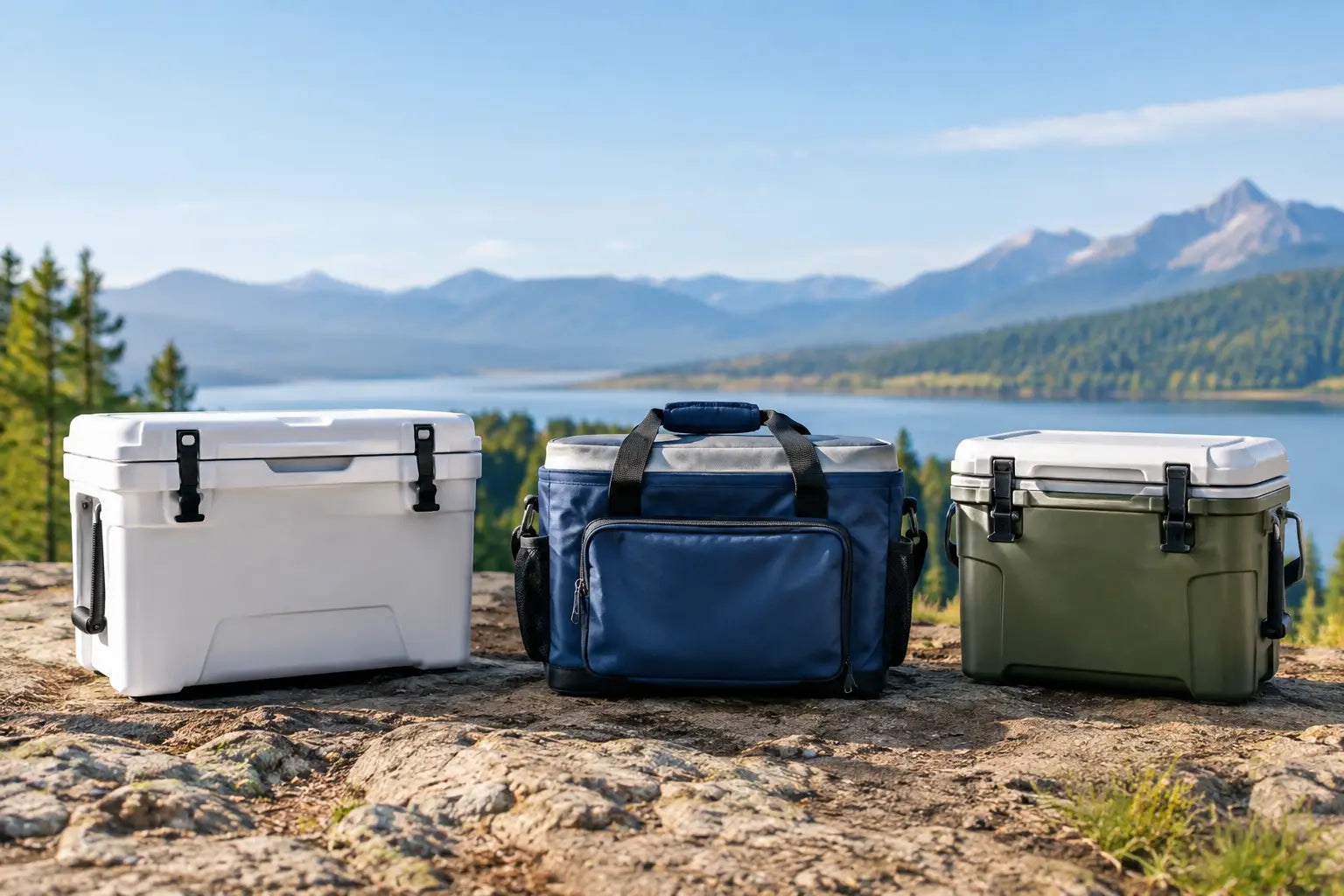
Most coolers fall into four useful categories: soft-sided coolers, standard hard coolers, high-performance rotomolded coolers, and electric coolers. Each handles cold retention, carrying comfort, capacity, and cost differently.
| Cooler type | Best for | Main advantage | Trade-off |
|---|---|---|---|
| Soft-sided cooler | Day trips, picnics, short hikes | Light and easy to carry | Limited ice retention |
| Standard hard cooler | Camping, tailgating, family outings | Good capacity at an affordable price | Bulkier than soft coolers |
| Rotomolded hard cooler | Multi-day trips, fishing, boating | Excellent insulation and durability | Heavy and usually more expensive |
| Electric cooler | Road trips, RVs, vehicle-based camping | Runs without buying ice | Needs a reliable power source |
Soft coolers are built for mobility. They are easy to lift into a kayak, tuck behind a truck seat, carry to the beach, or bring along for a short hike. Many have shoulder straps, exterior pockets, and flexible walls that make them easier to pack than a rigid cooler.
Their biggest limitation is insulation. A well-packed soft cooler can hold ice and chilled food for a day, sometimes longer in mild weather, but it is not the right tool for a three-night fishing camp in July. They also need a little more care around sharp hooks, knives, and rocky shorelines.
Choose a soft-sided model when convenience matters more than maximum ice life. For an afternoon of paddling, a youth sports tournament, or lunch on a boat, it keeps your load light and your drinks close at hand.
The traditional hard cooler remains one of the best values in outdoor gear. These coolers offer useful capacity, reliable insulation, and tough plastic construction without taking up the budget needed for tents, tackle, fuel, or food.
They work especially well for car camping, backyard cookouts, hunting camps, and weekend tailgates. A medium-size hard cooler can hold enough food and drinks for a couple of people over a weekend, while larger models can handle family trips or group fishing days.
Look for a tight-fitting lid, a drain plug, sturdy carry handles, and a size that fits your vehicle. A cooler that is too large is harder to load, heavier when full, and may use more ice than you need. If you usually travel with one other person, a manageable mid-size cooler is often more useful than an oversized chest.
Rotomolded coolers are made for people who need more than basic cold storage. Their thick insulated walls, heavy-duty latches, and rugged construction can help hold ice for several days when packed properly. That makes them a strong choice for remote campsites, long fishing tournaments, hunting trips, and multi-day boating excursions.
The catch is weight. Even before you add ice, food, and drinks, these coolers can be heavy. A large rotomolded cooler may take two people to move safely, especially over uneven ground or down a dock. They also cost more than standard hard coolers, so their extra performance is most worthwhile when you will actually use it.
For a two-night campground stay with easy access to a store, a basic hard cooler may be enough. For a remote lake, a hot-weather hunting camp, or a boat trip where resupplying is not an option, the added ice retention can be worth every pound.
Electric coolers and portable fridge-freezers change the equation because they do not depend on melting ice. Plugged into a vehicle outlet, portable power station, or campsite power source, they can keep food cold for days and may freeze items when needed.
They are a practical option for RV travel, overlanding, long road trips, and extended stays where ice runs are inconvenient. You also gain usable food space because there is no ice taking up room in the cooler. That can reduce waste and make meal planning easier.
Power management is the key consideration. Check the cooler's voltage options, power draw, cord length, and compatibility with your vehicle or battery setup. A powered cooler is only as dependable as the energy source behind it. For a weekend at a developed campground, that is usually simple. For a remote trip, bring a battery plan that matches your travel schedule.
Capacity is usually measured in quarts, cans, or both, but the numbers do not tell the whole story. Ice takes up a lot of room. A cooler advertised to hold 60 cans may not hold 60 cans plus enough ice to keep them cold for multiple days.
For a personal day trip, a small cooler is often plenty. For two people on a weekend campout, a medium cooler gives you room for food, drinks, and ice without becoming a back-breaking lift. Families, fishing crews, and group camps may need a large cooler, but consider whether it is better to bring two medium coolers instead.
Two coolers can make packing easier. Keep food in one and drinks in the other, since the drink cooler gets opened more often. This simple setup helps the food cooler stay cold longer and keeps meal ingredients from getting buried under cans and loose ice.
A cooler's advertised ice retention is useful, but real conditions matter just as much. Direct sun, hot truck beds, frequent opening, warm groceries, and poor packing can cut ice life quickly. The best cooler cannot overcome a lid that gets opened every five minutes.
Pre-chill your cooler the night before whenever possible. Start with cold food and drinks instead of loading warm supplies from the garage. Use block ice for long-term cooling, then add cubed ice to fill gaps around food and beverages. Keep the cooler in shade, cover it during long stops, and drain water only when it is no longer helping keep contents cold.
Dry goods should stay out of the cooler. Every item that does not need refrigeration leaves more room for ice and reduces the time you spend opening the lid.
The best features are the ones that solve a problem on your trip. Wheels are valuable when you are moving a loaded cooler across pavement, packed dirt, or a campground loop. They are less helpful on soft sand, steep trails, or rocky banks, where wide tires and strong side handles matter more.
A drain plug makes cleanup easier, especially after a fishing trip or a long weekend. Tie-down points are useful on boats, trailers, and truck beds. Non-slip feet help keep a cooler from sliding around on a deck. A ruler built into the lid can be handy for anglers, while a divider or basket helps separate food from ice.
Do not pay extra for every feature if you will not use it. A simple, dependable cooler with the right size and insulation level is usually a better buy than an overloaded model that does not fit your vehicle or your routine.
Your next cooler should match the miles, the weather, and the crew you bring along. Pack it cold, keep it shaded, and choose a design that makes getting outside easier. That is how you stay ready for the next cast, campsite meal, or sunrise launch.