Your Cart is Empty


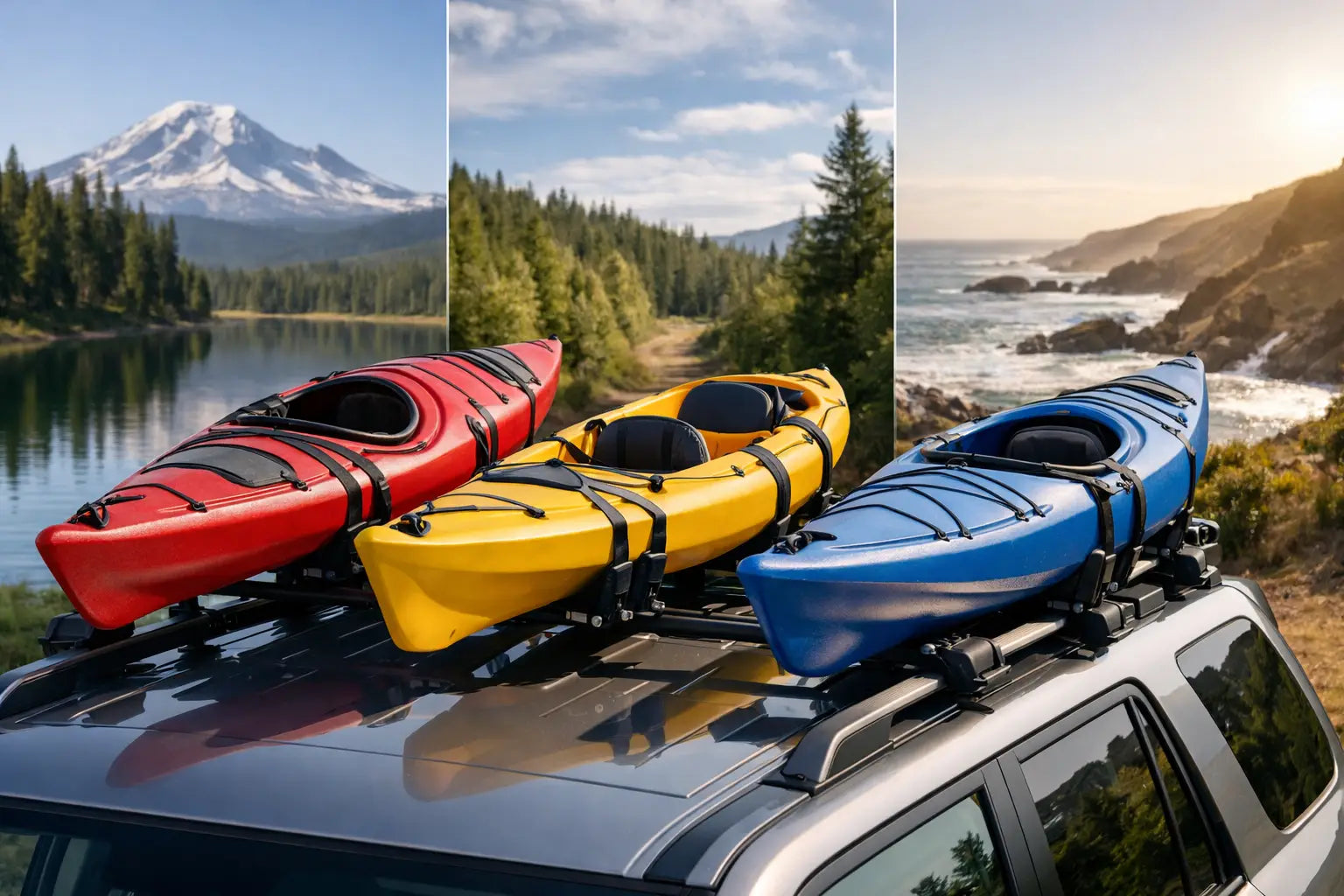

A calm lake at sunrise is a lot more appealing when loading your kayak does not turn into a wrestling match in the parking lot. The best kayak roof racks keep your boat secure at highway speed, protect its hull between trips, and make getting on the water easier - whether you drive a compact SUV, a pickup, or a full-size family vehicle.
The right setup is not always the most expensive one. It is the rack that fits your vehicle, supports your kayak correctly, and matches how often you paddle. Start with your boat, your roof, and the trips you actually take. Then gear up with a system built for the miles ahead.
A dependable kayak rack starts with a solid foundation. Your vehicle needs factory crossbars or an aftermarket roof rack with crossbars rated to carry the combined weight of your kayak and carrier. Check both the crossbar rating and your vehicle roof's dynamic weight limit. The lower number is the one that matters while driving.
Next, consider the kayak itself. A lightweight 10-foot recreational kayak is a very different load from a 14-foot fishing kayak with a wide hull. Longer and heavier boats create more wind force, need more support, and can be harder to load alone. A rack that feels like overkill for a short plastic kayak may be the sensible choice for a heavy sit-on-top loaded for a weekend of fishing.
Security also matters. Quality cradles or saddles spread the load across the hull instead of concentrating pressure in a small area. Strong straps, protected buckles, and a stable fit reduce shifting, rubbing, and the chance of damage on rough roads. For most paddlers, paying for a purpose-built carrier is worth it compared with laying a kayak directly on bare crossbars.
There is no single best design for every vehicle or every boat. These are the main rack styles and where each one performs best.
J-cradles hold a kayak on its side at an angle, freeing up space for another kayak or extra gear on the roof. They are a popular choice for recreational and touring paddlers because they offer reliable side support and make efficient use of narrower crossbar spreads.
They work especially well if you regularly transport one or two kayaks and want room for a roof box, bike rack, or camping gear. The trade-off is loading height. You must lift the boat far enough to set it into the cradles, which can be tough with a tall SUV or a heavy fishing kayak. Look for padded contact points and wide straps with buckle protectors.
Saddle-style carriers let the kayak sit hull-down in shaped pads or cradles. They support more of the boat's natural profile and are often the easiest choice for loading a heavier kayak by yourself. You can lift one end onto the rear crossbar, then slide the kayak forward into place.
For composite boats, fishing kayaks, and long touring boats, saddles are often among the best kayak roof racks because they distribute weight broadly and reduce stress on the hull. Some adjustable saddle systems can be matched closely to your kayak's shape. Their main drawback is roof space: a single hull-down kayak generally takes up more width than a J-cradle setup.
A stacker uses upright posts to carry kayaks on their sides. This simple design is ideal for households, paddling clubs, and friends heading to the river with several narrow recreational or touring kayaks. Depending on the bar width and the boats, stackers can carry two, three, or even four kayaks.
This is a practical, affordable way to move a group, but it demands careful strapping. Each boat needs to be secured so it cannot shift against the others, and longer boats should have bow and stern tie-downs. Stackers are less convenient for very wide sit-on-top or fishing kayaks.
Foam blocks rest on a bare roof or crossbars and cushion the kayak during transport. They can make sense for an occasional paddler with a lightweight boat, a limited budget, and no permanent roof rack. They store easily and can work on many vehicles.
Still, foam blocks are not the first choice for frequent highway travel. Setup takes longer, fit can vary, and straps may need to run through the vehicle's doors. If kayaking is becoming a regular part of your camping, fishing, or lake-day plans, a crossbar-mounted carrier offers better stability, security, and convenience.
Before choosing a carrier, measure your crossbar spread - the distance between the front and rear bars. A wider spread usually supports longer kayaks more steadily. Check the carrier's fit guide for bar shape and size as well. Some racks fit round, square, aero, or factory bars, while others need adapters.
Your vehicle height changes the decision, too. A J-cradle may be easy to use on a wagon but frustrating on a lifted truck. If you are lifting a 70-pound kayak above shoulder height, consider a load-assist bar, rear roller, or a saddle system that lets you slide rather than fully lift the boat. A simple loading aid can save your shoulders and keep the kayak from hitting the side of the vehicle.
For pickup owners, a bed extender and tailgate transport setup can be a better fit for short trips with one kayak. But when you need the bed for coolers, tackle boxes, or camp gear, roof transport keeps the truck more useful. The best option is the one that supports the boat safely without limiting the rest of your adventure setup.
A good rack cannot make up for poor strapping. Use cam buckle straps made for watersports and thread them around the crossbars or the carrier's designated anchor points. Tighten until the kayak is secure, but do not crank down hard enough to deform a plastic hull. In hot weather, check straps again after a few miles because the hull and webbing can settle.
Avoid ratchet straps for kayaks. They can apply too much force quickly and damage the boat. Keep loose strap ends tied off so they do not flap in the wind, and use buckle pads or a twisted strap section to cut down on road noise.
Bow and stern tie-downs add stability, especially for long boats, windy conditions, interstate speeds, and rough roads. Attach them to proper vehicle recovery points, tow hooks, or approved under-hood loops - not fragile plastic trim. The goal is not to pull the kayak down aggressively. These lines should prevent forward, rearward, and side-to-side movement.
Before leaving, grab the kayak near the cockpit and give it a firm shake. The vehicle should move with the boat. If the kayak moves independently, stop and adjust the setup. Check it again after the first 10 to 15 minutes of driving and at every fuel or rest stop.
When comparing racks, prioritize features that make every trip easier rather than paying for extras you will not use. Corrosion-resistant hardware is valuable for coastal paddlers and anyone who transports boats after saltwater outings. Thick padding protects the hull, while integrated strap storage keeps webbing from becoming a tangled mess in the garage.
Locks are useful if you leave your vehicle at a trailhead or launch, though no rack lock replaces smart parking habits. Folding cradles are another worthwhile upgrade for drivers who do not want tall carriers creating wind noise when no kayak is loaded. If you paddle alone often, loading assistance may be the feature that delivers the biggest real-world value.
Outdoor Up shoppers should also think beyond the rack itself. A cockpit cover keeps rain and road debris out of a sit-inside kayak. A paddle holder prevents loose gear from rolling around inside the vehicle. Dry bags, PFDs, and a compact first-aid kit finish the setup for a day that starts organized and stays that way.
Choose a rack that fits your boat, your vehicle, and the way you get outside. Secure it carefully, inspect it before each drive, and make loading simple enough that an early launch feels like part of the adventure, not the hardest part of it.