Your Cart is Empty


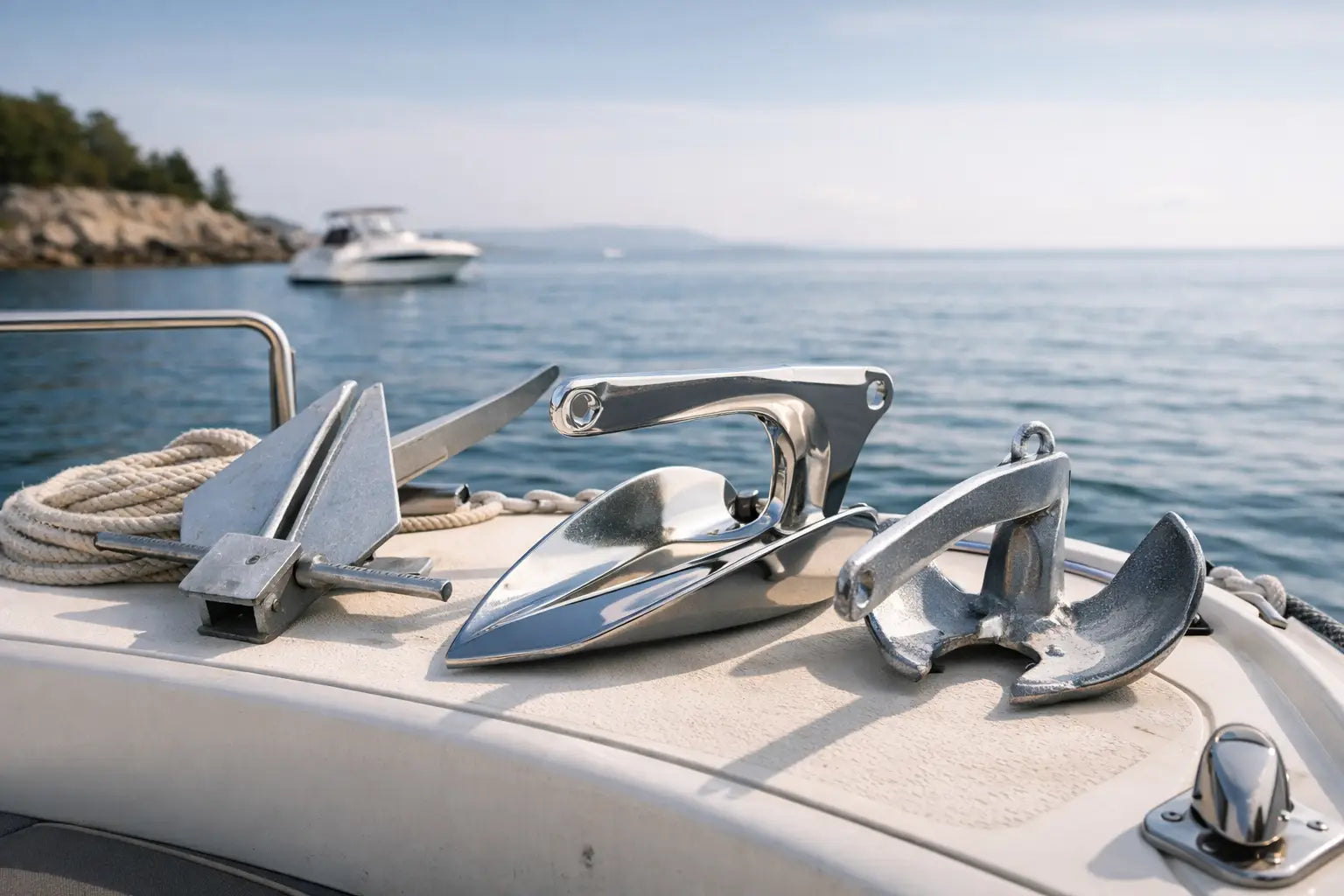

A quiet cove can turn uncomfortable fast when your boat starts dragging toward shore, another boat, or a line of rocks. This boat anchor selection guide helps you choose an anchor system that matches your boat, your usual water, and the way you spend time afloat - whether that means casting on a lake, rafting up at a sandbar, or settling in for the night.
The right anchor is not simply the heaviest one you can carry. Holding power comes from the anchor’s design, the bottom beneath it, the length and type of rode, and how you set it. Gear up with the whole system in mind, and you will spend less time resetting your anchor and more time enjoying the day.
Anchor sizing begins with boat length, but it should not end there. A 20-foot aluminum fishing boat on a protected lake needs a different setup than a 20-foot center console exposed to tidal current and afternoon wind. Windage matters too. A pontoon, cabin boat, or boat with a tall windshield presents more surface area to the wind than a low-profile skiff of the same length.
Use the manufacturer’s sizing chart for the specific anchor model as your starting point. When your boat is near the top of a chart’s stated range, moving up one size is often the practical choice. It adds holding margin when the wind builds, passengers shift around, or you anchor in deeper water than usual. The trade-off is weight and storage space, so make sure you can handle and stow the anchor safely.
Think honestly about where you boat most often. Calm inland lakes, rivers, bays, tidal inlets, and coastal anchorages each put different demands on ground tackle. An anchor that works beautifully in soft lake mud may be a poor match for rocky bottoms or grassy flats.
No single anchor dominates every situation. The best choice depends on what you expect it to bite into.
Fluke-style anchors, often called Danforth-style anchors, use broad flat flukes to dig into sand and soft mud. They are popular with smaller recreational boats because they offer strong holding power for their weight and store fairly flat in a locker.
Their limitation is changing conditions. They can struggle to reset when the boat swings sharply with a wind shift, and they are less dependable in rock, heavy weeds, or hard-packed bottoms. For a lake boat that spends most of its time over sand or mud, though, a properly sized fluke anchor is a smart, affordable primary option.
Plow-style anchors are built to penetrate and hold across a wider range of bottoms. Scoop-style designs use a concave shape that can set quickly and produce serious holding power in sand, mud, and many mixed bottoms. They tend to be a stronger all-around choice for boaters who deal with wind, current, or varied coastal conditions.
These anchors are usually bulkier and more expensive than a basic fluke anchor. They also need a bow roller or anchor locker that fits their shape. If your boat sees regular use in bays, tidal water, or overnight stops, the added security can be worth the extra weight and cost.
Claw-style anchors have a curved, three-lobed profile that helps them roll into a setting position. They can perform well on rocky, gravelly, and mixed bottoms, and they often reset reliably when the boat changes direction.
They may require more weight to equal the holding power of a modern scoop anchor in soft sand. Still, they are a proven option for boaters who want a versatile anchor that handles inconsistent bottom conditions without much fuss.
Mushroom anchors are common on small jon boats, canoes, kayaks, and other light craft in sheltered water. They work by weight and by suction once they settle into soft bottom material. They are not a replacement for a true holding anchor on a larger boat or in wind and current.
A mushroom anchor can be useful for keeping a small boat positioned while fishing a calm pond, but do not rely on one for exposed water, changing weather, or an overnight stay.
Your rode is the line connecting the boat to the anchor. A dependable setup usually combines anchor line with a length of chain. The chain adds weight near the anchor, keeps the pull more horizontal, and helps the anchor dig in rather than lift out.
For most recreational boats, three-strand nylon line is a practical choice. It has stretch, which absorbs shock loads from waves and gusts. That stretch is helpful, but nylon should be inspected often for chafe, stiffness, cuts, and sun damage. A damaged rode can fail long before the anchor itself does.
Scope is the ratio of rode length to water depth, measured from the bow cleat down to the bottom. In protected conditions, a 5:1 scope is a useful minimum. If the water is 10 feet deep and your bow sits 3 feet above the water, plan on roughly 65 feet of rode. In stronger wind, current, or rougher water, extend toward 7:1 or more when space allows.
Do not forget the tide. If you anchor in 8 feet of water at low tide and the tide rises another 5 feet, your effective scope shrinks unless you have paid out enough rode. This is one of the easiest ways to turn a secure set into a dragging anchor.
A great anchor will not perform well if it is dropped and ignored. Ease toward your intended spot slowly, stop the boat, and lower the anchor to the bottom. Avoid throwing it overboard, which can tangle the rode or cause the anchor to land upside down.
Once it reaches bottom, let the boat drift or reverse slowly while paying out rode. When you reach your planned scope, secure the rode to a proper bow cleat using a cleat hitch. Then apply gentle reverse power to help the anchor dig in. Increase power gradually until you feel the anchor hold.
Use visual references to confirm that you are not moving. Pick two fixed points on shore, check your position against a chartplotter or GPS, and look again after several minutes. On a busy anchorage, an anchor alarm adds another layer of awareness. It does not replace watchkeeping, but it can alert you before a small drift becomes a bigger problem.
A second anchor is more than extra gear. It gives you a plan when the primary anchor is lost, bent, stuck, or simply wrong for the bottom. It can also help stabilize a boat that is swinging uncomfortably in a current, though using two anchors requires room, planning, and attention to other boats.
For many anglers, a compact fluke anchor makes a practical backup even if the primary anchor is a plow, scoop, or claw design. Keep its rode organized and ready to deploy. A tangled backup setup is not much help when wind is rising and daylight is fading.
Other useful pieces of anchor gear include a properly rated shackle, a thimble or chain connector designed for marine use, chafe protection at the bow, gloves for handling line, and a buoyed trip line where bottom conditions make snagging likely. Make sure every connection is sized for the load and secured correctly. An undersized shackle can become the weak point in an otherwise capable system.
The most common mistake is choosing by price or anchor weight alone. A heavier anchor with the wrong shape may still skid across the bottom. The next is carrying too little rode, especially on deeper lakes or tidal water. Your anchor needs room to pull horizontally and dig in.
Avoid tying the rode to a stern cleat unless you have a specific, safe reason to do so and understand the conditions. Anchoring from the stern can let waves hit the boat broadside or from behind, increasing the risk of swamping on smaller boats. The bow is designed to meet waves and is the normal anchoring point.
Finally, never treat an anchor as a substitute for judgment. Watch forecasts, know your route, leave room to swing, and be ready to move if conditions change. If a thunderstorm line, fast current, or crowded shoreline makes the stop questionable, pick up and relocate.
A reliable anchor setup gives every outing more options: pause over a fishing spot, swim with confidence, wait out a passing shower, or settle into a protected cove before dark. Choose for the bottom, size for your boat and conditions, and practice setting it before the day you truly need it. That is how you get outside more and stay ready for better days on the water.