Your Cart is Empty


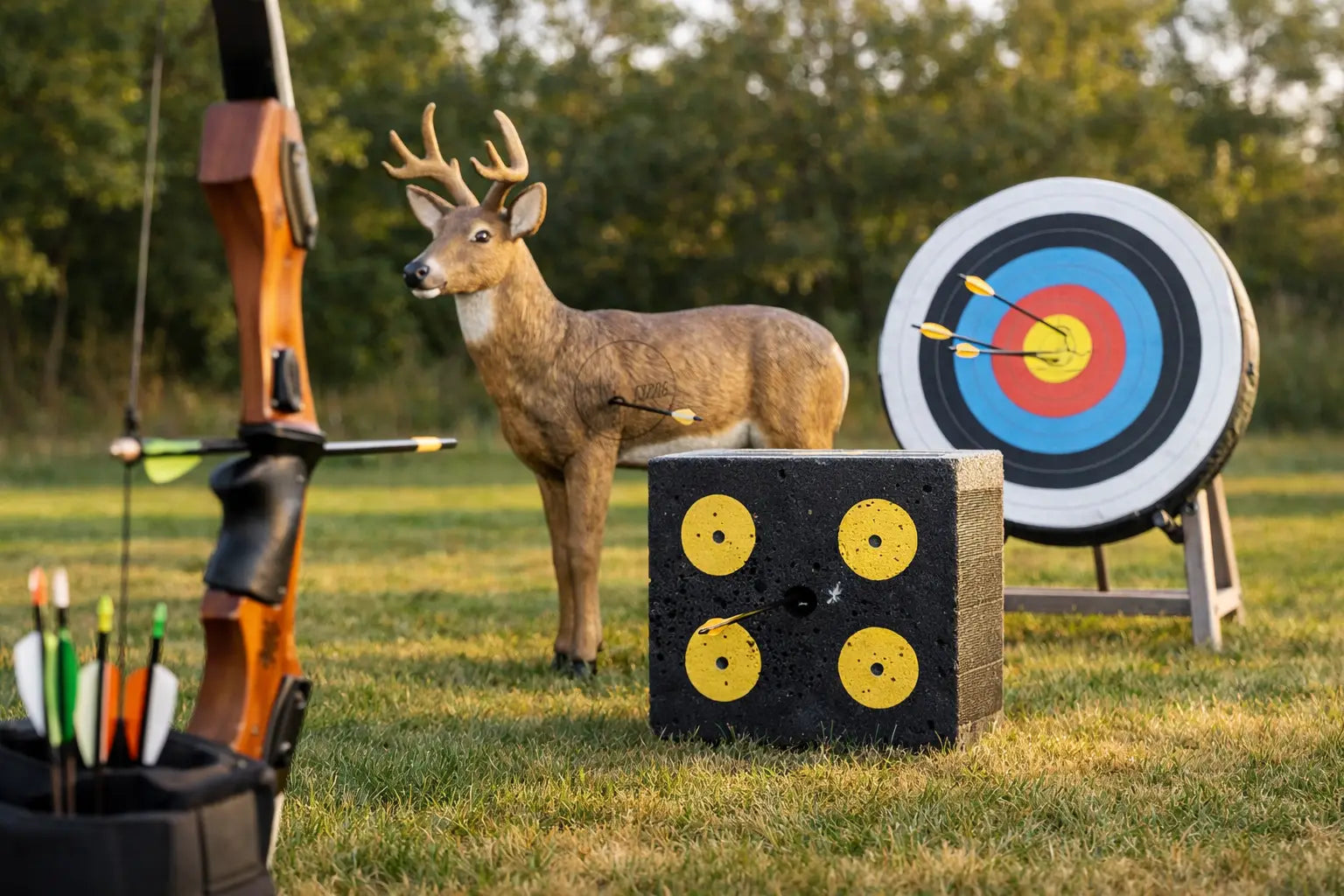

A target is more than a place to send arrows. The right archery targets help you see your progress, protect your arrows, and practice with the same confidence you want on the range or in the field. The wrong one can wear out fast, make arrow removal a chore, or fail to stop the setup you shoot.
Before loading the truck for a range day or setting up a practice lane at home, match your target to your bow, arrow setup, and real goal. A beginner working on consistent groups needs something different than a hunter preparing for a broadhead season.
Start with the energy your bow produces. A low-poundage recurve or youth compound can use many foam and bag targets without trouble. Faster compound bows, heavier draw weights, and lightweight carbon arrows demand a target with enough stopping power to prevent pass-throughs.
Check the target manufacturer's guidance for maximum arrow speed, draw weight, and approved arrow points. This matters most when using modern compounds. A target that stops field points at moderate speeds may not be rated for high-speed setups, and an arrow that passes through can be damaged or create a serious safety risk.
Your point style matters just as much. Most bag and foam practice targets are built for field points. Broadheads cut target material as they enter and exit, so they can quickly destroy a target made only for regular practice points. If you intend to shoot broadheads before hunting season, choose a purpose-built broadhead target or a layered foam model rated for them.
Crossbow shooters should be especially careful. Crossbow bolts carry substantial energy, and not every target is designed to stop them. Use a target specifically rated for crossbow bolts and your setup's speed. Never assume a standard block target will handle it.
There is no single best target for every backyard, range bag, or hunting camp. The right choice comes down to portability, durability, point type, and how often you shoot.
Bag targets use a tough outer cover filled with synthetic material. They are popular because arrows are generally easy to pull, especially with field points, and many are light enough to carry from the garage to the yard. They work well for recreational shooting, youth archers, and routine compound or recurve practice.
The trade-off is broadhead compatibility. Broadheads can tear the face and pull filling material loose, shortening the target's life. Bag targets also should stay dry. A covered storage spot will help the filling and outer fabric last longer.
Foam block targets are a strong all-around choice for shooters who want a compact target with multiple shooting faces. Dense, self-healing foam slows arrows as the material closes around the shaft, and many models are suitable for field points and broadheads.
Look at the target's dimensions along with its depth. A larger face gives new archers more room for error and lets experienced shooters rotate aiming spots to reduce wear. A smaller, dense block can be a practical option for travel, but it may wear quickly if every arrow lands in the same center circle.
Layered targets stack compressed foam sheets to absorb arrow energy. They are a smart pick for higher-poundage bows, repeated practice, and broadhead tuning when the target is rated for it. Once a shooting area gets worn, some layered models can be rotated or have sections replaced, extending useful life.
They are usually bulkier and heavier than bag targets, so they make the most sense for a more permanent practice area. If your target will live on a stand behind the house all season, that extra weight can be a benefit rather than a drawback.
3D animal targets bring a different kind of value to practice. They help bowhunters judge shot angles, focus on a precise aiming point, and rehearse situations that paper circles cannot duplicate. Deer, turkey, bear, and small-game styles can make practice more engaging for the whole group.
Quality 3D targets often include replaceable core sections because the vital area takes the most punishment. They cost more than a basic bag target, but they are worth considering when realistic shot placement is the goal. Use field points unless the target is clearly rated for broadheads.
Target size should make practice productive, not frustrating. At close range, a small target face can encourage careful aiming. At longer distances, the same target may lead to missed arrows, damaged shafts, or unnecessary time searching through grass.
For new archers, start with a generous target face and shoot from a distance where arrows consistently land on the target. Build form and confidence first. As groups tighten, move farther back or use smaller printed aiming dots. This creates a clear challenge without asking a beginner to practice misses.
Bowhunters can benefit from variety. Practice at known distances to confirm sight pins or scope marks, then add realistic distances if local conditions allow. Shoot from kneeling, seated, or slightly elevated positions only when you have a secure target, a clear backstop, and a safe shooting lane. The goal is to make field practice familiar without getting careless.
A good target cannot compensate for a poor range setup. Every arrow needs a safe path and a reliable backstop. Position your target so missed or pass-through arrows stop in a substantial earthen bank, purpose-built backstop, or another safe barrier designed for archery. Never rely on a fence, a thin sheet of plywood, or brush to stop an arrow.
Keep the shooting lane clear of people, pets, vehicles, and reflective surfaces. Make sure there is no trail, road, neighboring yard, or campground activity behind the target area. If you shoot on public land or at a campground, confirm that archery practice is allowed before setting up.
Place the target on level ground and secure it against tipping. A target stand should be stable enough to handle wind and repeated impacts. If you use a paper face, attach it flat and use multiple aiming spots instead of drilling the same bullseye session after session.
Retrieving arrows deserves attention, too. Call the range cold before anyone walks forward. Pull arrows straight out rather than twisting aggressively, and use an arrow puller when shafts are tight. Before shooting again, inspect carbon arrows for cracks, splinters, or soft spots. A damaged carbon shaft can fail on release, so discard it if you find damage.
Target life comes down to rotation, storage, and matching the target to the arrows you shoot. Shift your aim around the face so one area does not get hammered. Turn a multi-sided block regularly, and replace paper faces before they become so torn that they hide the target's wear pattern.
Keep targets out of standing water and prolonged direct weather when possible. A simple cover, shed, or garage space can protect foam from UV exposure and prevent bag targets from absorbing moisture. If your practice target stays outside, bring it in during heavy rain, snow, or long stretches of bad weather.
Watch for warning signs: arrows sinking much deeper than usual, loose filling, foam chunks pulling out, or frequent pass-throughs. Retire or replace a target before it becomes unreliable. Saving a few dollars is not worth losing arrows or compromising your practice area.
The best target is the one that fits your actual routine. A portable bag target makes sense for quick weekend shooting. A dense foam block gives you flexibility for regular practice. A 3D target earns its place when hunting season calls for realistic reps.
Gear up for the way you shoot, then give yourself a safe place to use it. With a dependable target in the yard, at camp, or on the range, a few arrows after work can become the practice that makes your next outdoor adventure feel a lot more ready.