Your Cart is Empty



A calm launch ramp can fool you. One smooth morning, one short run to the fishing spot, and it is easy to think you do not need much on board. Then the weather turns, the motor cuts out, or someone slips on a wet deck. A solid boat safety equipment checklist keeps small problems from becoming long, expensive, or dangerous days on the water.
The good news is that getting prepared does not have to mean overpacking or overspending. Most boaters need the same core gear, and once you build your setup, routine checks get fast. The key is matching your equipment to your boat, your passengers, and the water you actually use - not the trip you hope every outing will be.
At a minimum, your checklist should cover flotation, fire protection, distress signaling, sound signaling, navigation lighting, and a few backup essentials in case the boat stops moving. Exact legal requirements vary by boat size, propulsion type, and where you operate, so it always pays to confirm current federal and state rules before launch.
That said, there is a practical difference between legal minimums and smart minimums. If you fish small inland lakes, your kit may look different than someone running coastal water or crossing a large reservoir in changing weather. A smart checklist covers both compliance and real-world use.
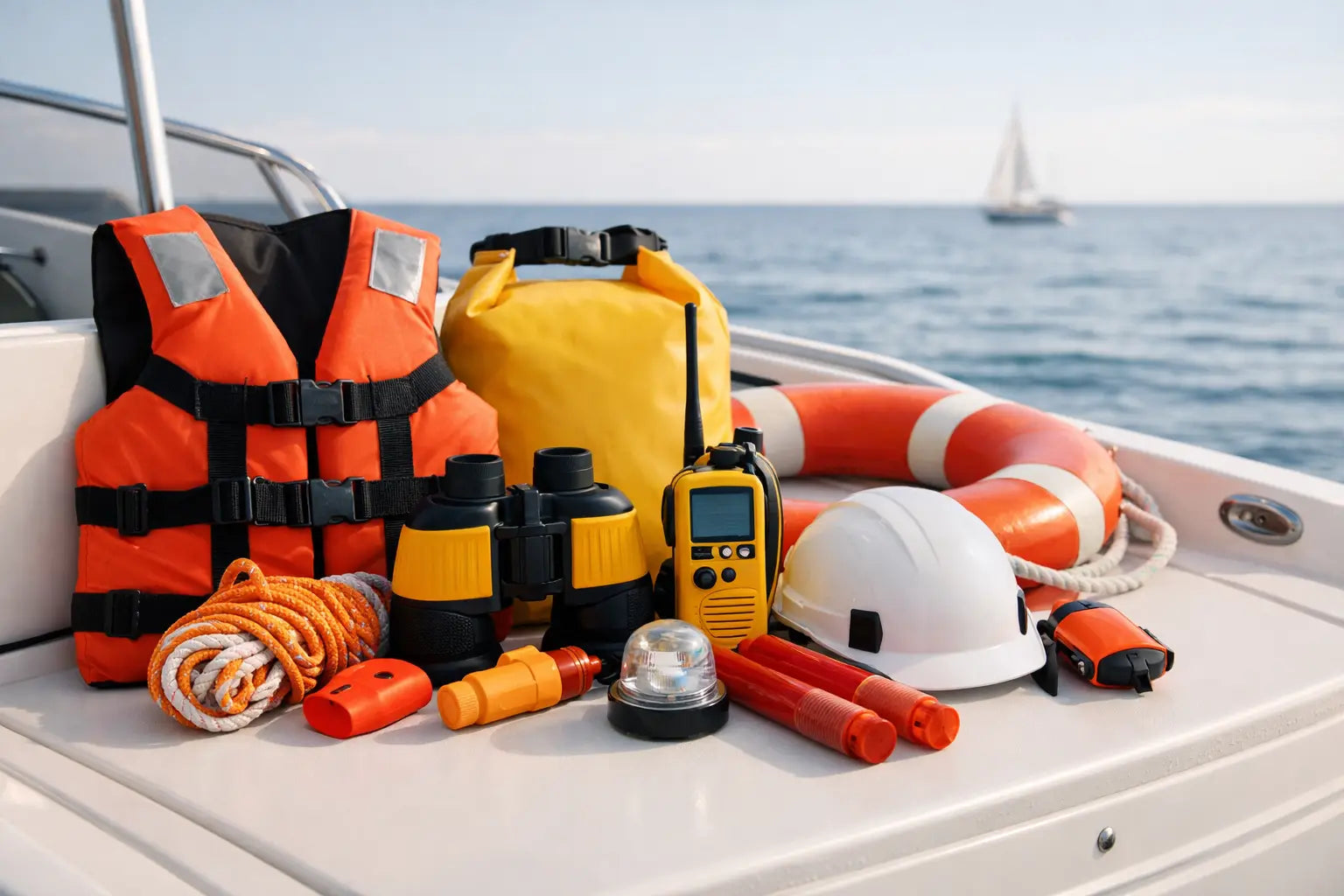
If there is one category to take seriously every single time, it is personal flotation devices. You need a properly sized, Coast Guard-approved life jacket for every person on board, and they need to be easy to reach. Stuffing them under three tackle bags does not count as ready.
Fit matters as much as quantity. Adult jackets that are too loose, kids' jackets that do not match weight range, or old foam vests that are breaking down are all problems. If you regularly boat with children, guests, or pets, check your setup before the trip instead of assuming something in the storage compartment will work.
For many boats, a throwable flotation device is also part of the required gear. Even when it is not, having one within quick reach makes sense. It gives you a fast option if someone goes overboard and cannot get back immediately.
Boats with engines, fuel systems, enclosed compartments, or electrical accessories carry real fire risk. A marine fire extinguisher should be charged, accessible, and mounted where you can grab it quickly. If it is buried in a locker behind ropes and bumpers, it is there in theory, not in practice.
Check the gauge and condition often. Extinguishers expire, lose pressure, and sometimes get ignored for years. If you upgraded electronics, added batteries, or changed fuel storage, revisit your fire protection instead of relying on what came with the boat.
If you boat on coastal waters, the Great Lakes, or certain federally controlled waters, visual distress signals may be required. Even when they are not, signal flares or approved alternatives can be a smart addition, especially if you run far from shore or often launch early and return late.
A sound-producing device matters too. On smaller boats, that may be a whistle or horn. On larger boats, requirements can increase. The point is simple: if visibility drops or another operator is not paying attention, you need a way to get noticed fast.
Running before sunrise, after sunset, or in low visibility without proper lights is asking for trouble. Navigation lights should work every time, and that means testing them before the trailer hits the road, not after the sun starts dropping.
Electrical issues are common on boats that sit between trips. Corrosion, weak batteries, and loose wiring can turn a routine ride back to the ramp into a bad guessing game. Keep spare bulbs if your system uses them, monitor battery health, and make sure your charging setup is actually doing its job.
Legal gear gets most of the attention, but mechanical trouble is what strands a lot of boaters. A practical boat safety equipment checklist should include a few simple backup items that help you stay in control while you figure things out.
An anchor is not just for fishing or relaxing in a cove. If the engine quits in current or wind, an anchor can stop you from drifting into rocks, docks, or shallow water. Match anchor type and line length to the water you use. A tiny anchor tossed into deep, windy water will not do much.
Dock lines and fenders belong in the same category. They do not sound dramatic, but they prevent damage and help you manage the boat safely at ramps, marinas, and fuel docks. If you boat with new passengers, this gear becomes even more important because docking rarely goes perfectly.
On small boats, paddle power can be the difference between getting back to the launch and waiting for help. On larger boats, it is less about covering distance and more about staying clear of hazards. It is easy to skip this item because it feels old-school, but it still solves real problems.
Water finds its way into boats. Rain, spray, leaks, wake, and wet gear all add up. Depending on your boat, you may need a working bilge pump, a manual backup, or at least a bailing device. Check pumps before each trip. A dead battery or stuck float switch usually shows up at the worst possible time.
A lot of boating risk starts with exposure, not collision. Sun, wind, cold water, and sudden rain wear people down fast. That is why a good checklist should include personal protection and communication gear, not just required onboard equipment.
A marine first aid kit should cover more than small cuts. Think bandages, antiseptic, motion sickness relief, pain relievers, gloves, and anything specific your group may need. If someone has allergies, asthma, or another medical condition, account for that before leaving the dock.
Your phone helps, but it is not a complete emergency plan. Service can be weak, batteries die, and wet phones fail. Depending on where you boat, a VHF radio, backup power bank, or other communication device may be worth adding. It depends on your range, your water type, and how quickly help is available.
Extra layers, rain gear, sun protection, and drinking water belong on many boats because fatigue and exposure make every other problem harder to handle. A bright, hot day can still turn cold when the boat is moving. A summer storm can soak everyone in minutes.
If you run offshore, on big open lakes, or during shoulder seasons, treat clothing as part of your safety setup. Dry people think better, move better, and make fewer mistakes.
The best boat safety equipment checklist is not the longest one. It is the one you will actually use, inspect, and restock.
Start with three questions. What kind of boat are you running? Where do you use it most often? How far from help do you usually get? A jon boat on a farm pond does not need the same kit as a center console running coastal water, but both need serious attention to flotation, communication, and basic emergency readiness.
From there, separate your gear into two groups: required equipment and trip-specific add-ons. Required gear stays on the boat full time whenever possible. Trip-specific gear changes with season, passengers, distance, and conditions. That keeps your setup organized without leaving out something important on a bigger day.
This is where preparation turns into habit. Before each outing, check life jackets, fuel, battery charge, navigation lights, fire extinguisher status, bilge function, anchor and line, and weather conditions. Confirm that your phone or radio is charged and that someone knows your float plan.
This does not need to take twenty minutes. Once your boat is organized, a fast walk-through catches most problems. It is one of the easiest ways to protect your gear, your passengers, and your day off.
Cheap safety gear that fails early is not a bargain. At the same time, most recreational boaters do not need premium commercial equipment for every category. The sweet spot is dependable, easy-to-use gear that fits your type of boating and gets checked regularly.
That is where shopping by activity helps. If you can build your kit around real use - freshwater fishing, family cruising, towing watersports, or occasional coastal runs - it becomes easier to spend where it matters and skip what does not. Outdoor Up serves a lot of boaters in exactly that middle ground: practical gear, solid performance, and no need to overcomplicate the buy.
A prepared boat feels different at the ramp. You launch faster, worry less, and spend more time doing what you came out to do. Build your checklist once, improve it as your trips change, and let readiness buy you more good days on the water.