Your Cart is Empty



A slow morning can turn fast the second a bass blows up on the edge of a weed line. That is why choosing the best fishing tackle for bass is less about buying the most gear and more about carrying the right gear for the water in front of you. If you want more bites and fewer wasted casts, start with a tackle setup that covers the most common bass situations without draining your budget.
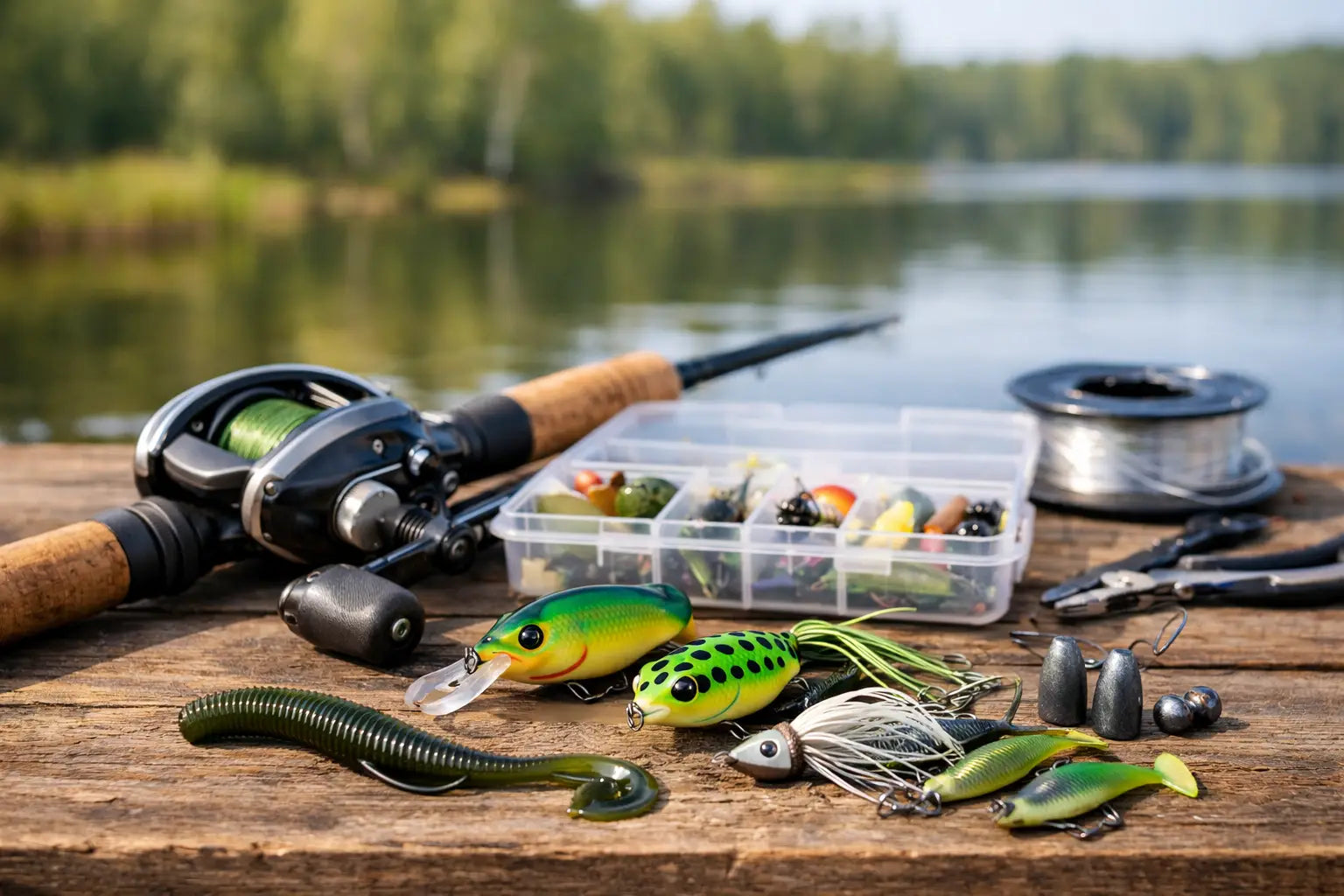
Bass tackle gets confusing when every aisle is packed with lure styles, colors, sizes, and specialty rigs. The good news is you do not need all of it. A solid bass setup usually comes down to a few dependable categories - soft plastics, moving baits, terminal tackle, line, and a rod-and-reel combo that matches how you fish.
The best fishing tackle for bass is the tackle you can use confidently in multiple conditions. That usually means gear that handles shallow cover, open water, stained water, and changing weather. If a lure only works in one narrow scenario, it may still be useful, but it should not be your starting point.
If you are building a practical tackle box, soft plastics should be near the top of the list. Worms, craws, creature baits, and paddle tail swimbaits all earn their place because they can be rigged different ways and fished at different depths. A stick worm on a Texas rig can get through grass and brush. The same bait wacky-rigged can save a slow day around docks or calm banks.
Jigs belong in that core group too. They are not always the easiest bait for beginners, but they catch quality fish and work around wood, rock, and grass. Pair a jig with a trailer that matches the water temperature and forage. In colder water, a more subtle trailer often gets better results. In warmer water, a bigger profile and more movement can help fish find it.
Spinnerbaits and chatterbaits are strong choices when you need to cover water. They help you find active fish quickly, especially in stained water or windy conditions. Spinnerbaits shine around laydowns, grass edges, and shallow flats. Chatterbaits bring vibration and a more aggressive hunting action that can trigger reaction bites, but they can also pick up vegetation depending on the setup.
Crankbaits are useful, but they are more situation-dependent. A squarebill is excellent around shallow cover and deflects well off wood and rock. A deeper-diving crankbait can be productive offshore or on points, but only if your rod, line, and retrieve match the depth you are trying to reach. That is one reason many anglers keep crankbaits as a second-wave purchase rather than a first.
Topwater deserves a place in any bass box because few presentations cover low-light feeding windows better. Poppers, walking baits, and hollow-body frogs all have their moment. Frogs are especially valuable over matted grass and pads where treble-hook baits are almost useless.
A great lure will not help much if your hook is too light, too big, or too dull. For soft plastics, extra-wide-gap hooks are a common choice for thicker baits, while straight-shank worm hooks often give better hook-up power in heavy cover. If you fish Texas rigs a lot, keep a few sizes on hand so your bait stays balanced.
Bullet weights are another must-have for bass fishing. Tungsten gives you a smaller profile and better bottom feel, while lead costs less and still gets the job done for many anglers. If you are fishing grass, a pegged bullet weight helps your bait move through cover as one compact package. If you are fishing more open bottom, leaving it unpegged can look more natural.
Jig heads, shaky heads, drop shot weights, swivels, and snaps each have a place, but they do not all belong in every beginner box. Start with what supports your main presentations. If your confidence baits are worms and craws, build around hooks and bullet weights first.
The easiest way to narrow your tackle picks is to match them to where and how bass feed.
Go with weedless presentations. Texas-rigged plastics, flipping jigs, and frogs are dependable here. Braided line usually makes the most sense because it cuts through vegetation and gives you pulling power when a fish buries up.
Jigs, Texas rigs, and spinnerbaits are smart choices. Squarebill crankbaits can also be excellent because they bounce off cover and trigger strikes. Here, accuracy matters almost as much as lure selection.
Drop shots, swimbaits, crankbaits, and finesse worms shine when fish are pressured or suspended. Fluorocarbon often helps in clearer water because it is less visible and sinks, which can improve lure control.
Loud vibration and strong profile usually beat subtle presentations. Chatterbaits, spinnerbaits, black-and-blue jigs, and darker soft plastics are reliable options. Bass do not need a perfect look if they can feel the bait and track it down.
A lot of anglers spend too much on lures and not enough thought on the setup throwing them. The wrong rod action or line type can make solid tackle feel ineffective.
If you want one versatile bass combo, a 7-foot medium-heavy fast-action rod with a baitcasting reel covers a huge range of techniques. It handles Texas rigs, jigs, spinnerbaits, chatterbaits, and some topwater well. For many anglers, this is the best starting point because it balances power, casting control, and hook-setting strength.
A spinning combo still matters, especially for lighter baits. A 6-foot-10 to 7-foot medium spinning rod is a practical choice for shaky heads, drop shots, wacky rigs, and smaller swimbaits. If your local lakes get a lot of pressure, finesse tackle can save the day.
Line depends on the presentation. Braid is tough and sensitive, which makes it great for frogs and heavy cover. Fluorocarbon sinks and offers low visibility, so it works well for jigs, worms, and crankbaits. Monofilament floats and has more stretch, making it useful for some topwater applications. There is no single best line for every bass lure. It depends on cover, depth, and how you want the bait to move.
You do not need a tournament-level setup to fish effectively. A budget-friendly bass tackle box can still be highly capable if you focus on versatility first. Start with a few soft plastic styles in natural and dark colors, a couple of jig sizes, one spinnerbait, one chatterbait, one squarebill, and one topwater bait. Add matching hooks, bullet weights, and one dependable line setup.
That approach gives you options for slow presentations, reaction baits, shallow cover, and low-light feeding windows. It also helps you learn what you actually use before buying niche tackle that sits untouched.
Color is another place where anglers often overspend. You do not need ten versions of the same bait right away. In many lakes, a simple spread of green pumpkin, black and blue, white, and a shad pattern handles most situations. Clear water usually leans natural. Dirty water usually leans dark, bright, or high-contrast.
If you are shopping for value, think in systems rather than one-off items. A worm that rigs three ways has more value than a lure that only fills a rare scenario. That practical mindset is a good fit for anglers who want dependable gear and more time on the water, not more clutter in the garage.
One mistake is buying for hype instead of conditions. A lure that is hot on social media may not match your local pond, reservoir, or river. Another is ignoring hook quality. Cheap hooks and dull points lose fish fast.
A third mistake is building a tackle box with too many overlapping baits. If you already have several soft plastics that do the same job, adding more similar options will not improve your fishing much. You are usually better off adding a different presentation or upgrading line and terminal tackle.
It is also easy to go too heavy across the board. Big rods, heavy line, and oversized lures make sense in thick cover or around giant bass, but they can hurt your results in clear water or on pressured fisheries. Matching your tackle to the fishery is where consistency starts.
The best bass tackle is not the flashiest setup on the shelf. It is the gear that helps you make clean casts, fish the right depth, and stay ready when the bite changes. For most anglers, that means a compact but capable mix of soft plastics, jigs, moving baits, reliable terminal tackle, and a rod-and-reel combo built for versatility.
If you keep your choices practical, you can fish more conditions with less guesswork and fewer wasted purchases. Gear up with tackle that matches real water, real cover, and the way you actually fish, and your next bass trip has a better chance of ending with a bent rod instead of a box full of maybes.