Your Cart is Empty


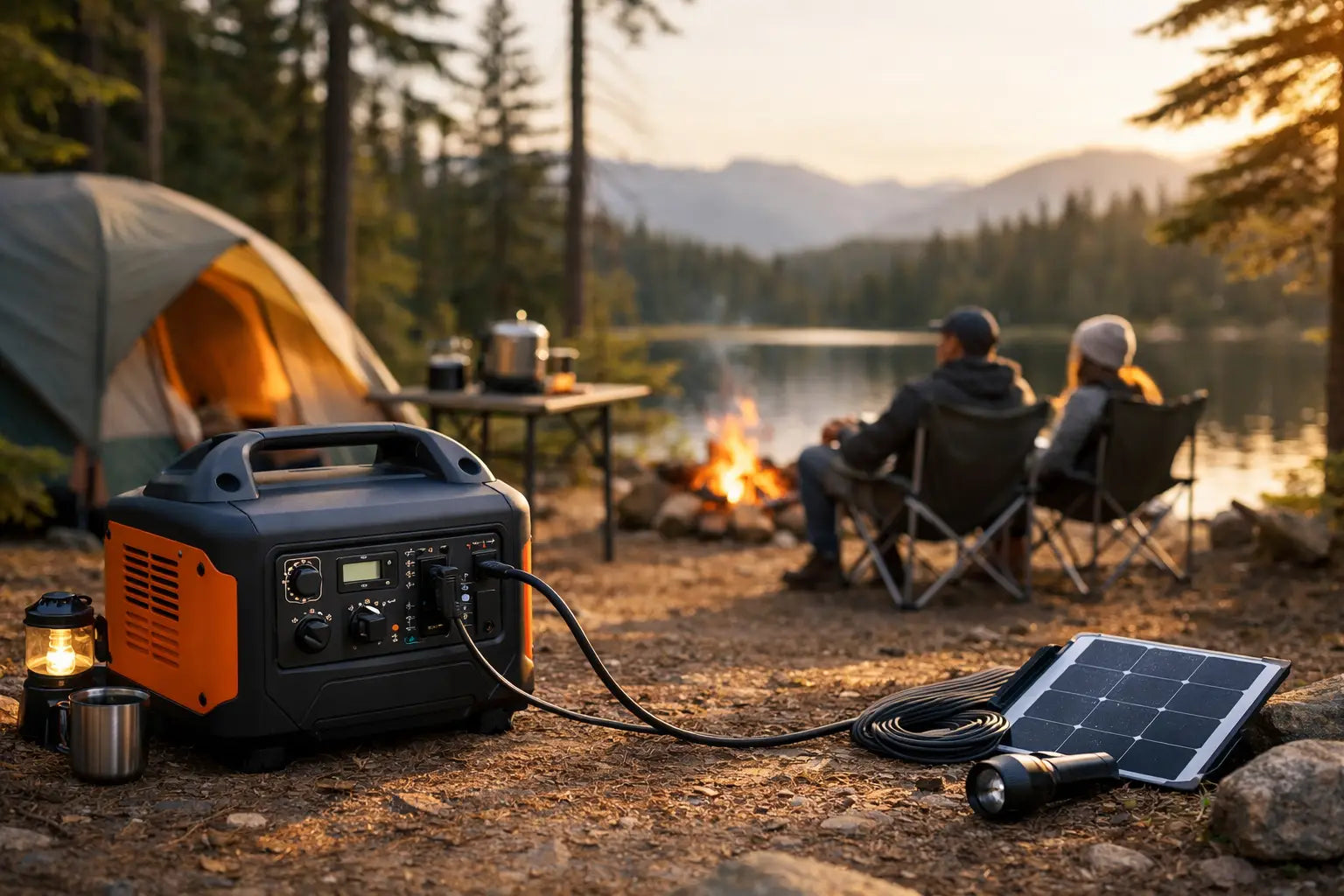

A dead battery at the trailhead is annoying. An overloaded generator that shuts down your camp fridge, lights, and coffee maker is worse. This portable generator wattage guide helps you choose enough power for the gear you actually use, without hauling a loud, fuel-hungry unit that is bigger than the trip demands.
The right size comes down to two numbers: running watts and starting watts. Add them correctly, leave room for real-world use, and your generator becomes a dependable piece of camp, RV, or emergency gear instead of another thing to troubleshoot.
Think through a normal morning or evening at camp, not every electrical item you own. A weekend tent campsite may need a phone charger, LED lights, a small fan, and a coffee maker. An RV site may add a refrigerator, microwave, water pump, TV, air conditioner, and battery charger. A fishing trip might mean a livewell charger, work lights, or an electric cooler.
Find the wattage label on each appliance, tool, or charger. It may list watts directly, or it may show volts and amps. For standard 120-volt equipment, multiply volts by amps to estimate watts. A device rated at 120 volts and 5 amps uses roughly 600 watts.
Write down the items that will run at the same time. That last part matters. You do not need to size a generator for a blender and a microwave together if you will simply run one, then the other. But if the RV refrigerator, battery charger, and air conditioner can all cycle on while the coffee maker is brewing, count them together.
Actual ratings vary by model, so treat these as planning numbers and confirm your equipment before buying:
Running watts are the steady power an item needs after it is operating. Starting watts, also called surge watts, are the brief extra power needed to start motors in equipment such as refrigerators, pumps, air conditioners, and power tools.
A refrigerator may use 200 running watts but need 600 to 1,200 watts for a moment when its compressor starts. If your generator only has enough capacity for the running number, it can overload or trip when that motor kicks on.
For a reliable portable generator wattage calculation, add the running watts of everything that may operate at once. Then add the highest starting-watt requirement among the motor-driven items likely to start during that period. You usually do not add every appliance's starting watts together, unless several motors truly can start at the exact same time.
Here is a simple camp example. Say you want to run an electric cooler at 80 watts, LED lights at 40 watts, a fan at 60 watts, and a coffee maker at 900 watts. Your running total is 1,080 watts. If the cooler needs a 200-watt startup bump, plan for at least 1,280 watts of surge capacity. A 2,000-watt inverter generator gives you useful breathing room and lets you charge a few devices without constantly managing the load.
Do not shop for a generator that matches your total exactly. Generators perform best when they are not pinned at maximum output for hours, and your power needs may grow once you are outside. Add roughly 20 to 25 percent headroom above your calculated running load.
That margin helps with startup surges, hot weather, altitude, aging appliances, and the inevitable extra charger someone plugs in. It also gives you options. You can make breakfast while charging camera batteries rather than waiting for one task to finish.
For example, a calculated 1,600-watt running load is better matched to a generator with around 2,000 running watts, not a 1,600-watt model. Check both ratings on the generator specifications. Many models advertise a larger peak number, but the running-watt rating is what supports continuous use.
A small inverter generator in the 1,000- to 2,000-watt range works well for tent campers who want quiet battery charging, lights, a fan, a CPAP, or occasional use of a coffee maker. It is also a practical choice for anglers charging electronics and running low-draw camp equipment.
A 2,000- to 3,500-watt unit suits more demanding camps and small RV needs. It can cover kitchen appliances one at a time, battery charging, a refrigerator, and many basic onboard systems. Air conditioner use is where the calculation gets more specific. Some smaller RV AC units may start on a properly sized generator, especially with a soft-start device, while others need substantially more surge capacity.
For a larger travel trailer, multiple major appliances, or home emergency loads, 3,500 to 7,500 running watts may make sense. More power brings trade-offs: added weight, more fuel use, more noise, and a higher purchase price. Bigger is not automatically better if you need to lift the generator into a truck bed or keep a peaceful campsite.
Inverter generators are often worth considering for recreation. They typically run quieter at lighter loads, use fuel more efficiently, and provide clean power for phones, laptops, cameras, and other sensitive electronics. Conventional open-frame generators can offer more watts per dollar and may be a smart fit for jobsite tools, storm cleanup, or high-demand backup work.
Air conditioners create the most common generator-sizing mistake. The number printed on an RV AC unit may not tell the whole story because startup demand can be much higher than running demand. A 13,500 BTU rooftop air conditioner often needs around 1,300 to 1,800 running watts but may require 2,500 to 3,500 or more starting watts.
Check the AC manual or data plate, then account for the refrigerator, converter, and anything else that could be operating. A soft-start kit can reduce the initial surge and may allow a smaller generator to run the AC, but it does not eliminate the unit's running load. It also should be installed correctly and matched to your system.
If cooling the RV is the priority, avoid guessing. Confirm the generator's running and peak ratings, your AC's requirements, and whether your elevation or summer heat will reduce available performance.
Even a well-sized generator needs smart use. Start high-draw appliances one at a time. Turn off the coffee maker before using the microwave. Let the air conditioner settle before switching on another motor-driven device. Those simple habits prevent nuisance trips and keep power available when you need it.
Use outdoor-rated extension cords sized for the load and length of the run. A thin, undersized cord can overheat and reduce performance, especially with high-watt appliances. Keep connections dry, inspect cords for damage, and never use a generator in a tent, RV, garage, or enclosed shelter.
Carbon monoxide is odorless and dangerous. Run the generator outdoors, well away from doors, windows, vents, and neighboring campsites. Follow the manufacturer's clearance instructions, point exhaust away from people, and use working carbon monoxide alarms in RVs and homes. Refuel only after the generator has cooled, and carry fuel in an approved container.
The best generator is the one that supports the trip without becoming the trip. Make a quick list of your must-run gear, check each wattage label, calculate running and starting demand, and choose a unit with room to spare. Then consider the practical details: noise limits at your campground, fuel capacity, portability, outlets, and whether parallel capability would let you add power later.
A generator should make the campsite more comfortable, the RV more capable, and the unexpected easier to handle. Gear up with a plan, respect the load, and spend more time around the fire than around the control panel.