Your Cart is Empty


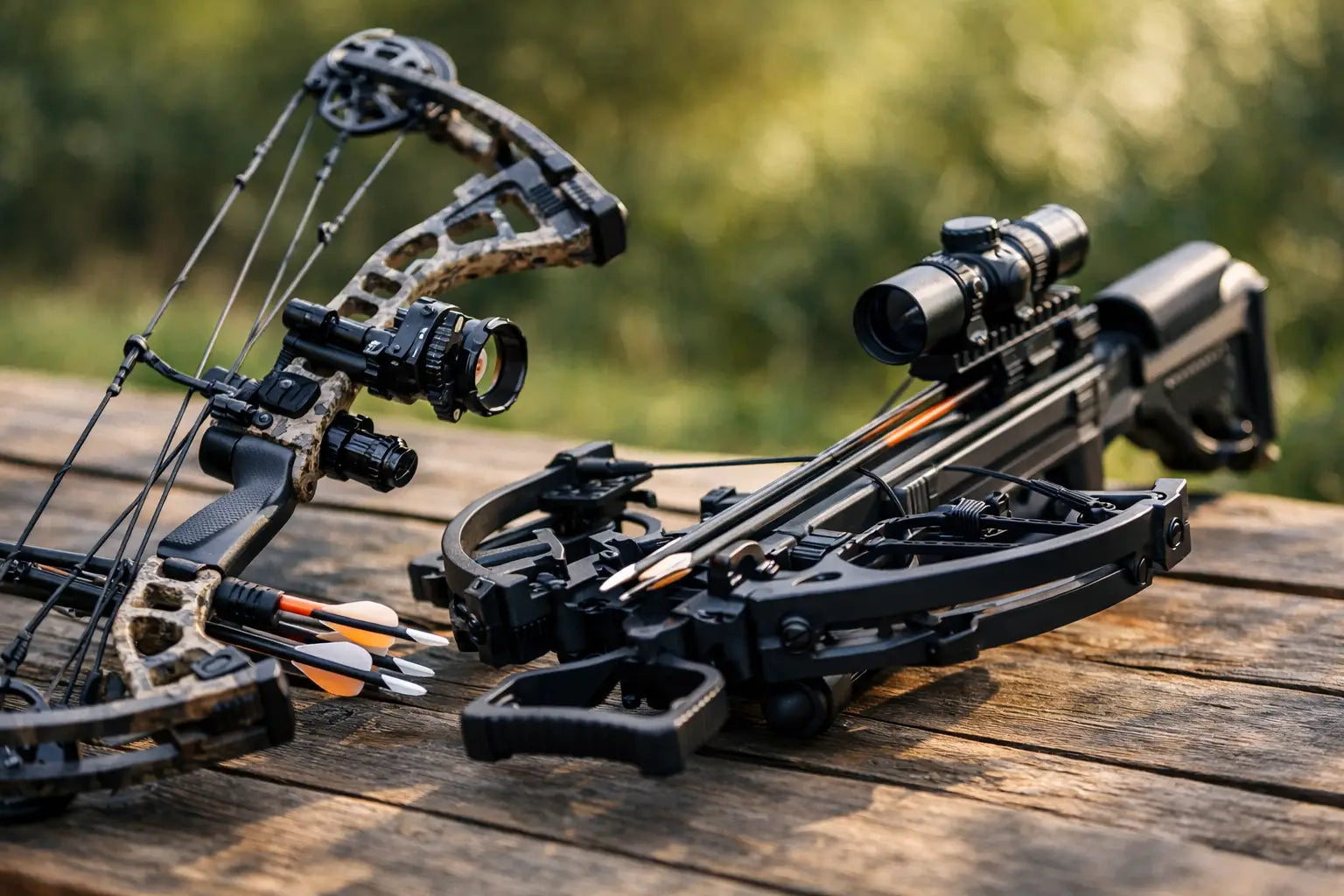

A compound bow vs crossbow decision usually comes down to one moment: when the shot opportunity finally appears, which tool can you handle with confidence? Both can be accurate, effective choices for hunting and target shooting. But they demand different skills, carry differently in the field, and may be regulated differently where you hunt.
The best choice is not automatically the faster model or the one with the biggest scope. It is the one you can practice with often, transport safely, and operate steadily when conditions are less than perfect. Here is how the two platforms compare where it counts.
A compound bow is drawn and held by the shooter at full draw until the arrow is released. Its cams create let-off, meaning you hold only a fraction of the bow's peak draw weight at full draw. A 60-pound compound bow may hold at roughly 15 to 20 pounds, depending on its let-off rating. That makes a controlled shot possible, but it still requires sound form, strength, and repetition.
A crossbow is mounted horizontally and stays cocked before the shot. The trigger releases the string, much like a firearm trigger releases a firing mechanism. Because it can remain cocked, a crossbow lets the shooter aim without holding the draw weight. Most use an optic, and many hunters find the aiming process familiar.
That basic difference shapes nearly every other trade-off. Compound bows reward hands-on shooting skill and quiet, mobile hunting. Crossbows prioritize a stable, ready-to-aim platform, though they bring more weight, bulk, and safety considerations.
Crossbows often post higher advertised speed numbers than compound bows. Many modern crossbows send bolts at 350 to 450 feet per second or more, while many hunting compound bows fall in the roughly 280 to 340 feet-per-second range. Faster arrow flight can reduce how much an animal can react before impact and can produce a flatter trajectory.
Speed is not the same thing as useful range. Broadhead accuracy, wind drift, arrow or bolt setup, sighting, and a shooter's form all matter. At ethical hunting distances, consistent shot placement is more valuable than chasing a number on the box.
A compound bow can be extremely accurate in practiced hands, especially for a hunter who has built repeatable anchor points and clean release technique. A crossbow can make it easier to aim precisely from a supported rest, but it is not point-and-click equipment. Bolts still drop, broadheads still need to be tuned and verified, and scope reticles must match the actual speed of your setup.
Treat either platform as a close-range hunting tool unless you have put in the range time to prove otherwise. Practice from the positions you will use outdoors: seated in a blind, standing in a treestand, kneeling on uneven ground, or leaning against a tree. Field accuracy is what matters.
For many beginners, a crossbow feels easier to learn because the aiming system resembles a rifle scope and there is no need to hold the bow at full draw. It can be a practical option for new archers, hunters returning after years away, and people who cannot comfortably draw a vertical bow.
However, cocking a crossbow takes effort. Some models require a rope cocker, while others use a crank. A crank can reduce the physical effort substantially, but it adds a step and can add weight or cost. Before buying, make sure you can cock, load, unload, and carry the crossbow safely without rushing.
A compound bow has a steeper learning curve. You need to establish a dependable draw cycle, anchor point, grip, peep alignment, and release process. The payoff is a highly personal shooting experience and a skill that improves noticeably with regular practice. Draw weight can also be adjusted on many models, allowing newer shooters to start at a manageable setting and work upward.
If you enjoy the process of becoming a better archer, a compound bow offers more room to develop that craft. If your priority is a more familiar aiming experience with less effort at the moment of the shot, a crossbow may be the better fit.
Compound bows are generally lighter, narrower, and easier to carry through brush. They are especially practical for spot-and-stalk hunting, hiking to remote public-land setups, and treestands with limited space. A short axle-to-axle bow can be maneuverable, but a longer bow may feel more stable to shoot. There is no one-size-fits-all answer.
Crossbows are wider across the limbs or longer from stock to stirrup, depending on the design. They can be awkward in thick cover and require more thought when maneuvering in a treestand. Their added weight can be tiring on a long walk, yet that weight can also help them feel stable from a blind, shooting rail, tripod, or other supported position.
Think about your usual hunt before choosing. A ground blind near a food plot, a fixed stand with a solid rest, or a shorter walk from the truck can favor a crossbow. Long hikes, still-hunting, and tight cover often favor a compound bow.
Noise deserves attention, too. Both setups make noise when fired, and neither is silent. Crossbows can produce a sharper mechanical report, while compound bows produce string, cable, and limb noise. Good maintenance, properly installed dampeners, and a correctly tuned setup help, but no accessory replaces careful shot selection.
Price comparisons can be misleading because both platforms need supporting gear. A compound bow setup may require a rest, sight, stabilizer, quiver, release aid, arrows, broadheads, case, target, and possibly a professional setup session. A crossbow setup may include an optic and bolts, but you still need broadheads, a cocking device if one is not included, a case, target, sling, and maintenance supplies.
Crossbow bolts are shorter and typically cost more per piece than standard arrows. They can also be damaged by a bad impact, and using the wrong bolt weight or nock can create safety problems. Compound bow arrows need to be matched to draw weight, draw length, and point weight, so proper selection matters there as well.
Plan for practice gear, not just hunting gear. Field points, a durable target rated for your arrow or bolt speed, spare nocks, and a few extra projectiles keep a small equipment issue from ending your range day. Buying a complete, compatible setup is often more affordable than correcting mismatched components later.
Archery seasons and crossbow rules vary by state and can change from year to year. Some states allow crossbows throughout archery season, while others limit their use by season, species, age, disability permit, or special hunt designation. Public land, local ranges, and specific wildlife management areas may have their own requirements as well.
Check your current state hunting regulations before you buy, then check them again before the season opens. Confirm rules on broadhead type, minimum draw weight, bolt or arrow requirements, illuminated nocks, cocked crossbow transport, and hunter education requirements. A legal setup in one state may not be legal just across the border.
Range rules matter too. Some archery clubs allow crossbows only on certain lanes or at specific times because high-speed bolts can wear targets faster. Calling ahead saves frustration.
Every bow deserves the same basic respect: inspect it before shooting, keep projectiles pointed in a safe direction, use a target designed for the equipment, and keep people clear of the shooting lane. Never shoot a damaged arrow or bolt.
Crossbow shooters need extra attention around the string path. Keep fingers, thumbs, loose sleeves, and gear below the flight deck. A thumb placed too high can be struck by the moving string with serious force. Use the correct bolts for the manufacturer’s specifications, and never dry-fire a crossbow.
Compound bow shooters should inspect strings, cables, cams, limbs, and arrow nocks regularly. A damaged string, cracked limb, or split arrow is a reason to stop shooting and have the equipment checked. When in doubt, get help from a qualified archery technician.
Choose a compound bow if you want a lighter, more mobile setup and enjoy building traditional archery skill through repetition. It is a strong choice for hunters who hike, stalk, or value a compact rig in the woods.
Choose a crossbow if you prefer a scoped aiming system, need to avoid holding draw weight at full draw, or hunt primarily from stable, supported positions. It can make confident shooting more accessible, provided it is legal for your hunt and you commit to safe handling.
The right bow is the one that makes you want to head to the range before the season, not the one that sits in a case waiting for opening day. Gear up with the platform that fits your body, hunting style, and local rules, then let steady practice turn that choice into better days outside.