Your Cart is Empty


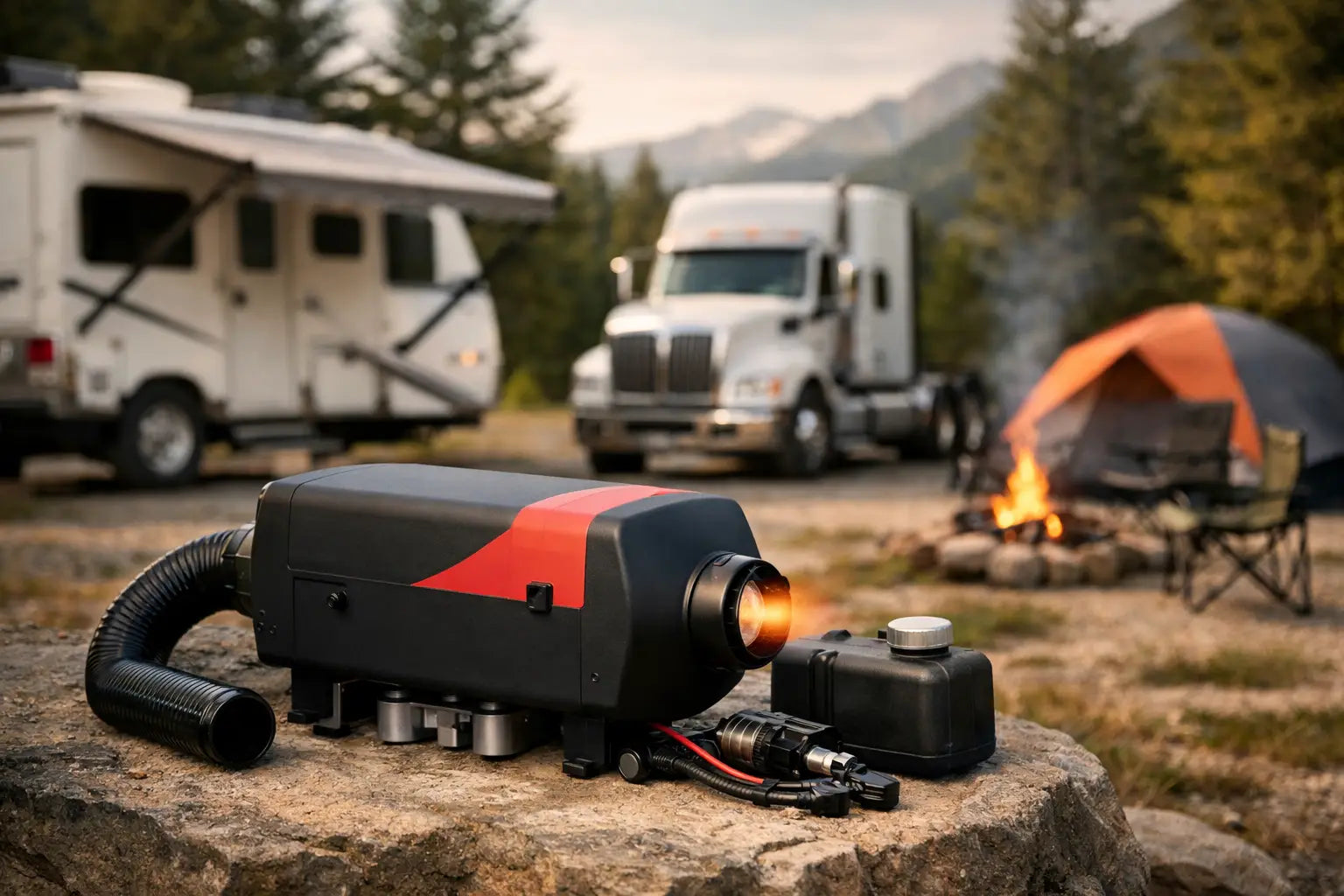

A cold night can turn a well-planned RV stop, hunting trip, or ice-fishing weekend into a long wait for sunrise. This diesel heater review focuses on what matters when you need practical heat: real-world output, fuel use, power demands, installation, noise, and safe operation. The right heater can make shoulder-season camping and winter travel far more comfortable. The wrong setup can waste fuel, drain a battery, or create a serious safety risk.
A diesel air heater burns fuel in a sealed combustion chamber, then pushes warmed cabin air through a separate duct. Fresh air for combustion comes from outside, and exhaust must return outside. That separation is the main reason these heaters are popular for RVs, camper vans, work trucks, enclosed trailers, boats, and permanent ice-fishing shelters.
Their biggest advantage is dry heat. Propane heaters can add moisture to the air in some setups, while a properly installed diesel heater sends combustion byproducts outdoors. That means fewer wet windows, less condensation on walls, and a more comfortable sleeping space when temperatures drop.
Diesel heaters also sip fuel once they reach temperature. A small tank can often support an overnight run at low or medium output, depending on the heater size, outside temperature, insulation, and thermostat setting. For travelers who already carry diesel, the convenience is obvious. For gasoline vehicles, a separate fuel tank is usually part of the installation plan.
The trade-off is complexity. A portable propane heater can be carried into camp and put away later. A diesel heater needs a fuel source, wiring, intake and exhaust routing, and careful mounting. It rewards a thoughtful setup, not a rushed one.
Many diesel heaters are marketed by kilowatt rating, commonly around 2 kW, 5 kW, and 8 kW. Bigger numbers sound reassuring, but oversized heaters are not always better. A heater that is too large for a compact van or truck camper may heat the space quickly, then cycle down or run at a low setting most of the time. That can mean more fan noise, less consistent temperature control, and more unnecessary cost.
A 2 kW class heater is often a sensible match for a small truck cap setup, compact camper, or modest sleeping area. A 5 kW class unit gives more headroom for larger vans, enclosed trailers, small RVs, and poorly insulated spaces. Larger heaters can make sense for bigger cabins or serious cold-weather use, but the published rating alone does not tell the whole story.
Insulation changes the equation. A well-insulated van with window covers, sealed gaps, and insulated flooring may need much less heat than a drafty trailer of the same size. Think about the conditions you actually face: a 35-degree fall night at a campground is different from a windy 5-degree night at a remote trailhead.
If you regularly camp in cold weather, prioritize a heater with enough reserve capacity to recover after opening doors, drying wet gear, or warming the cabin at bedtime. If most of your trips are cool rather than frigid, right-sizing the unit will usually provide quieter, more efficient comfort.
Fuel consumption is one of the strongest selling points. At a low setting, many diesel heaters use a relatively small amount of fuel per hour. At maximum output, consumption rises quickly, so running a heater flat out all night is rarely the most efficient plan. Warm the cabin before bed, then maintain a lower overnight temperature with bedding that matches the forecast.
Electrical use deserves equal attention. The glow plug draws a noticeable surge during startup, while the fan and fuel pump require much less power after the unit is running. A weak vehicle battery, undersized wiring, or loose connection can cause failed starts and error codes when temperatures are lowest.
For overnight use away from shore power, pair the heater with a healthy deep-cycle battery or a properly designed auxiliary power system. A basic battery monitor helps you see what is happening before voltage gets too low. This is one area where dependable wiring and correctly sized fuses are worth more than bargain shortcuts.
Diesel heaters make several kinds of noise: the steady rush of the cabin-air fan, the click of the metering pump, and the sound of combustion and exhaust outside. Quality installation makes a big difference. Mounting the fuel pump on an isolator, securing ducts, and avoiding metal-to-metal vibration can reduce the sounds that become irritating at 2 a.m.
A heater mounted close to the sleeping area will always be more noticeable than one installed under a bench, in an exterior compartment, or beneath the floor with proper protection. Consider where you sleep, where your neighbors camp, and whether the heater will run through quiet hours. A little installation planning can preserve both warmth and peace at camp.
The heater itself may be compact, but its installation should be treated as a permanent vehicle or shelter system. The mounting surface must be solid and heat-safe. Combustion intake and exhaust components need to be routed outside, separated from each other, protected from road debris, and kept clear of doors, windows, vents, and anything flammable.
Never route exhaust into an enclosed space, under a tent fly, or into an area where fumes can collect. Exhaust systems become extremely hot. Maintain manufacturer-specified clearances, use the correct heat shielding, and inspect the system after rough roads or trailer travel.
Fuel routing matters too. Use compatible fuel line, secure every connection, protect the line from abrasion, and keep it away from heat sources and moving parts. A dedicated tank is often the simplest option for a portable-style installation. Tapping a vehicle tank can be cleaner for a permanent build, but it is more involved and may be better handled by an experienced installer.
For RVs, trailers, and boats, plan service access before drilling holes. You will eventually need to inspect wiring, clean the intake, check fuel connections, and replace wear items. A heater hidden behind finished panels may look tidy on day one but become frustrating when maintenance is due.
A diesel heater is not a substitute for safe ventilation, working alarms, or common sense. Install a carbon monoxide detector inside the occupied space and test it before each trip. A smoke alarm and a properly rated fire extinguisher belong nearby as well. These are small additions with outsized value when you are sleeping far from help.
Before every cold-weather outing, inspect the exhaust pipe, intake, wiring, fuel line, and mounting hardware. Look for crushed tubing, loose clamps, chafed wires, fuel odor, soot marks, and debris around the exhaust outlet. If the heater starts smoking heavily, smells unusual inside, repeatedly shuts down, or triggers a carbon monoxide alarm, turn it off and diagnose the issue before using it again.
Portable diesel heater boxes can be useful for heating a tent or shelter from outside, with warm air ducted in. The heater and its exhaust still stay outdoors, on stable ground, and away from fabric, snow buildup, and foot traffic. Do not place a running combustion heater inside a standard tent or enclosed shelter unless the system is specifically designed, installed, and vented for that use.
Diesel heaters are a strong fit for people who make regular overnight trips in an RV, van, truck camper, enclosed trailer, boat cabin, or ice-fishing shelter. They are especially useful for hunters arriving before daylight, anglers launching in cold weather, and road trippers who want to extend their camping season without relying on campground hookups.
They are less ideal for the occasional fair-weather camper who wants instant, zero-install heat. If your trips are limited to mild weekends, extra sleeping insulation and a good camp blanket may be the simpler answer. But if cold weather keeps cutting trips short, a properly installed diesel heater can be one of the most practical upgrades you make.
The best diesel heater is not necessarily the highest-rated unit or the cheapest kit. It is the one sized for your space, installed with safe exhaust routing, supported by reliable power, and simple enough to inspect and maintain. Look for clear controls, readily available replacement parts, solid mounting hardware, and instructions that match your intended installation.
Outdoor Up shoppers who camp, tow, hunt, fish, or travel through changing seasons should think of a diesel heater as a comfort-and-readiness tool. Build the system carefully, test it before the first real cold snap, and you will spend less time shivering in the dark and more time enjoying the trip you came to take.