Your Cart is Empty



A trailer can feel perfectly settled until one small roll turns setup into a scramble. So, do wheel chocks work? Yes - when you choose the right chocks, place them correctly, and use them as part of a complete parking routine. They are simple gear, but they do a serious job: helping keep your RV, boat trailer, utility trailer, or truck from moving when it needs to stay put.
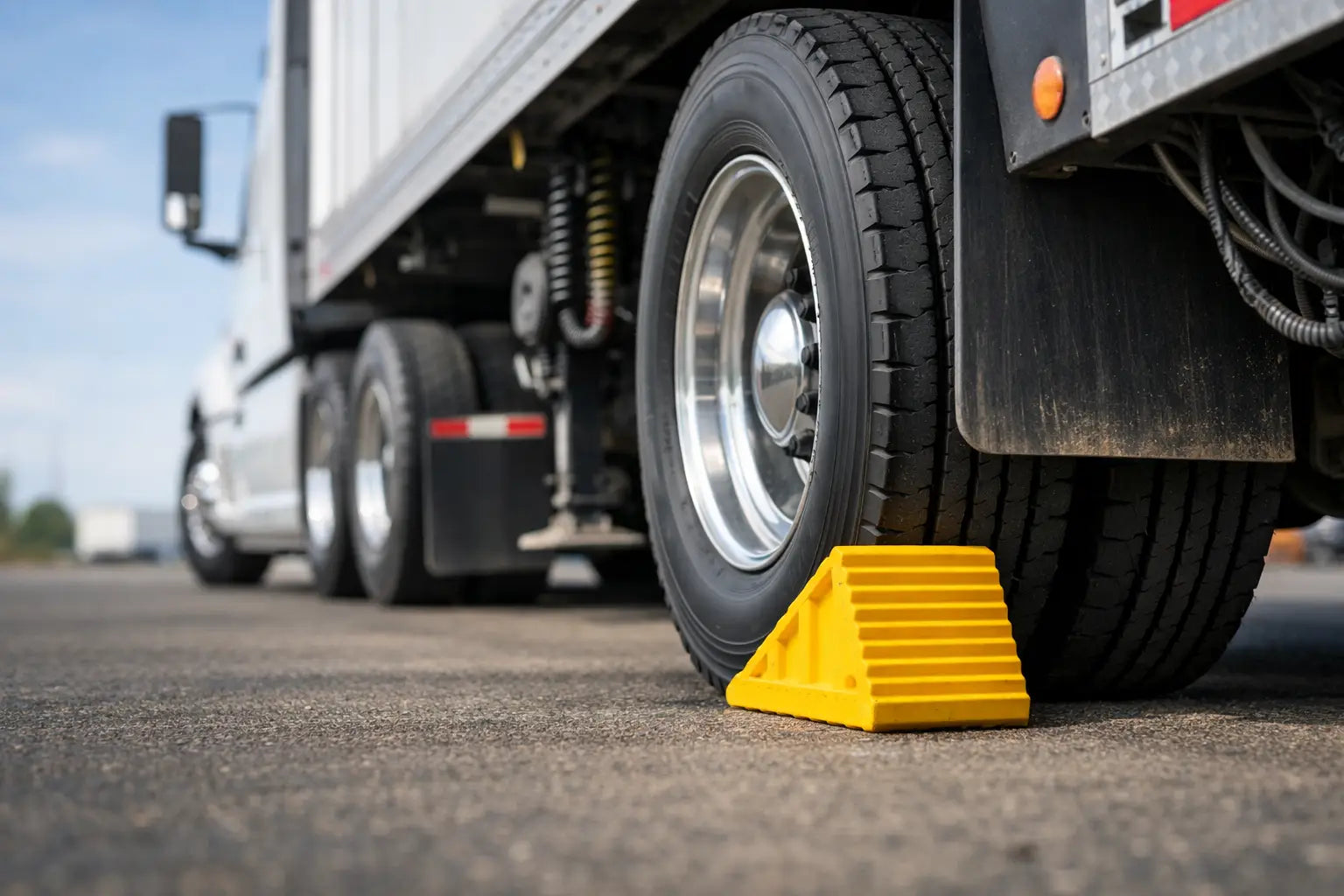
Wheel chocks work by creating a physical barrier against the tire. If a rig tries to roll, the tire presses into the chock instead of continuing forward or backward. On level, firm ground, a properly sized chock can provide meaningful protection against small shifts caused by a change in weight, people moving inside an RV, or a bump during loading.
But a chock is not magic. Its effectiveness depends on the tire size, vehicle weight, slope, surface, and the material of the chock. A lightweight plastic chock may be fine for a small utility trailer on packed gravel. That same chock may not be the best choice for a loaded travel trailer on a steep, wet campsite.
Think of wheel chocks as a critical layer of protection, not a substitute for using your parking brake, placing a transmission in Park, or connecting a trailer correctly. For trailers that are not attached to a tow vehicle, chocks are especially essential.
A tire rolls because its round shape can move over the ground. A wheel chock interrupts that movement with a wedge-shaped stop. The tire pushes against the angled face, while the flat base resists sliding across the ground.
Good grip comes from a few factors working together. The chock needs enough height to meet the tire effectively, a broad enough base to resist being pushed away, and a material that grips the surface. Rubber chocks tend to bite well on pavement and concrete. Heavy-duty molded plastic models are lighter to carry and often work well for camping and trailering. Metal chocks can be extremely durable, though they may slide on smooth surfaces if they do not have a rubberized base.
The ground matters just as much as the chock. On dry pavement, the base has a predictable surface to push against. Loose sand, mud, icy gravel, or slick grass can let a chock slide, sink, or tilt. If your campsite surface is soft, take extra time to find the most stable placement possible.
The best wheel chock is not always the biggest or heaviest one on the shelf. It is the one designed for the load and tire size you are managing. Check the product's recommended tire diameter and weight capacity before adding it to your trailer or RV kit.
For a small cargo trailer, pop-up camper, or lightweight boat trailer, sturdy plastic or rubber chocks are often practical and easy to store. For larger travel trailers, fifth wheels, and motorhomes, step up to heavy-duty rubber or reinforced chocks with a wide footprint. Heavier rigs create more force against the chock, especially when parked on even a mild grade.
Tandem-axle trailers deserve special attention. Standard wedge chocks placed against the outside tires help prevent rolling, while X-style chocks fit between two tires on the same side of the trailer. X-chocks can reduce the back-and-forth rocking you feel inside the camper. They are useful for stabilizing, but they should not be your only protection against rolling unless the manufacturer specifically states they are rated for that purpose.
A practical setup for many RV owners includes at least two durable wheel chocks, plus additional chocks for longer stays, uneven sites, or multi-axle trailers. Having spares is cheap insurance when one gets muddy, damaged, or left behind at the last campground.
Placement is where many people lose the benefit of good gear. The chock should sit snugly against the tire, not a few inches away from it. If there is space between the tire and chock, the vehicle can gain momentum before it reaches the barrier.
Park as level as you can, set the tow vehicle's parking brake, and shift into Park or the appropriate gear for a manual transmission. Once the rig is stopped, place chocks on the downhill side of the wheels. If you are parked nose-down, chock the front side of the tires. If you are parked nose-up, chock the rear side.
On a steep or questionable slope, use chocks on both sides of the wheel whenever possible. That protects against movement in either direction and is a smart move when unhooking a trailer from the tow vehicle.
For a dependable setup, follow this routine:
Chocks matter anytime a vehicle or trailer is parked, but there are situations where they move from helpful to non-negotiable. Loading an ATV, mower, kayak cart, or coolers into a trailer can shift weight fast. A trailer can move enough to create a dangerous gap at a ramp or hitch.
They are also vital before unhitching. The coupler may be disconnected, but the trailer still has thousands of pounds of weight waiting to follow gravity. Chock the wheels before you raise the tongue with the jack. Never rely on the jack alone to hold the trailer in place.
At camp, wheel chocks support a more stable setup. Once the trailer is chocked and leveled, you can move around, extend slides if your RV has them, and settle in with greater confidence. For boat owners, chocking the trailer before launching prep or unloading gear helps keep a busy ramp from becoming more stressful than it needs to be.
Wheel chocks are not designed to compensate for unsafe parking. If the slope is extreme, the ground is slick, or the load is beyond the chock's rating, find a safer position. A chock can be forced to slide, crush, or flip when it is asked to hold more than it was built for.
They also do not replace proper trailer maintenance. Worn brakes, a faulty parking brake, damaged tires, and a loose hitch all create risks that chocks cannot solve. Use them alongside sound equipment checks, not instead of them.
One more caution: never put yourself downhill from a vehicle or trailer while positioning a chock. Keep hands and feet clear of the tire's path. If the rig begins to move, step away rather than trying to stop it by hand.
The most common mistake is using a chock that is too small. A low-profile chock can sit under the tire's contact point without providing enough resistance. Another is placing chocks only after unhitching, when the trailer may already shift as the tongue weight changes.
It is also easy to forget that leveling changes the forces on your wheels. Raising one side of an RV onto leveling blocks can slightly reposition the rig. Once it is level, walk around and make sure every chock is still firmly seated against its tire.
Finally, do not confuse wheel chocks with wheel stops found in parking lots. A fixed parking stop may help guide a vehicle into place, but it is not a portable, rated solution for securing an RV or trailer at camp.
A pair of dependable wheel chocks takes up little room in your gear kit, yet it can make every stop feel more controlled. Before you unload, unhook, or settle into camp, take the extra minute to chock the wheels and give your next adventure a steadier start.