Your Cart is Empty



A trailer can turn a weekend into a better adventure - until a loose load shifts at highway speed, a coupler comes free, or you return to an empty parking spot. Knowing how to secure a trailer means protecting your gear, your vehicle, other drivers, and the trip you planned. The right routine takes only a few minutes, but it needs to happen every time you tow.
Start with the ground beneath the trailer. Park on firm, level pavement or packed ground whenever possible, set the tow vehicle's parking brake, and chock the trailer wheels before loading. Wheel chocks matter even when the trailer is connected to the vehicle. A slight grade, shifting weight, or a bump from a loading ramp can move an unchocked trailer fast.
Inspect the trailer itself before adding gear. Check the tires for proper inflation, cracks, and obvious damage. Look over the wheels, lights, safety chains, ramps, coupler, jack, and tie-down points. If a D-ring is bent, a strap is frayed, or the coupler latch does not close positively, fix it before the trip. Do not assume a problem will hold together for one more run to the lake, trailhead, or campground.
Loading capacity matters just as much as the hardware. Confirm the trailer's gross vehicle weight rating, the axle rating, tire limits, and the towing capacity of your vehicle. Your trailer may physically have room for an ATV, a stack of camp bins, a generator, and a cooler, but that does not mean it can safely carry all of them.
A stable trailer starts with balanced weight. Place heavier cargo low and close to the trailer axle, with a modest amount of weight toward the front. Too much weight behind the axle can cause trailer sway. Too much weight on the tongue can overload the hitch, rear suspension, or tow vehicle.
A common target is about 10 to 15 percent of the loaded trailer weight on the tongue, but always follow the limits for your trailer, hitch, and vehicle. A tongue weight scale is useful for frequent towing, especially with utility trailers, boat trailers, and enclosed cargo trailers.
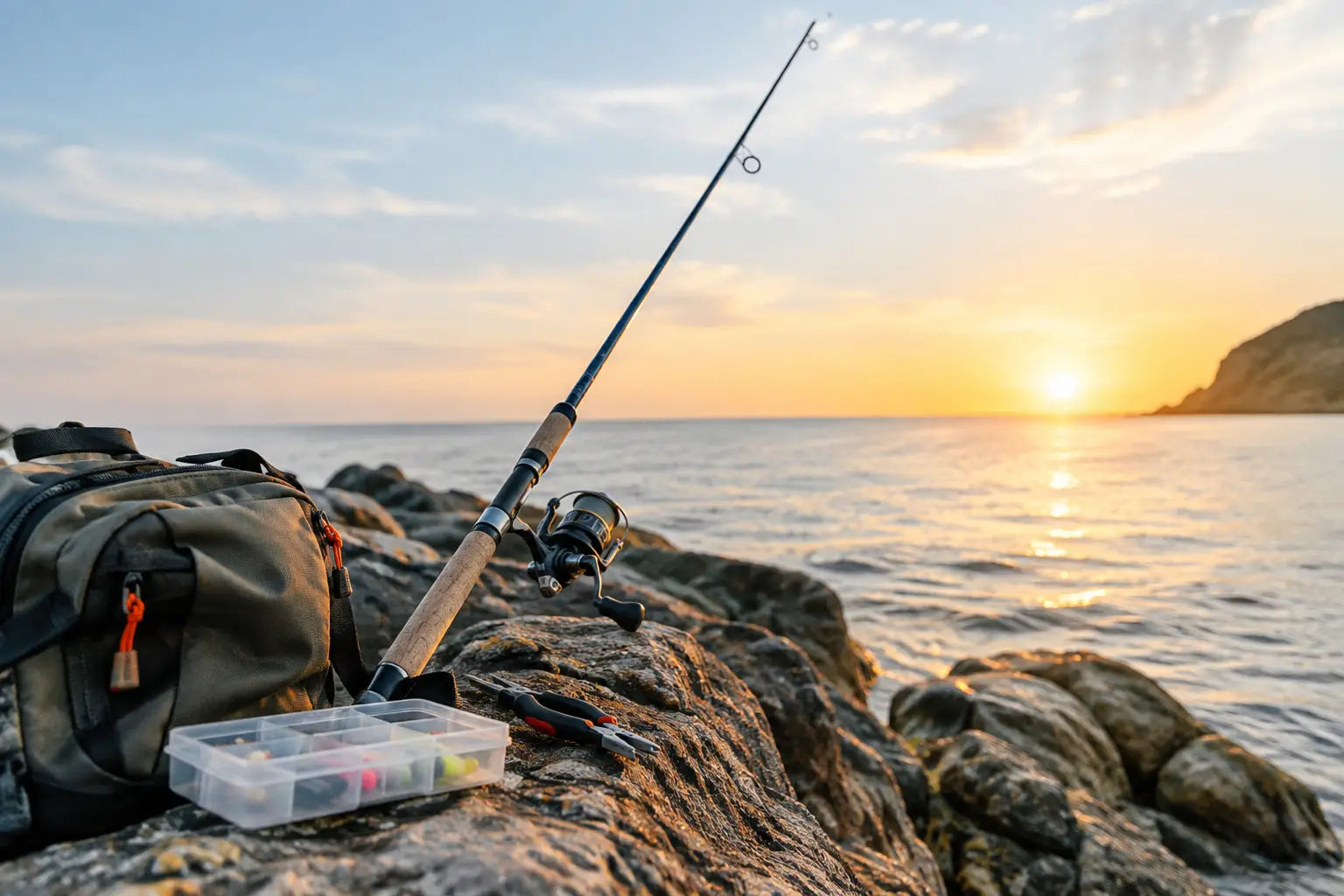
Avoid stacking loose gear high just because it fits. Fishing tackle boxes, fuel cans, camp chairs, coolers, firewood, and recovery gear can become dangerous projectiles if a strap loosens or you brake hard. Put heavy items down first, keep lighter items low where possible, and use bins or cargo nets for small loose equipment.
Ratchet straps, cam buckle straps, chains, and cargo nets all have a place, but they are not interchangeable. Select tie-downs with a working load limit appropriate for the item being secured. The working load limit is the number that matters in real use, not the higher break-strength number printed on some packaging.
Use at least two independent tie-downs for most large items. For an ATV, UTV, motorcycle, or other rolling equipment, four-point tie-downs are generally the better choice. Attach straps to solid frame points or manufacturer-approved locations, not plastic bodywork, handlebars that can bend, or suspension parts that are not designed for restraint.
Crossing straps can add side-to-side stability for some loads, but the best setup depends on the cargo and trailer anchor points. The goal is simple: the load should not slide forward, backward, or sideways. After tightening the straps, push and pull the cargo by hand. If it moves easily, it is not ready for the road.
Protect straps from sharp metal edges and keep excess webbing tied up. A strap flapping in the wind can fray quickly, and a loose hook can work free. Recheck tension after the first 10 to 15 miles, then during fuel or rest stops. New straps often settle once the load shifts into place.
Back the tow vehicle squarely to the trailer and confirm that the hitch ball is the correct size for the coupler. Lower the coupler fully onto the ball, close and lock the latch, then raise the trailer jack slightly to verify the coupler is actually seated. This simple lift test can prevent a serious disconnect.
Connect the safety chains in a crossed pattern beneath the coupler. They should have enough slack for turns but not so much that they drag on the ground. Crossed chains can help cradle the tongue if the coupler disconnects. Attach them to the vehicle's designated chain connection points, not to the hitch ball or an improvised location.
Connect the breakaway cable separately from the safety chains. It should be clipped to a solid point on the tow vehicle and have enough length for turns without dragging. Do not loop it around the hitch in a way that keeps it attached if the trailer separates. For trailers equipped with electric brakes, test the breakaway system according to the trailer manufacturer's instructions.
Finally, plug in the wiring harness and test the running lights, brake lights, turn signals, and hazard lights. Have a helper stand behind the trailer, or use reflections and a phone camera if you are alone. If you tow often, keeping a small light tester in the glove box is a smart move.
Road safety is only half the job. Campgrounds, boat ramps, storage lots, driveways, and trailhead parking areas can all be targets for trailer theft. A visible security setup will not stop every determined thief, but it can make your trailer a less appealing target and buy valuable time.
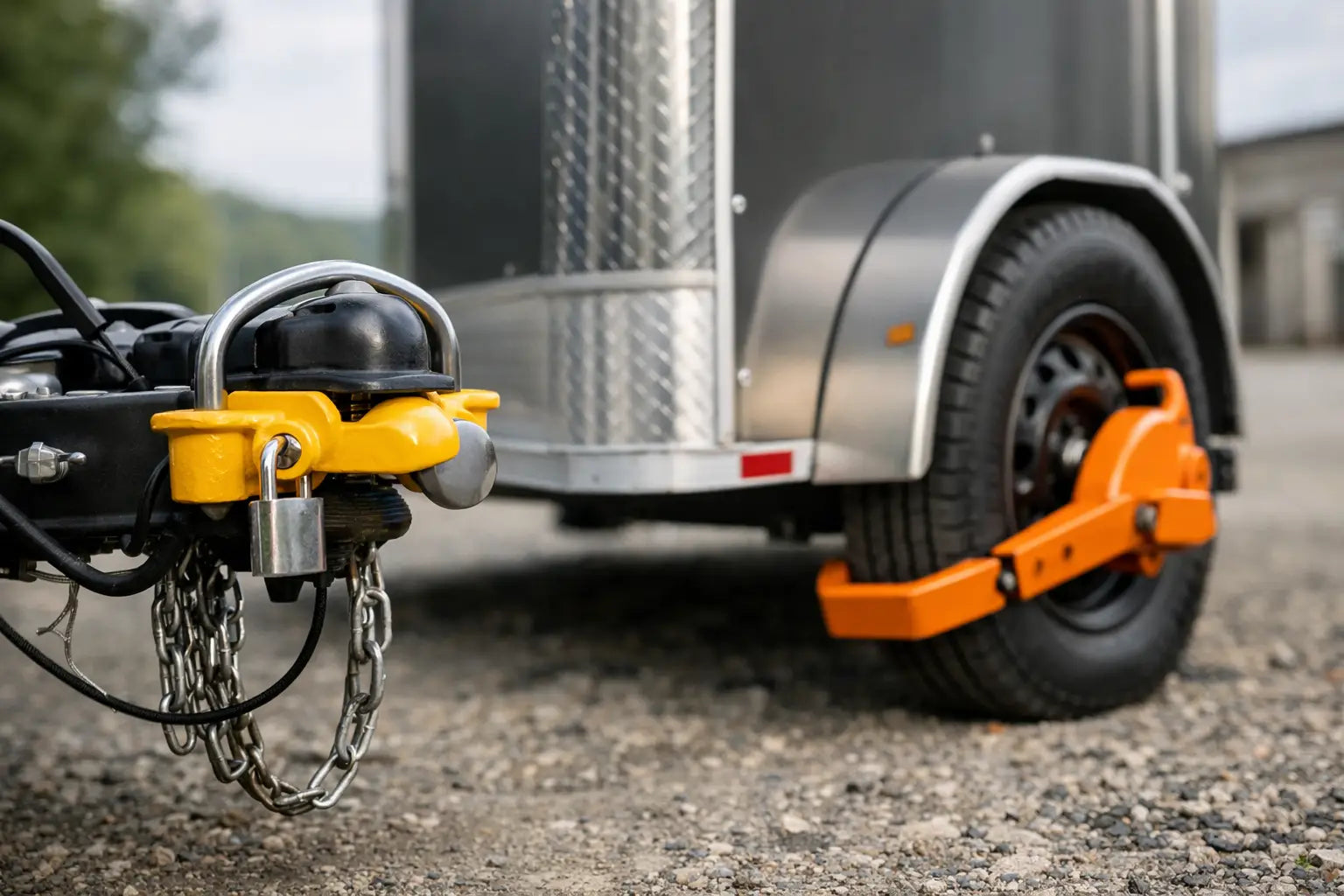
A coupler lock prevents someone from quickly attaching your trailer to another vehicle. Choose a lock made for your coupler style and check that it fits tightly enough that it cannot be twisted or pried off easily. When the trailer is disconnected, a hitch pin lock is useful for securing removable ball mounts as well.
For longer-term storage, add a wheel lock or wheel boot. This is especially helpful for utility and boat trailers that are easy to move. A heavy-duty chain through a wheel or axle, secured to a fixed anchor, can add another layer where practical. Do not rely on one small padlock for a high-value trailer loaded with outdoor gear.
If you store a trailer at home, keep it in a well-lit area and avoid leaving high-value items visible inside or on the deck. Remove portable electronics, fishing gear, firearms, fuel containers, and easy-to-grab accessories. An enclosed trailer can look like a locked treasure chest when expensive gear is left inside.
Record the trailer's VIN, license plate number, make, model, and photos of its unique features. Marking tools and accessories with identification also helps if equipment is recovered later. These steps do not replace insurance, but they make a theft report far more useful.
Your final walk-around should be quick and consistent. Confirm the coupler is latched, the jack is fully raised, chains and breakaway cable are connected, lights work, tires look properly inflated, and ramps or doors are locked. Check every tie-down, especially the hooks and anchor points. Make sure nothing can drag, bounce out, or catch the road.
Once you are moving, give yourself extra braking distance and take turns wider than usual. Trailer handling changes with weight, wind, road surface, and speed. If you feel sway, do not accelerate through it. Ease off the throttle, keep the steering steady, and use the trailer brake controller if your setup has one and the manufacturer recommends it.
A secure trailer is not about buying the most gear or using the biggest lock. It is about using correctly rated equipment, loading with balance, and building a repeatable check before every departure. Take those few extra minutes, then hitch up with confidence and get outside more.