Your Cart is Empty


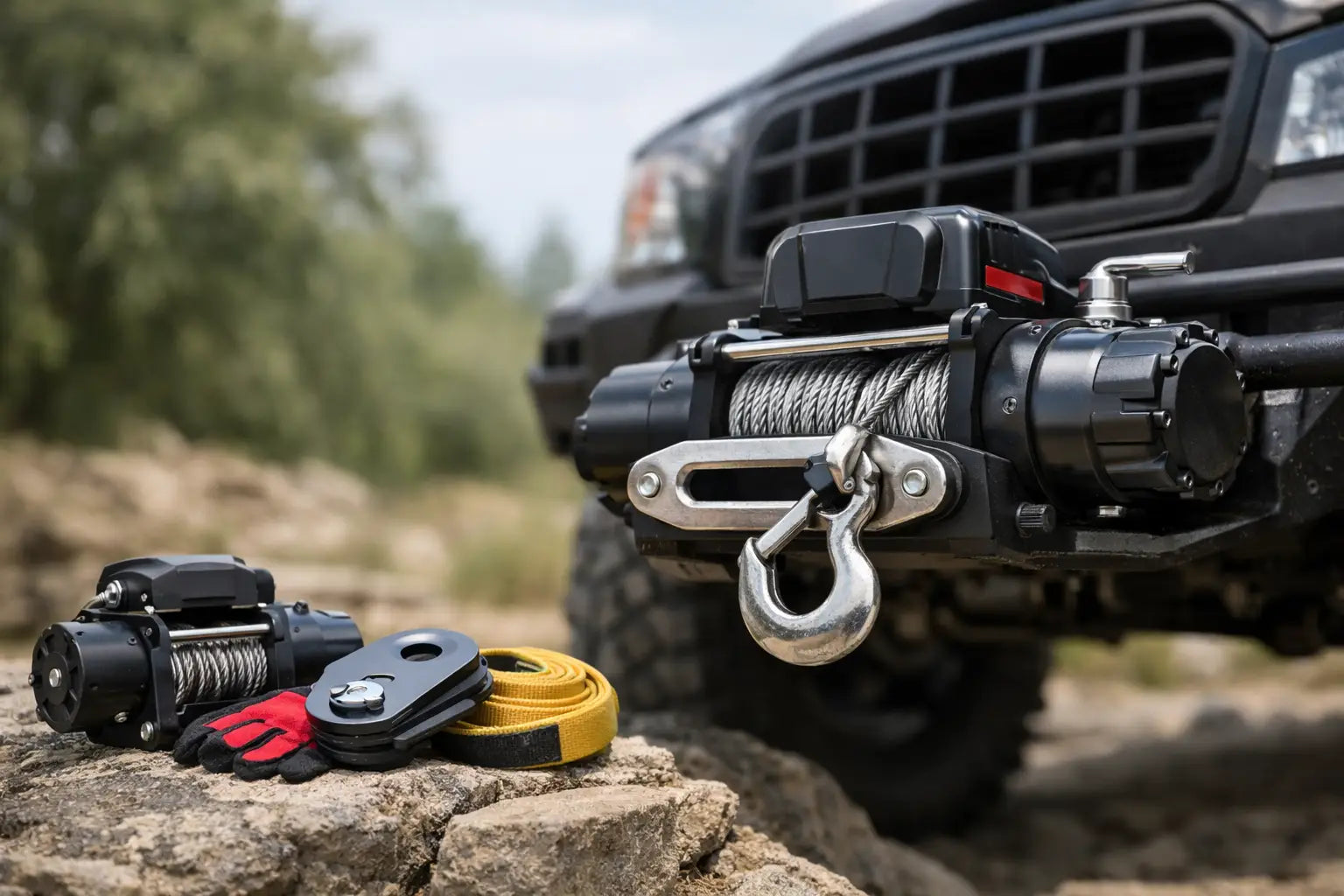

A winch that is too small can turn a manageable recovery into a stalled-out problem. A winch that is oversized may cost more, add unnecessary weight, and demand more from your electrical system. So, what size winch do i need? Start with the loaded weight of what you are pulling, then account for mud, hills, rolling resistance, and the fact that winch ratings are measured under ideal conditions.
For most off-road vehicles, the simple answer is to choose a winch rated at least 1.5 times your vehicle's gross vehicle weight rating, or GVWR. That gives you useful pulling power when conditions are less than perfect - which is usually when you need a winch most.
For a Jeep, SUV, pickup, or side-by-side, use the vehicle's GVWR rather than its empty curb weight. GVWR represents the maximum safe loaded weight of the vehicle, including passengers, cargo, fuel, accessories, and aftermarket upgrades. A camping-ready truck with a bed rack, recovery gear, cooler, rooftop tent, and full fuel tank can weigh far more than it did on the dealer lot.
Take the GVWR and multiply it by 1.5. That is your baseline winch rating.
A Jeep with a 5,000-pound GVWR needs at least a 7,500-pound winch. In real-world shopping, an 8,000- or 9,500-pound model is a smart fit. A half-ton pickup with a 7,000-pound GVWR should generally run a 10,500- or 12,000-pound winch. For a heavily equipped full-size truck, a 12,000- to 15,000-pound winch is often the better call.
This margin matters because a stuck vehicle rarely needs to be pulled across dry, level pavement. Deep mud can create suction. Sand builds resistance. Snow packs beneath the tires. A slope adds load fast. The 1.5-times rule helps make sure your winch has enough capacity when the trail gets demanding.
A 4,500- to 6,000-pound winch commonly fits ATVs, UTVs, and compact utility vehicles. A 8,000- to 10,000-pound winch works well for many Jeeps, midsize trucks, and lighter SUVs. A 10,000- to 12,000-pound winch is a dependable range for half-ton trucks and loaded overland rigs. Heavy-duty pickups, large work trucks, and seriously built trail rigs may need 12,000 to 15,000 pounds or more.
Do not choose by vehicle class alone. Two trucks with the same badge can have very different loaded weights, bumper setups, and intended uses. Check the door-jamb GVWR label, then size from there.
A winch's advertised capacity is usually its maximum line pull on the first layer of rope wrapped around the drum. As more cable or synthetic rope builds up on the drum, the effective pulling power drops. That is one reason a winch that looks adequate on paper can feel underpowered during a hard recovery.
The strongest pulls happen with more line paid out, leaving fewer wraps around the drum. Never unwind the rope completely, though. Keep the number of wraps required by the winch manufacturer on the drum so the rope remains securely anchored.
Angle also matters. Pulling straight ahead is easiest on the winch, rope, and fairlead. A hard side pull can bunch rope on one side of the drum, increase wear, and reduce control. If the recovery point is off to the side, use a snatch block, recovery ring, or another properly rated rigging method to improve the pull angle.
A light trail rig that sees forest roads, occasional snow, and campground access needs a different recovery setup than a truck that regularly works muddy lease roads or climbs rocky backcountry trails. Think about the places where you are most likely to get stuck, not just the easy days.
Mud and wet clay call for extra capacity because tires can sink and the ground can hold the vehicle in place. Sand may not look dramatic, but it creates heavy rolling resistance and can bury a loaded vehicle quickly. On steep terrain, gravity adds another challenge. If you often travel alone in remote areas, it is wise to favor the next size up instead of buying at the bare minimum.
A larger winch is not permission to make risky recoveries. It is simply more reserve capacity when conditions demand it. Choose a safe line, assess the recovery point, clear bystanders, and work slowly.
Trailer winches are sized by the rolling load, not always the full weight of the trailer or boat. A boat trailer rolling up a properly angled ramp on good rollers may require far less pulling force than the boat's total weight. But a steep ramp, bunk-style trailer, low water, crosswind, or a stuck load can change the equation quickly.
For a manual or electric boat trailer winch, start with the fully loaded boat-and-trailer weight, then follow the winch maker's application guidance for your trailer style and ramp conditions. A winch rated for the full load is a conservative choice, especially if you launch at different ramps or pull a larger fishing boat. Do not assume a small utility winch can safely handle a heavy boat simply because the trailer rolls on level ground.
For car haulers, equipment trailers, and utility trailers, consider whether you are pulling a rolling load onto the deck, dragging a disabled machine, or recovering something that cannot roll freely. A rolling ATV is one thing. A locked-up truck in soft ground is another. Match capacity to the toughest realistic job, not the easiest one.
A properly used snatch block or recovery ring can nearly double your mechanical advantage in a single-line-to-double-line pull. That can make a 9,500-pound winch much more capable when you need extra control and pulling force. It also reduces the load on the winch, though it cuts line speed roughly in half.
Good rigging is more than an upgrade. It is part of a complete recovery setup. Carry appropriately rated soft shackles or D-rings, a tree saver or recovery strap, gloves, and a line damper. Use recovery points designed for the load. A trailer hitch ball, thin bumper bracket, or random suspension component is not a safe anchor point.
If you are recovering from a tree, protect the bark with a wide tree saver strap. When using another vehicle as an anchor, make sure it is on firm ground, properly secured, and connected to a rated recovery point. Controlled pulls beat sudden jerks every time.
Either option can work, but the choice affects how you use and maintain your winch. Synthetic rope is lighter, easier to handle, and less likely to store dangerous energy if it breaks. It is a popular choice for recreational off-roaders who want a lighter front end and simpler trail handling. It does need protection from abrasion, sharp edges, UV exposure, and excessive heat.
Steel cable is durable against abrasion and has long been common on work rigs. It is heavier, can develop sharp strands, and needs regular inspection for kinks, corrosion, and fraying. If your vehicle sees tough utility work around rocks, brush, and abrasive surfaces, steel may still make sense. For many weekend trail and overland setups, synthetic rope is the easier option to live with.
Whichever you choose, inspect it before every serious pull. Damaged rope or cable is not a minor issue. Replace worn components before they become a recovery-day failure.
A 12,000-pound winch is only useful if the bumper, mounting plate, bolts, wiring, and battery system can support it. Use a vehicle-specific winch mount or a properly engineered bumper, and follow the torque and wiring instructions that come with the winch. The mount must be rated for the winch capacity and recovery loads, not just built to hold the winch's weight.
Electric winches draw serious amperage under load. Keep battery terminals clean, inspect cables for damage, and make sure your battery is healthy. Frequent recovery use, cold-weather travel, or added electrical accessories may justify a higher-capacity battery or dual-battery setup. Run the engine during a recovery when it is safe to do so, allowing the alternator to help support the system.
Also confirm that your fairlead matches your line. Hawse fairleads are commonly used with synthetic rope, while roller fairleads are traditionally paired with steel cable. The wrong combination can wear the line faster.
The best winch size is not the smallest number that might work on a calm day. It is the capacity that gives your loaded vehicle or trailer a safe margin when weather, terrain, and weight stack the odds against you. Build the system around your real adventures, pack the right recovery gear, and you will be ready to Venture Further with a lot more confidence.