Your Cart is Empty


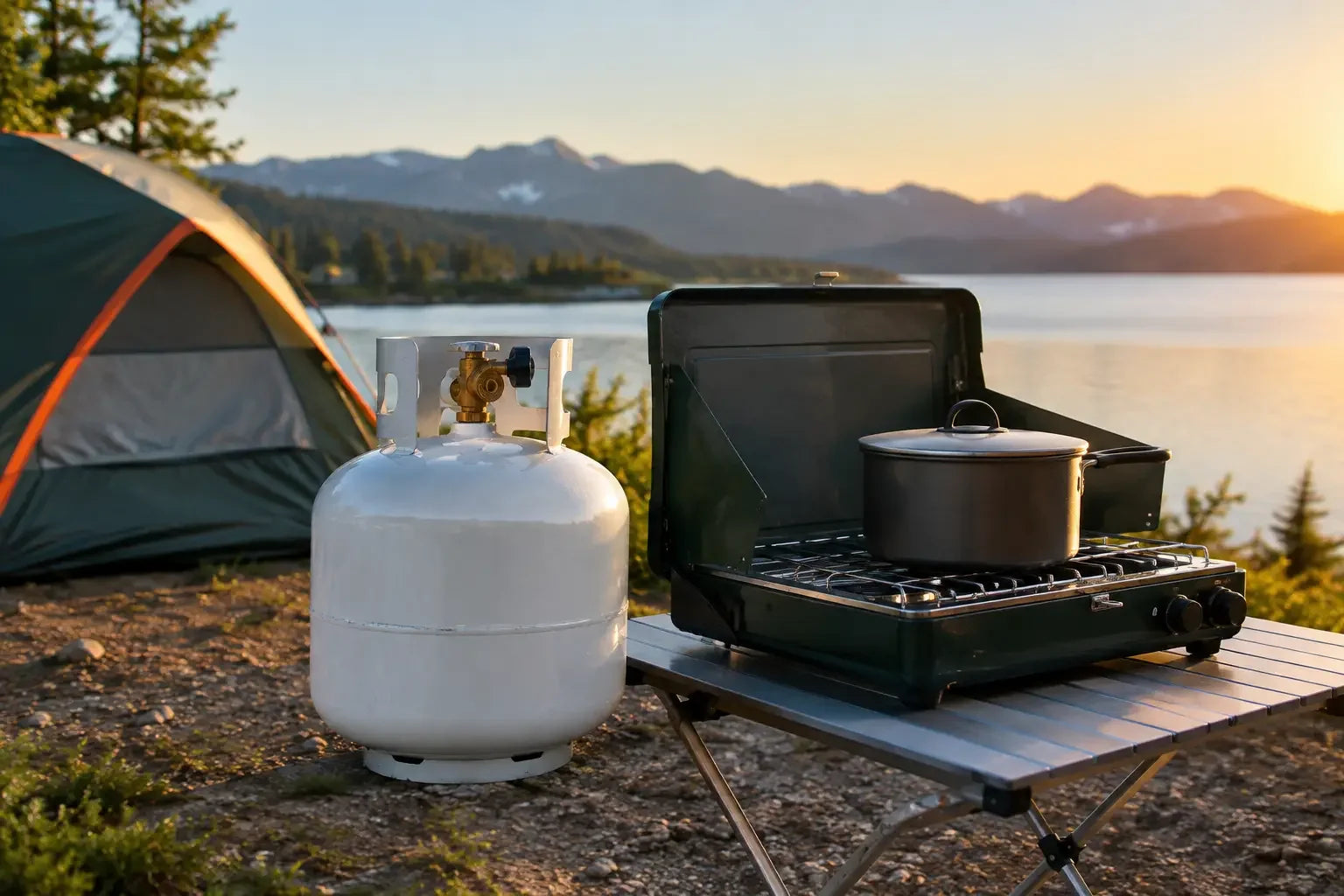

A cold sunrise, a skillet full of breakfast, and a propane cylinder that suddenly sputters out is an avoidable way to start the day. Knowing how long propane lasts camping helps you pack enough fuel without loading the truck or camper with tanks you will never use. The answer depends on the appliance, its BTU rating, the setting you use, and how much time it actually runs.
For most weekend campers, one 1-pound cylinder handles basic cooking. Add a propane heater, a griddle, or a multi-day group campsite, though, and fuel needs climb fast. A quick estimate before you leave means hotter meals, warmer nights, and fewer last-minute supply runs.
Propane contains about 21,600 BTUs of energy per pound. That gives you a reliable starting point for estimating run time. Divide the total BTUs in your cylinder by the BTUs per hour listed on your appliance.
A 1-pound propane cylinder holds roughly 21,600 BTUs. A full 20-pound cylinder holds about 432,000 BTUs. In real use, wind, cold conditions, burner adjustments, and imperfect fuel gauges can affect results, so treat every estimate as a planning range rather than a guarantee.
| Propane container | Approximate fuel capacity | Total BTUs | Best use |
|---|---|---|---|
| 1-pound cylinder | 1 pound | 21,600 BTUs | Compact stoves, lanterns, short trips |
| 5-pound cylinder | 5 pounds | 108,000 BTUs | Weekend cooking or small heaters |
| 20-pound cylinder | 20 pounds | 432,000 BTUs | Family camps, RVs, extended stays |
For example, a single 10,000-BTU burner running at full blast would use a 1-pound cylinder in about 2.1 hours. Run that same burner at a medium setting around 5,000 BTUs, and the cylinder may last closer to four hours. Most camp cooking is not nonstop high heat, so a 1-pound cylinder can often cover a weekend of coffee, breakfast, and simple dinners for one or two people.
Use this simple formula:
Propane run time in hours = total cylinder BTUs ÷ appliance BTUs per hour
The BTU rating is usually printed on the stove, heater, grill, or its packaging. Check the rating for each burner, not just the appliance total. A two-burner camp stove may be rated at 20,000 BTUs with both burners on high, but you may only use one burner at a time.
Here is what common propane-powered camp gear looks like at full output:
| Appliance | Typical BTU rating | 1-pound cylinder run time | 20-pound cylinder run time |
|---|---|---|---|
| Single camp stove burner | 7,500-10,000 BTUs | 2-3 hours | 43-58 hours |
| Two-burner stove, both burners high | 20,000 BTUs | About 1 hour | About 21 hours |
| Portable propane grill | 8,000-15,000 BTUs | 1.5-2.5 hours | 29-54 hours |
| Small propane heater | 4,000 BTUs | About 5.4 hours | About 108 hours |
| Medium heater setting | 9,000 BTUs | About 2.4 hours | About 48 hours |
| High-output portable heater | 18,000 BTUs | About 1.2 hours | About 24 hours |
Those numbers show why cooking fuel is usually easy to manage while heat deserves extra planning. A stove runs in short bursts. A heater might run for hours at a time, particularly during chilly shoulder-season camping.
BTU math gives you the baseline, but conditions at camp decide how close you get to it. Your cooking style matters most. Boiling a large pot of water with the burner wide open burns fuel far faster than simmering chili or warming breakfast on medium heat.
Wind is another major fuel thief. It pushes heat away from pots and cooking surfaces, so you run the burner longer to get the same result. Use the built-in windscreen on a compatible camp stove, choose a sheltered cooking spot, and keep open flames away from anything flammable. Never fully enclose a stove or heater to block wind.
Cold temperatures also affect performance. Propane needs to vaporize from liquid to gas inside the cylinder. As temperatures drop, especially below freezing, smaller cylinders can lose pressure and deliver weaker flame output. The fuel is still there, but it may not flow as efficiently. Keep spare cylinders upright, dry, and out of direct snow or standing water. Do not try to warm a cylinder with a campfire, stove, or open flame.
Finally, consider how many people are using the gear. A solo camper making oatmeal and coffee has very different fuel needs than a family cooking bacon, pancakes, burgers, and evening drinks. Plan from your real menu, not from the most optimistic estimate.
For a one- or two-night tent camping trip with one or two people, bring two 1-pound cylinders if you are using a compact stove for meals and coffee. You may only need one, but the second gives you a comfortable backup for a leak, a long cook, or a forgotten burner left on low.
For a family weekend using a two-burner stove and portable grill, four to six 1-pound cylinders can work, but a refillable 5-pound or 20-pound tank is often more practical. A larger tank produces less packaging waste, reduces cylinder swaps, and makes it easier to see your overall fuel supply. It does add bulk, so it is better suited to car camping, truck-bed setups, and RV campsites than backpacking.
If you plan to heat a tent, hunting blind, ice-fishing shelter, or other approved outdoor space, calculate heater fuel separately from cooking fuel. Do not assume your cooking cylinders will cover both. A 9,000-BTU heater can consume nearly a full 1-pound cylinder during one cold evening, depending on run time and thermostat cycling.
For an RV trip, start with the built-in tank capacity and check whether propane also powers the refrigerator, water heater, furnace, and range. The furnace is typically the biggest draw. A 20-pound cylinder might seem generous on paper, but several cold nights with the furnace running can change the picture quickly.
You do not need to eat cold food to conserve propane. A few smart habits make a noticeable difference. Prep ingredients before lighting the stove so the burner is not running while you chop vegetables or search for utensils. Keep lids on pots to boil water faster, and use cookware sized to the burner so flames do not spill around the sides.
Cook shared meals when possible. One large pot of pasta, chili, or stew uses less fuel than several separate pans. A good cooler also pays off: chilled food keeps longer, and you are less likely to rely on a propane-powered fridge or make extra trips for ice and supplies.
Bring a way to check fuel before it becomes critical. Some cylinders have built-in gauges, while larger tanks can be weighed or checked with a compatible tank gauge. If you use disposable 1-pound cylinders, carry a spare rather than trying to judge the remaining fuel by shaking the bottle. The liquid propane level is hard to estimate that way.
Propane is dependable when you treat it with the respect any pressurized fuel deserves. Transport cylinders upright and secured so they cannot roll around in a vehicle. Keep valve caps in place when cylinders are disconnected, and never leave them inside a hot, enclosed vehicle for long periods.
Before lighting an appliance, inspect the hose, regulator, and connection for cracks, damage, or dirt. If you smell propane, turn off the valve if it is safe to do so, move away from ignition sources, and allow the area to air out. Never test for leaks with a flame. Use a purpose-made leak solution or soapy water, then look for bubbles at the connection.
Use propane stoves, grills, and heaters only as their instructions allow. That means cooking outdoors or in a properly designed, ventilated camp kitchen, and never running a propane heater inside a tent, RV, vehicle, or enclosed shelter unless it is specifically approved for that environment. A carbon monoxide detector is a smart addition for any RV or enclosed camping setup.
A little fuel planning keeps the focus where it belongs: the trail ahead, dinner around camp, and a warm drink when the day winds down. Check your appliance ratings, pack one more cylinder than your estimate calls for, and gear up for the trip with confidence.