Your Cart is Empty


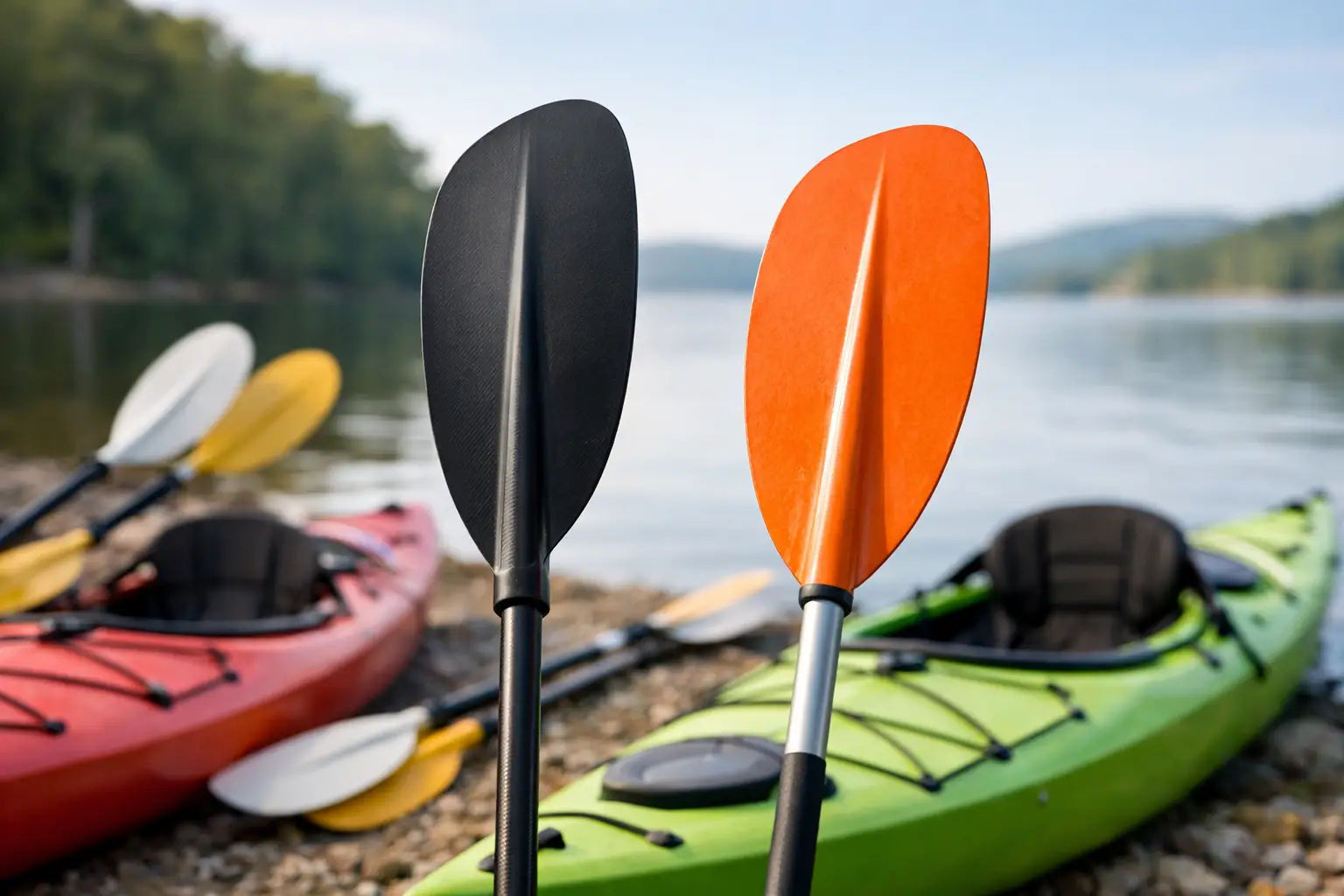

A kayak can be stable, comfortable, and ready for the water, yet still feel awkward if the paddle is wrong. Too long, and every stroke feels slow and tiring. Too short, and you may bang your knuckles on the deck or strain to reach the water cleanly. Learning how to choose a kayak paddle starts with your boat and body, then comes down to where you paddle and how hard you plan to push.
A good paddle is not just an accessory. It is your engine, steering wheel, and connection to the water. Choose one that fits your trip, and you will paddle farther with less effort and more control.
Paddle length is the first decision, and it is more than a height chart. Your kayak’s width matters just as much because a wider boat puts you farther from the water. You need a longer paddle to clear the sides and get a solid bite with each stroke.
For most recreational paddlers, a paddle between 220 and 240 centimeters is a practical starting range. A shorter 210 to 220 cm paddle often works well for narrow touring kayaks, lower seats, and paddlers using a more vertical stroke. Wider recreational kayaks, fishing kayaks, and sit-on-top models commonly call for 230 to 250 cm paddles.
Your torso height also matters. Two people of the same standing height may need different paddle lengths if one has a longer torso or sits higher above the water. If you are between sizes, think about your kayak first. A wide, high-seated fishing kayak generally benefits from the longer option. A narrow day-touring boat usually feels better with a shorter paddle.
Use these ranges as a starting point, then adjust for your kayak and paddling style:
Blade shape affects how the paddle moves water and how much energy each stroke requires. Larger blades catch more water, creating stronger acceleration. That sounds appealing, but it also puts more load on your shoulders, elbows, and wrists. For long, relaxed outings, a moderate blade is usually easier on the body.
Low-angle blades are longer and narrower. They suit a relaxed paddling style where your hands stay lower and the paddle shaft moves at a flatter angle across the kayak. This is a common fit for recreational paddling, lake cruising, wildlife watching, and long days at an easy pace.
High-angle blades are shorter and wider. They are designed for a more upright, powerful stroke. They work well for paddlers who want quicker acceleration, better control in moving water, or a more athletic pace. They can be a smart choice for touring, surf, and river paddling, but they are not automatically better for everyone.
For most beginners, a medium-size low-angle or versatile recreational blade is the safe choice. It offers enough power to move a loaded kayak without making every mile feel like a workout. If you fish from your kayak, remember that a paddle is often used in short bursts around docks, shoreline cover, and wind. Comfort and easy handling matter more than maximum power.
The lightest paddle in the rack is not always the right buy, but weight matters more than many new paddlers expect. You lift and rotate a paddle hundreds or thousands of times in a day. A few ounces saved at the shaft and blades can make a noticeable difference in fatigue.
Aluminum-shaft paddles are durable and budget-friendly. They are a dependable option for occasional paddling, family boats, rentals, and backup gear. The trade-off is weight, and aluminum can feel cold in cool weather or hot after sitting in direct sun. Grip sleeves can improve comfort, though they may hold water and stay damp.
Fiberglass shafts offer a lighter, warmer-feeling upgrade. They are a strong fit for paddlers who spend regular time on the water and want better comfort without stepping into premium pricing. Fiberglass blades can also provide a good balance of durability and performance.
Carbon fiber paddles are exceptionally light and efficient, making them attractive for touring paddlers and anyone with shoulder fatigue. They cost more and may not be the best choice for a paddle that will get tossed into a truck bed, shared around camp, or used hard against rocky banks. For many outdoor families, a quality fiberglass or hybrid paddle hits the sweet spot between performance, durability, and price.
Plastic or nylon blades are tough and practical for casual use. Fiberglass-reinforced or carbon-reinforced blades can be lighter and stiffer, which helps transfer more of your effort into forward motion. Stiffer is not always more comfortable, though. A little flex can soften the feel of each stroke and reduce stress during long sessions.
Most two-piece kayak paddles allow you to set the blades in line or at an angle to each other. That angle is called feathering. A feathered paddle lets the upper blade slice through the wind more easily while the lower blade is in the water. It can be helpful on open lakes, coastal water, and windy afternoons.
A non-feathered, or matched, setting keeps both blades aligned. Many beginners find it more natural because their wrists do not need to rotate as much between strokes. There is no need to force a feathered setup if it feels awkward. Start with what feels comfortable and experiment once your basic stroke becomes more automatic.
Also look at the connection system. A simple push-button ferrule is quick and reliable for casual use. A lever-lock or adjustable ferrule may offer more blade-angle settings and a tighter fit. Whichever system you choose, make sure it is easy to operate with wet hands and stays secure after repeated use.
A paddle shaft should feel controlled, not oversized or slippery. Standard round shafts work for most people, while ovalized sections can help you place your hands consistently without looking down. Smaller-diameter shafts are worth considering for paddlers with smaller hands or anyone who experiences hand fatigue.
Pay attention to the shaft’s flex as well. A very rigid shaft gives a direct, responsive feel, but it can transfer more impact into your joints. Moderate flex can feel smoother on all-day outings. If you have shoulder, wrist, or elbow concerns, prioritize a lighter paddle with a comfortable shaft diameter and moderate blade size over an oversized power blade.
Where you paddle should shape the final choice. Calm ponds and slow rivers reward a comfortable recreational paddle that will not wear you out. Larger lakes and bays often bring wind, so a lighter paddle and adjustable feathering can be worthwhile. Fast-moving rivers call for quick control, a durable blade, and a length that supports a more upright stroke.
Fishing kayaks have their own needs. Their wide hulls and elevated seats usually require longer paddles, and a durable blade matters when you are pushing off banks or repositioning near cover. If you regularly paddle at dawn, after sunset, or during changing weather, a bright blade color can also make you easier for other boaters to spot.
For inflatable kayaks, do not assume a short paddle is right just because the boat is compact. Many inflatables are quite wide, which can require a longer paddle than a narrow hard-shell kayak. Measure the width and consider how high the seat positions you above the water.
When you can, hold the paddle before committing. With your hands positioned naturally on the shaft, your elbows should bend comfortably and your grip should not feel cramped. On the water, a properly sized paddle should let the blade enter fully without forcing you to lean far to either side.
Watch for warning signs on your first few outings. Knuckles scraping the deck, repeated shoulder fatigue, blades that do not fully catch the water, or a constant need to reach too far are all signs the length or style may be off. Technique matters too, but gear that fits gives you a much better foundation.
A paddle leash, drip rings, and a spare breakdown paddle are smart additions for longer trips, but start with the paddle itself. Choose for the kayak you use most, the water you actually paddle, and the comfort that keeps you out there longer. Gear up with a dependable fit, then point the bow toward the next shoreline.