Your Cart is Empty



A 40-degree morning at camp can turn into a sunny 65-degree hike by lunch, then drop fast once the fire burns low. Knowing how to layer camping clothing lets you adjust for those swings instead of packing one heavy outfit and hoping for the best. The goal is simple: stay dry, warm, and able to move without carrying more clothing than your camp bag can handle.
A summer camping trip can require a warmer setup than a dry fall weekend. Elevation, wind, rain, humidity, activity level, and the overnight low all matter more than the month printed on the calendar.
Check the forecast for the campground and nearby trailheads, then look beyond the daytime high. Pay attention to the low temperature, chance of rain, wind speed, and hourly changes around sunrise and sunset. A 50-degree night with steady wind can feel far colder than a calm 40-degree night.
Also consider what you will be doing. Sitting around camp, fishing from shore, or watching kids near the water produces less body heat than hiking, hauling firewood, or setting up a tent. Campers often dress for the active part of the day and end up chilled when they stop moving. Pack for your least active, coldest hours.
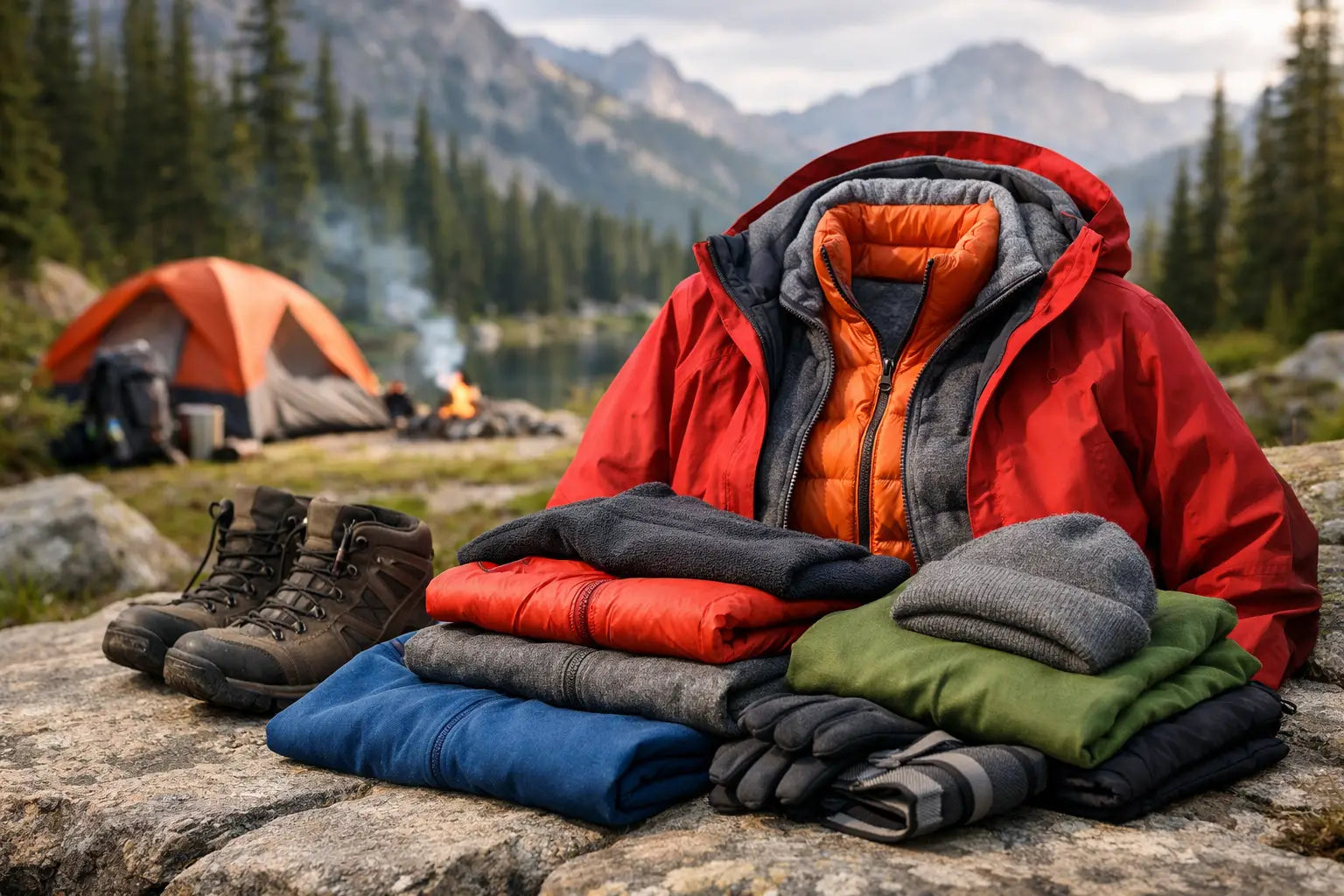
The classic system uses a base layer, a midlayer, and an outer layer. Each one has a job. When the layers work together, you can add or remove a piece as weather and effort change.
Your base layer sits against the skin. Its main job is moving moisture away from your body, because damp clothing pulls heat away quickly once you slow down.
Choose synthetic performance fabric or merino wool for shirts, underwear, socks, and long underwear. Synthetic options dry quickly, are usually budget-friendly, and work well for active hikes. Merino wool manages odor well and stays comfortable across a wider range of temperatures, though it can cost more and may dry more slowly than lightweight synthetics.
Avoid cotton as your primary base layer in cool or wet conditions. Cotton is fine for a hot, dry campground afternoon, but once it gets sweaty or wet, it holds moisture and loses insulating value. That is the wrong fabric to wear when temperatures fall after sunset.
The midlayer is your insulation. Fleece, insulated jackets, wool sweaters, and synthetic insulated vests all fit here. The right choice depends on expected temperatures and how hard you will be moving.
A lightweight fleece is a dependable choice for cool mornings, breezy campsites, and active days. It breathes well, dries fast, and remains useful when slightly damp. For colder conditions, bring a thicker fleece or a packable insulated jacket. Synthetic insulation is a practical camping pick when rain, snow, or heavy condensation are possible because it retains more warmth when damp than down.
Down insulation offers excellent warmth for its weight and packs down small, which makes it a strong option for dry, cold trips. Protect it from rain and keep it in a dry bag or pack liner. If your budget only allows one insulation piece, a midweight fleece often delivers the most versatility for car camping and casual weekend trips.
Your outer layer protects the layers underneath from weather. A waterproof, breathable rain jacket is one of the most useful pieces in a camping clothing system. It handles sudden showers, blocks wind around camp, and can add surprising warmth over fleece when the temperature drops.
A basic rain shell is enough for occasional showers and camp use. If you hike regularly in prolonged rain, look for a more durable shell with a storm hood, adjustable cuffs, and ventilation zippers. Breathability matters because a rain jacket that traps sweat can leave you damp from the inside.
Do not confuse a water-resistant windbreaker with a waterproof shell. A windbreaker is great for dry, breezy conditions, but it will eventually soak through in sustained rain. Bringing both can make sense for variable trips, although many campers can save space by using one reliable rain shell.
Start a cold morning with all three layers, then remove insulation before you become sweaty. That small habit is one of the biggest differences between staying comfortable and getting chilled later. If you wait until you are sweating, your base layer is already wet.
For an active hike, wear a moisture-wicking shirt and add a light fleece only if needed. Keep the rain shell accessible at the top of your pack. At rest stops, throw on your insulating layer before you feel cold. When you reach camp or sit down for dinner, add warmth early rather than trying to recover once you are shivering.
At night, change out of damp hiking clothes whenever possible. A dry base layer, dry socks, and an insulating layer can make a sleeping bag feel significantly warmer. Keep tomorrow's clothes separate from your sleep clothes so you always have a dry set reserved for bedtime.
Layering is not only about jackets. Cold feet, wet socks, and exposed hands can end a good trip early.
For your legs, hiking pants or durable synthetic pants are more adaptable than jeans. In mild weather, they work on their own. When temperatures fall, add lightweight base-layer bottoms underneath. Rain pants are worth carrying for wet forecasts, paddling trips, or windy campsites, and they can also block wind over regular pants.
Bring enough socks to replace wet pairs. Wool or synthetic hiking socks provide cushioning, manage moisture, and stay warmer than cotton when damp. A warm pair reserved for camp is a small luxury that pays off every evening.
A knit beanie and simple gloves take up almost no room but make a major difference in cold weather. Add a brimmed hat for sun protection, and consider a neck gaiter when wind is expected. These small pieces let you fine-tune comfort without constantly changing your main layers.
For a warm, dry weekend, a breathable shirt, light fleece, rain shell, durable pants, and extra socks may be all you need. For shoulder-season camping, add base-layer bottoms, a warmer insulated jacket, beanie, gloves, and rain pants. Winter camping requires more specialized insulation, footwear, sleep gear, and a clear plan for staying dry.
The best setup is not necessarily the most expensive one. Start with dependable pieces that serve more than one purpose. A fleece that works on the trail and around camp, rain gear that blocks wind, and moisture-wicking layers you can use for fishing or travel all stretch your gear budget further. Outdoor Up shoppers can build that kind of practical kit around the conditions they actually camp in, rather than buying specialty clothing for every forecast.
When packing, lay out complete outfits instead of tossing in random extras. Make sure every item earns its place by adding warmth, weather protection, or a dry backup. For most trips, this short checklist covers the gaps campers commonly miss:
The biggest mistake is overdressing for activity. Heavy layers feel good at the trailhead, but they cause sweating once you start moving. Vent, unzip, or remove a layer early.
Another common issue is packing only one warm item. If that jacket gets wet, dirty, or is not warm enough for a long night outdoors, you have no backup. A dry fleece plus a weather shell is often more useful than relying on one bulky coat.
Finally, do not forget that your clothing system works alongside your shelter and sleep setup. A good sleeping bag, insulated sleeping pad, and dry tent make it easier to rest warm. Clothing layers help, but they cannot fully compensate for a sleeping pad that lets cold ground pull heat from your body.
Pack layers you can adjust quickly, keep your sleep clothes dry, and carry weather protection even when the forecast looks friendly. That preparation gives you more freedom to stay outside for the sunrise, the last cast, and one more story around the fire.