Your Cart is Empty


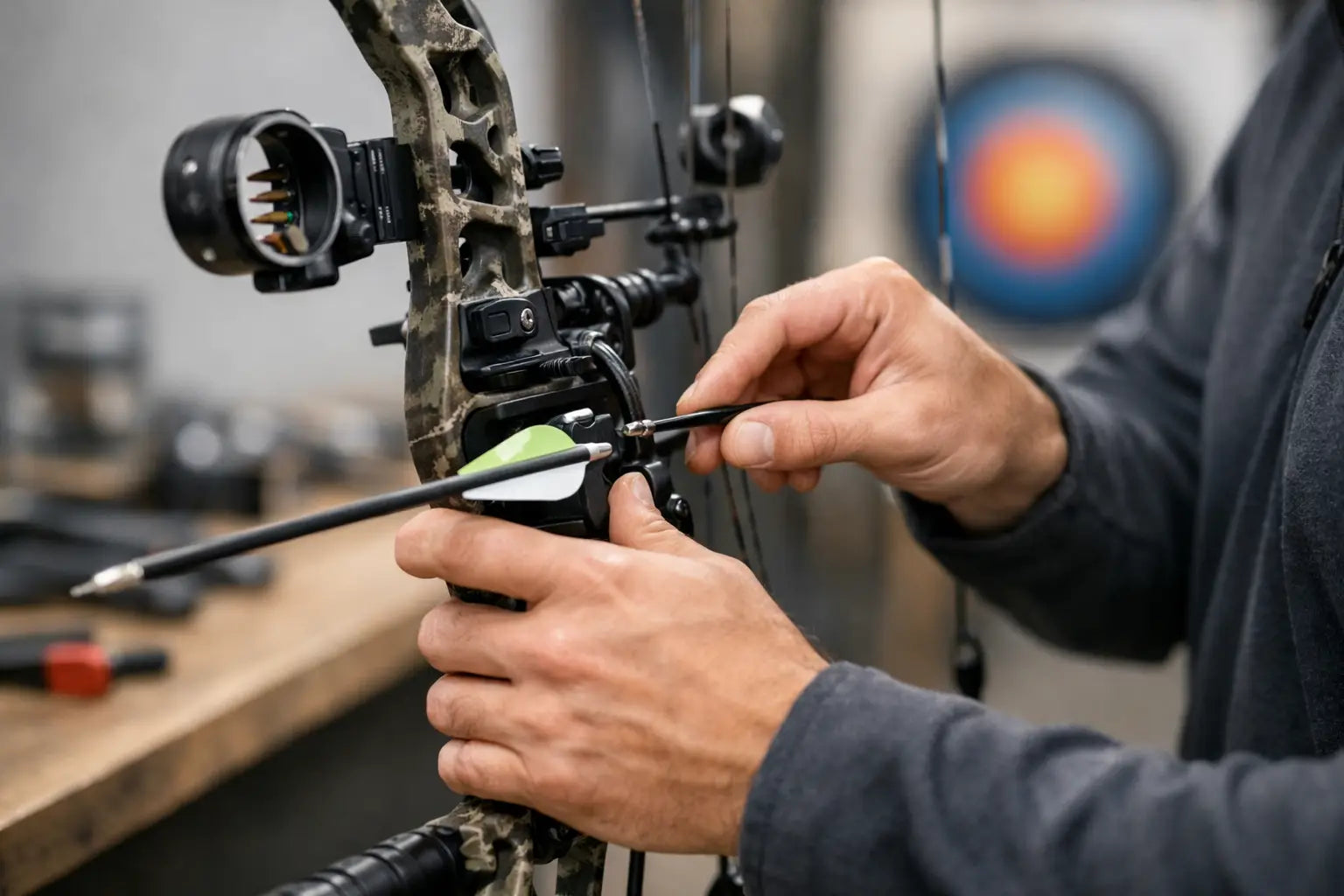

A compound bow can be set to the right draw weight, feel great at full draw, and still send arrows off course. That is usually not an accuracy problem you can solve by simply shooting more. When you tune a compound bow, you match the bow, rest, arrow, and broadhead so the arrow leaves cleanly and repeats its flight shot after shot.
For range days, that means tighter groups with less guesswork. Before hunting season, it means greater confidence that the arrow you practiced with will hit where it should when the moment is real. The process is methodical, but it does not have to be complicated. Start with the basics, make one small adjustment at a time, and let the target tell you what the bow needs.
Tuning begins before an arrow touches paper. Check your bow’s manual for its recommended draw-length range, draw-weight range, brace height, axle-to-axle measurement, and cam timing guidance. Those specifications create the baseline. A bow that is far outside its factory measurements may not tune consistently, no matter how much you move the rest.
Inspect the strings and cables for wear, separation, or heavy fuzzing. Look over the cams, limbs, module screws, rest mounting bolt, sight screws, stabilizer, and limb bolts. Tighten hardware to the manufacturer’s specifications. A loose rest or shifting sight can imitate a tuning issue and waste an afternoon of adjustments.
Do not dry-fire a compound bow. If you need to replace a string, adjust cam timing, change draw length on a system that requires a bow press, or address damaged parts, use a qualified archery shop. A compound bow stores serious energy, and the right tools matter.
A correct tune cannot compensate for a draw length that does not fit the shooter. If you are reaching for the release, collapsing forward, or feeling cramped at anchor, fix draw length before chasing arrow flight. The same goes for draw weight. Choose a weight you can draw smoothly and hold under control, not the maximum number printed on the limbs.
Your arrows must also match the setup. Arrow spine needs to suit draw weight, draw length, point weight, and the bow’s cam system. An arrow that is too weak or too stiff can create frustrating paper tears and inconsistent broadhead results. Confirm all arrows are the same model, spine, length, point weight, nock type, and vane configuration. One mismatched arrow can make a well-tuned bow look unreliable.
Before fine-tuning, set the arrow rest close to a neutral starting point. Many compound bows begin well with the arrow roughly level through the berger hole and the rest centered near the bow’s centerline. Your bow and rest manufacturer may offer a more specific starting measurement, so use that when available.
For a drop-away rest, verify that the launcher rises fully, holds the arrow securely at full draw, and drops without contacting the vanes. Use powder, foot spray, or a similar contact-checking method on the vanes and rest if you suspect interference. Even light contact can push an arrow off line and produce broadhead groups that wander.
Check nock fit while you are there. The nock should snap onto the string serving without pinching or sliding freely. If it is too tight, the arrow may not release cleanly. If it is too loose, it can fall from the string or vary from shot to shot.
Paper tuning is one of the fastest ways to see how an arrow is leaving the bow. Hang a sheet of paper in a simple frame and stand roughly 6 to 8 feet away. Shoot a field-point arrow through the paper with your normal form, then look at the tear.
A clean bullet hole with three small vane cuts is the goal. A left, right, high, or low tear means the nock is leaving in that direction relative to the point. Resist the urge to make a large correction. Move the rest in tiny increments, then shoot another arrow through fresh paper. Small changes - often no more than 1/32 inch at a time - are easier to read and easier to reverse.
For a right-handed shooter, a common starting response is to move the rest slightly toward the tear for a horizontal tear, while vertical tears are often addressed with small rest-height adjustments. Left-handed setups reverse the horizontal relationship. Still, paper tuning is not a universal formula. Cam timing, arrow spine, grip torque, and vane contact can all affect the result.
Shoot at least three arrows before deciding a tear is real. If the tears vary wildly, stop moving equipment and look at consistency first. Keep your bow hand relaxed, use the same anchor point, and execute the release cleanly. A repeatable shot gives useful tuning feedback.
Paper can get you close. Walk-back tuning helps confirm that the rest is centered for longer-distance flight. Start by sighting in at 20 yards. Then use a vertical line on a large target, aiming at the same point as you shoot from increasing distances, such as 20, 30, 40, and 50 yards.
If the arrows track straight up and down the line, your centershot is likely close. If the group angles left or right as distance increases, make a very small horizontal rest adjustment and repeat. Do not adjust the sight to hide a clear walk-back pattern. The sight should follow the tuned arrow, not cover up a rest issue.
This step is especially useful for hunters because small launch errors become more obvious as range grows. It also makes you pay attention to form. If a shifting grip changes the line every shot, work on your grip before blaming the rest.
Field points can group well even when a bow is only close to tuned. Fixed-blade broadheads are less forgiving because their blades catch more air. That makes them an honest final test for hunting setups.
Begin at 20 yards with a sharp, properly assembled broadhead that matches your field-point weight. Shoot one or two broadhead-tipped arrows alongside field points, using a target rated for broadheads. If broadheads hit consistently away from field points, make very small rest adjustments rather than moving your sight immediately. Recheck at 30 and 40 yards after each change.
Mechanical broadheads usually fly more like field points, but they still deserve practice. Check that the blades are secure, the deployment system is undamaged, and the total point weight matches what you used during tuning. Whether you shoot fixed or mechanical heads, finish with the exact arrows and broadheads you plan to carry afield.
A tune is not permanent. Strings settle, cables stretch, weather changes, and repeated shooting can expose loose hardware. Check your groups periodically and inspect the bow before major trips, tournaments, or opening day.
A practical maintenance routine includes checking fasteners, looking for string wear, confirming rest timing, and shooting a few field points and broadheads before the season. Mark the rest position lightly once the bow is dialed in, so you have a visual reference if it gets bumped during transport.
The best tune is the one that holds when conditions are less than perfect. Build it with measured adjustments, verify it with the arrows you actually shoot, and practice from realistic distances. Gear up with dependable essentials, stay patient through the process, and your compound bow will be ready when the target or the trail demands a clean shot.