Your Cart is Empty



A calm lake can make almost any kayak feel like the right choice for the first 10 minutes. Add wind, current, a full cooler, fishing gear, or a long paddle back to the launch, and the differences become clear fast. This kayak comparison focuses on the features that affect real days on the water, so you can choose a boat built for how you actually plan to paddle.
The best kayak is not automatically the fastest, widest, lightest, or most loaded with accessories. It is the one that fits your water, your gear, your body, and the way you want to spend the day. Start there, and you can skip the expensive mistake of buying a kayak that looks great in the driveway but feels wrong on the water.
Before comparing materials, seat systems, or color options, think about where you will go most often. A kayak designed for short lake outings handles very differently from one built for coastal bays, moving rivers, or all-day fishing.
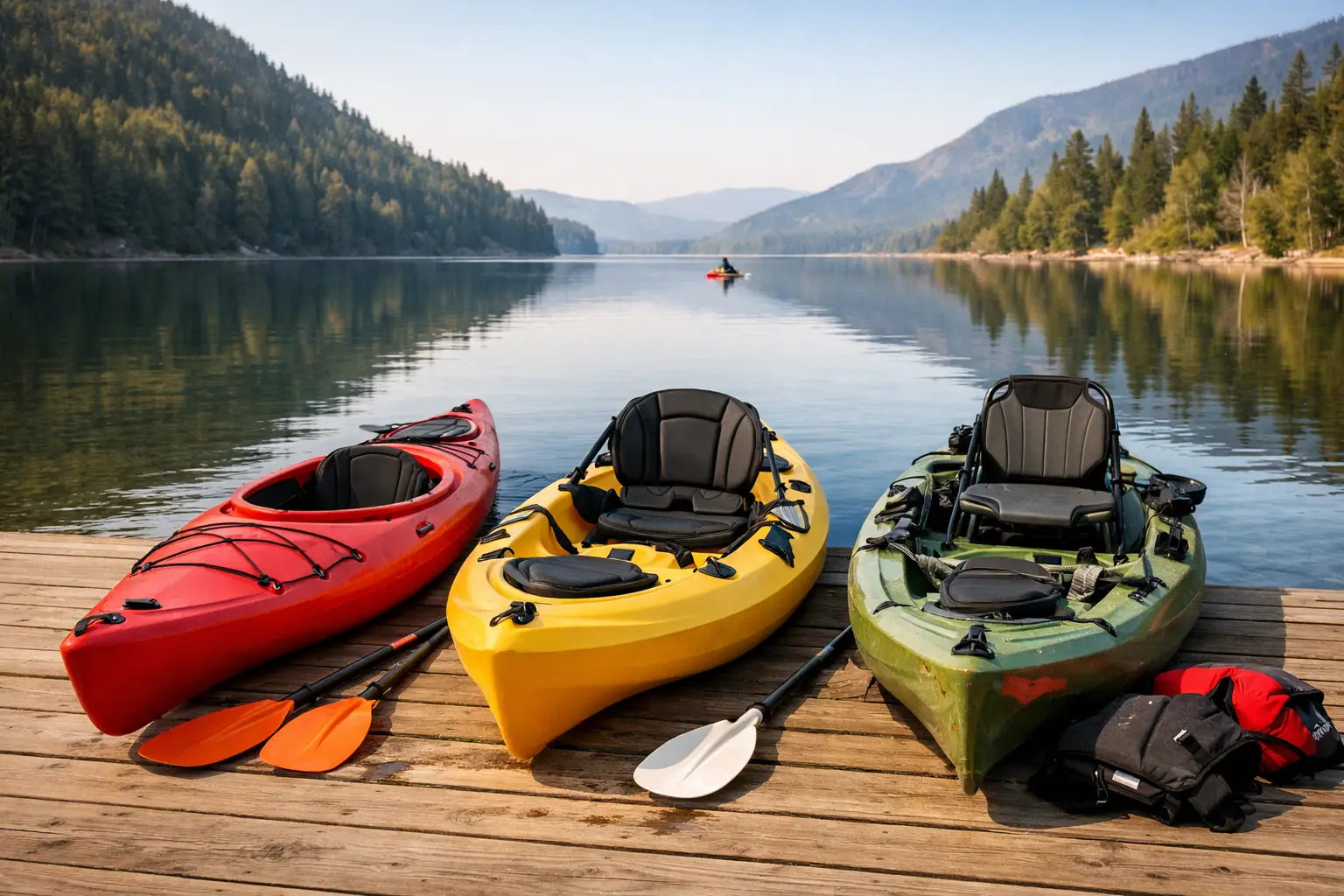
Recreational kayaks are a practical choice for beginners and casual paddlers. They usually have a wide, stable hull, a large cockpit or open deck, and a forgiving feel on flatwater. They are easy to enter, easy to turn, and well suited to relaxed paddles near shore. The trade-off is speed. A short, wide recreational model takes more effort to keep moving over distance and may wander in wind.
Touring and day-touring kayaks are longer and narrower. Their hulls track straighter and carry speed more efficiently, making them a better fit for bigger lakes, bays, and longer routes. They also tend to offer dry storage for extra clothing, food, and safety gear. They demand a little more paddling experience, especially in rough water, but the payoff is better control when conditions change.
Fishing kayaks put stability and usable deck space first. Many have open sit-on-top layouts, elevated seats, accessory tracks, rod holders, and wide standing platforms. They are built to help you cast, organize tackle, and stay comfortable while waiting for a bite. That stability often comes with extra weight, so consider how you will transport and launch one before committing.
Whitewater kayaks are short, highly maneuverable boats made for current, rocks, and quick direction changes. They are not the right all-purpose choice for a quiet reservoir or a long fishing trip. If river running is the mission, choose a boat rated for the class of water you plan to paddle and get the right safety training before you go.
For many buyers, this is the decision that shapes the entire experience.
A sit-inside kayak places your lower body inside a cockpit. The lower seating position can feel more connected and efficient, especially when paddling longer distances. It also helps shield your legs from wind and splash. In cooler conditions, a spray skirt can keep water out of the cockpit, though it takes practice to use safely.
Sit-inside models are a strong match for recreational lake paddling, touring, and shoulder-season outings. They can feel less convenient if you frequently want to get in and out to swim, fish, or move around. A smaller cockpit may also be less comfortable for some larger paddlers, so check the cockpit dimensions and weight capacity rather than assuming a kayak will fit.
A sit-on-top kayak has a molded, self-draining deck. You sit above the waterline, with open access to the deck and usually a scupper system that lets splashed water drain out. This design is simple, approachable, and popular for warm-weather paddling, fishing, and family use. Falling in is less stressful because re-entry is generally easier than climbing back into a cockpit.
The trade-off is exposure. You will get wetter, and wind or cold water can make an open deck uncomfortable. Wear quick-drying layers, and do not confuse warm air with safe water conditions. Cold water deserves extra caution no matter which kayak you choose.
A kayak’s hull determines much of its personality on the water. You do not need to memorize every design term, but a few basics help narrow the field.
A wide, flat hull provides excellent initial stability. That is the steady feeling you notice when getting seated, reaching for a tackle box, or shifting your weight. It is especially valuable for beginners and anglers. A rounded or V-shaped hull may feel less stable at first, but it can move through choppy water more efficiently and offer better secondary stability when edged in a turn.
Length matters, too. Short kayaks, often around 8 to 10 feet, are easy to maneuver and store. They work well on ponds, small lakes, and slow rivers. They usually turn easily but can be slower and harder to keep on course across open water.
Models around 10 to 12 feet offer a useful middle ground for many recreational paddlers and anglers. They carry more gear, track better, and still fit comfortably on many vehicle racks. Kayaks longer than 12 feet are generally better for touring, distance, and open water. They cover ground efficiently, but they need more storage space and can be harder to handle off the water.
Width is the other side of the equation. Wider kayaks feel steadier and offer more room, while narrower models tend to move faster with less effort. If standing to fish is a priority, choose stability. If you want to paddle several miles across a large lake, a longer, more efficient hull may be worth the learning curve.
Every kayak has a stated capacity, but shopping right at that limit is rarely a good plan. The number includes your body weight plus the paddle, PFD, water, cooler, tackle, dry bags, anchor, and every accessory you bring along.
For a more comfortable, responsive ride, leave a meaningful margin below the listed capacity. A heavily loaded kayak sits lower in the water, paddles less efficiently, and can become harder to control in wind or waves. For fishing or camping trips, calculate your full load before you buy.
Storage layout matters as much as total capacity. A rear tank well is useful for a crate or cooler. A front bungee area keeps a jacket or dry bag close at hand. Sealed hatches protect gear from splash and can add flotation, but access openings vary widely. Check whether the storage you need is actually reachable from the seat.
An uncomfortable seat turns a planned afternoon into an early return to shore. Look for an adjustable seat with supportive backrest height, breathable material, and enough padding for the length of your trips. A raised seat can make casting and standing easier in a fishing kayak, but it also raises your center of gravity. On a narrow boat, that can make the kayak feel more tippy.
Foot braces are just as important. Proper foot support lets you rotate your torso and paddle with more power instead of relying only on your arms. Adjustable braces also make a kayak more usable for different members of the household.
If you plan to fish, compare the accessory setup carefully. Built-in rod holders are useful, but placement matters. Gear tracks give you flexibility for adding a fish finder, camera mount, cup holder, or additional rod holder later. Do not load every available mount just because you can. Keep the deck clear enough to move safely and re-enter the kayak if needed.
A kayak that is easy to paddle but impossible for you to load alone will not get used often. Check the boat’s weight, carrying handles, and overall length alongside your vehicle, storage space, and launch routine.
Hard-shell kayaks offer durability and dependable performance, but larger fishing and tandem models can be heavy. A kayak cart can make the walk from parking lot to shoreline much easier. Roof racks work well for many vehicles, while trailers can simplify transport for multiple boats or heavier rigs. Always secure the kayak at the bow, stern, and rack points as appropriate for your setup.
Inflatable kayaks are worth considering when apartment storage, RV travel, or limited vehicle space is the bigger challenge. Quality inflatables can be stable and capable for calm-water use, but they require inflation, drying, and careful packing after each trip. They are not the best answer for every environment, especially sharp rocky water or high-wind open crossings.
Your kayak is only part of the setup. A properly fitted, US Coast Guard-approved personal flotation device should be on every paddler and worn on the water, not buried in storage. Bring a paddle leash only if it suits your use, plus a whistle, drinking water, sun protection, and a dry bag for essentials.
For larger lakes, rivers, or changing weather, add the gear and skills your conditions demand. Check the forecast, understand local regulations, tell someone where you are going, and give yourself enough daylight to return without rushing. A stable boat helps, but good decisions keep outings fun.
Choose the kayak that makes you want to launch more often. Whether that means a simple recreational boat for evening lake laps or a fully rigged fishing platform for sunrise casts, the right fit turns preparation into more time outside. Gear up for the water you have, leave room for the adventures ahead, and paddle with confidence.