Your Cart is Empty


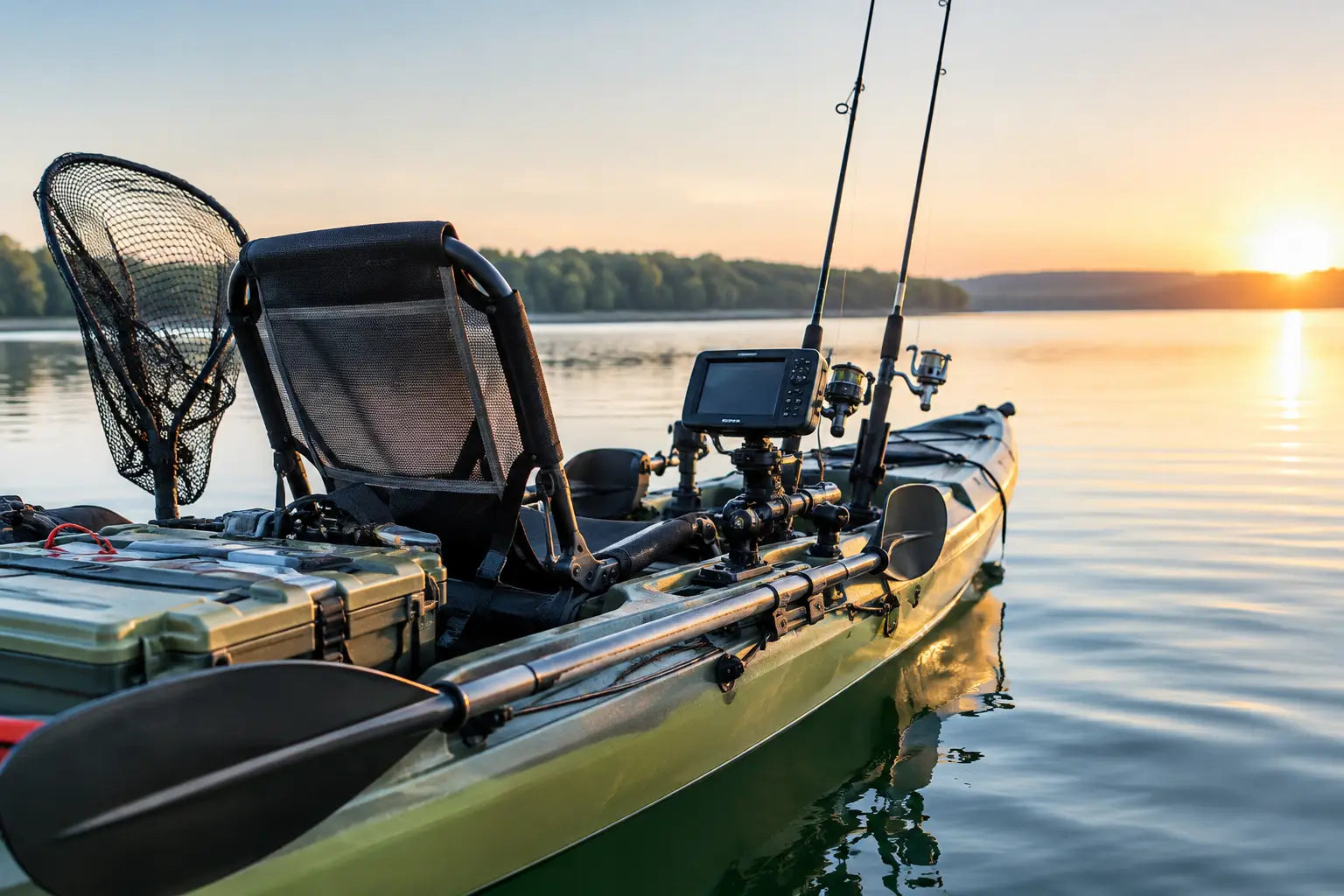

A productive day on the water starts before the first cast. The best kayak fishing setups do not try to turn a kayak into a floating tackle shop. They put the essentials within reach, keep the deck clear, and help you stay balanced when a fish hits, the wind picks up, or it is time to paddle back to the launch.
Whether you are fishing a quiet farm pond, working a creek for smallmouth, or chasing redfish along the coast, the right setup depends on where you fish and how you fish. Start with safety and stability, then add the gear that makes each trip more efficient.
A fishing kayak should match the water you plan to cover. A wide, sit-on-top kayak is a practical choice for many anglers because it offers a stable standing platform, easy entry and exit, and open deck space for a crate, tackle bag, or cooler. It is a strong fit for lakes, ponds, slow rivers, and protected bays.
A narrower kayak tracks better and can cover distance with less effort, but it may feel less forgiving when you reach for a rod behind your seat. If you fish moving water, pay attention to maneuverability and how the hull handles current. For larger lakes and coastal water, consider a kayak with enough capacity for your body weight, fishing gear, water, and any safety equipment you bring along.
Do not shop by length alone. A longer kayak generally moves more efficiently, while a shorter model is easier to transport and turn in tight places. The best choice is the one you can launch, load, and use often.
Good organization is less about owning more accessories and more about knowing where every item belongs. Your paddle, PFD, rod, tackle, landing net, and anchor system should be usable without twisting far behind you or standing up unnecessarily.
Keep your primary rod in a holder or secured along the side of the kayak, especially while paddling through shallow water or around branches. Rod holders are useful for trolling, resting a rod while you retie, or keeping a second presentation ready. They should not replace a firm grip when you are actively working a lure or fighting a fish.
A milk crate or purpose-built gear crate behind the seat remains one of the simplest storage solutions. Use it for a compact tackle bag, small utility boxes, rain gear, and a few must-have tools. Avoid stacking gear so high that it shifts your center of gravity or turns around to grab something becomes awkward.
For most freshwater trips, a compact tackle selection beats a heavy collection of boxes. Carry proven options for the species and season: a few moving baits, a few bottom presentations, terminal tackle, and spare line or leaders. Keeping only what you expect to use saves room and reduces clutter when conditions get rough.
Loose gear is a problem on the water. It can snag your line, slide under your feet, or disappear overboard at the worst possible moment. Use leashes where they make sense for paddles, pliers, nets, and electronics, but avoid creating a web of cords across the cockpit.
Place frequently used tools in a small holder, pocket, or tether near your seat. Fishing pliers, line cutters, hook removers, and a measuring board are most useful when they are ready in seconds. Put less-used items, such as spare batteries and first-aid supplies, in a dry bag within the crate or hull storage.
A personal flotation device is not an extra. Wear a properly fitted, US Coast Guard-approved PFD every time you launch. A fishing-specific PFD with pockets can also reduce cockpit clutter by carrying small tools, a whistle, and a phone in a waterproof case.
Check local requirements before heading out, especially if you use a trolling motor, fish tidal water, or paddle after dark. A light, whistle, visual distress equipment, registration, and other items may be required depending on your location and vessel setup.
Dress for immersion, not just the air temperature. Cold water can turn a minor capsize into a dangerous situation even on a warm day. In summer, sun protection, hydration, and lightweight layers matter just as much. Bring more drinking water than you think you will need, particularly when fishing exposed flats or big reservoirs.
Before every trip, make sure your kayak has a secure carry handle, functioning scupper plugs if you use them, and no cracks or damaged fittings. A five-minute check in the driveway is easier than troubleshooting at the launch.
A paddle setup is simple, quiet, and reliable. Match paddle length to your kayak width and seating height, and choose a model you can use comfortably for several hours. An efficient paddle stroke saves energy for fishing and makes the trip back less of a grind when the wind changes.
Pedal drives are popular with anglers who want hands-free movement while casting or working a shoreline. They can be a major advantage in open water, but they add weight, cost, and another system to maintain. In shallow, rocky, or weedy areas, you may spend as much time managing the drive as you would paddling.
A trolling motor can make sense for larger water, long runs, or anglers who need help covering ground. It also requires thoughtful battery placement, wiring, and weight distribution. Keep the battery secured low in the hull or near the center of the kayak, protect connections from water, and verify your local rules before launching.
A fish finder can help you locate depth changes, bait, submerged cover, and productive structure. It is especially useful on unfamiliar lakes where time on the water is limited. But it will not make up for poor boat control or a lack of attention to wind, current, and seasonal fish behavior.
Mount the display where you can read it without blocking your paddle stroke or access to the deck. Route cables neatly and use a protected battery box. For casual pond fishing or short trips, you may prefer the lighter, simpler setup of a map app, a rod, and a small tackle bag.
GPS features can be valuable for marking ramps, productive points, oyster bars, and safe routes through shallow water. Just remember that electronics need charging, can fail, and should never replace basic awareness of your surroundings.
Boat control is one of the biggest differences between a frustrating kayak trip and a productive one. If you cannot hold position, make a clean presentation, or stay off a target without drifting over it, the best lure in the box will not help much.
An anchor trolley lets you adjust where an anchor pulls from the kayak. This helps you face into wind or current instead of sitting broadside. In shallow water, a stakeout pole can be quicker and quieter than dropping an anchor. Both tools require care: never anchor in fast current, heavy boat traffic, or conditions where a snagged line could pull the kayak into danger.
A drift chute can slow your movement on windy lakes, while a simple paddle correction may be enough on protected water. Start with the least complicated option that gives you control. More hardware is only worthwhile when it solves a real problem on your regular waters.
Bass anglers often benefit from quick access to a few rods, soft plastics, and a landing net. Trout anglers may prioritize a low-profile setup that moves quietly through current. Saltwater anglers may need corrosion-resistant hardware, larger storage for safety gear, and a plan for managing wind and tides.
Match rod choices to your target species, but resist carrying every technique you own. Two or three well-chosen rods are plenty for many trips. A versatile medium-power spinning rod, a baitcasting setup for heavier cover, and a specialty rod when conditions demand it can cover a lot of water without crowding the kayak.
If you regularly bring fish home, plan for that too. A secured cooler or insulated bag protects your catch and keeps weight from shifting. If you practice catch and release, have a net, measuring board, and camera or phone ready so fish spend less time out of the water.
The right kayak setup should make you more confident, not more distracted. Start with the gear that keeps you safe and lets you control the boat, then build from there as your fishing grows. Pack smart, launch early, and get outside more.