Your Cart is Empty


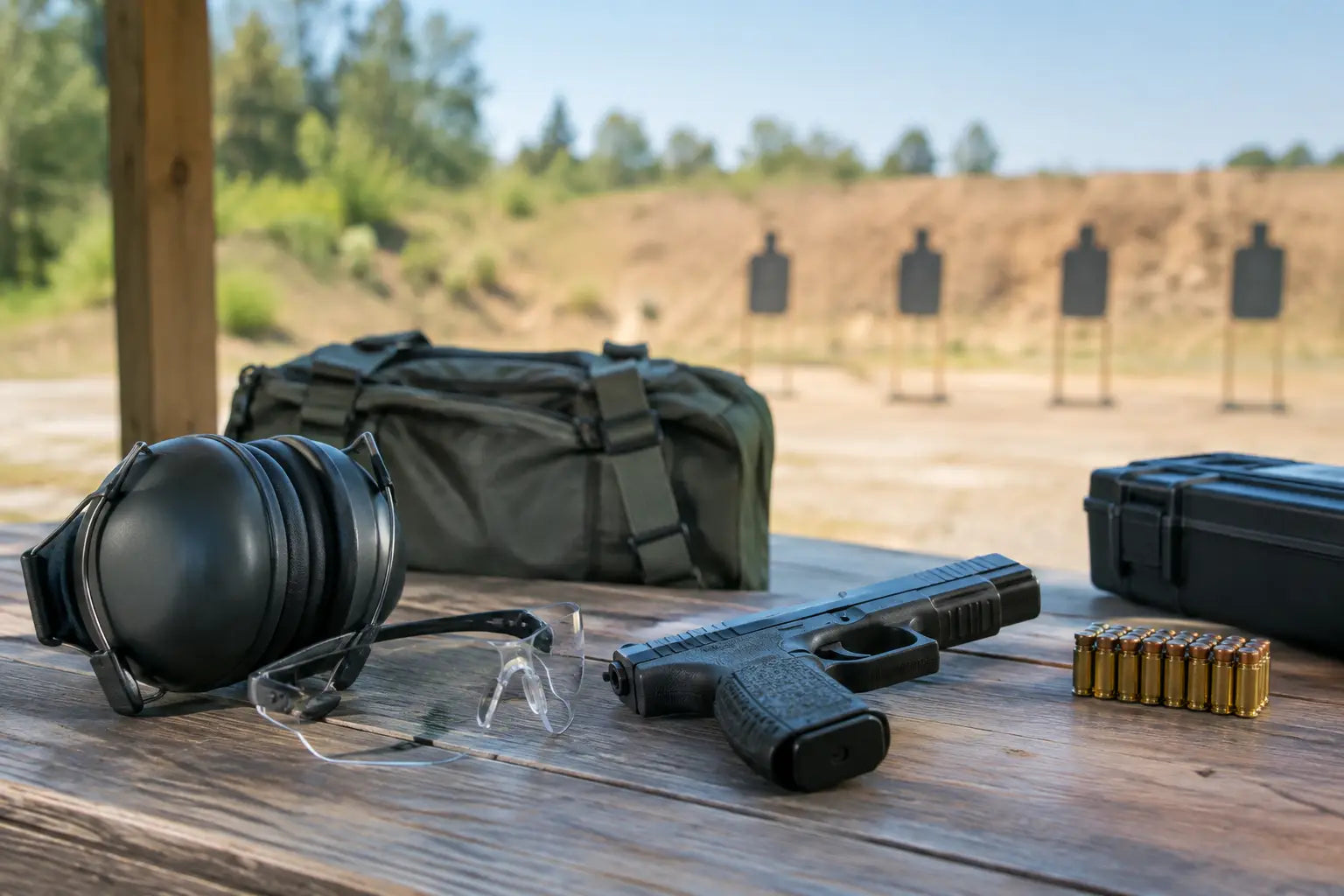

A good range day starts before you unzip the case. The firearm may be the centerpiece, but the gear around it determines whether you can practice safely, stay comfortable, and spend your time building skills instead of borrowing supplies. Use this shooting range gear guide to build a setup that works for your experience level, your local range rules, and the kind of shooting you plan to do.
The goal is not to pack every accessory you have. It is to bring the right equipment, keep it organized, and leave room to focus on safe, consistent shooting. Start with the must-haves, then add gear that solves a real problem for your style of practice.
Eye and ear protection belong at the top of every packing list. They are not upgrades or optional extras. Most ranges require both, and for good reason. Flying debris, hot brass, muzzle blast, and the sharp report of neighboring shooters can end a productive day quickly without proper protection.
For eye protection, choose shooting glasses with impact-rated lenses and full coverage around the eyes. Clear lenses work well indoors and on overcast days. Tinted or polarized options can improve contrast on bright outdoor ranges, but make sure the tint still lets you see sights, targets, and range commands clearly. A pair that fogs, slips, or pinches will become a distraction, so comfort matters as much as lens color.
Hearing protection is where it pays to consider how and where you shoot. Basic foam earplugs are affordable, light, and easy to keep as a backup in every range bag. Over-ear muffs provide more coverage and are simple to put on and take off. Electronic hearing protection costs more, but it allows normal conversation and range commands through while reducing dangerous impulse noise. That makes it a strong choice for busy public ranges, group outings, and new shooters who need clear coaching.
If you shoot centerfire rifles, handguns with muzzle brakes, or at indoor ranges, doubling up with plugs under earmuffs can provide another layer of protection. It may feel bulkier, but the trade-off is worthwhile when noise levels are high.
A dedicated range bag makes loading up faster and reduces the chance of leaving an essential item on the kitchen counter. Look for durable fabric, reinforced handles, smooth zippers, and compartments that make sense for how you shoot. A compact bag may be enough for a single handgun and a few boxes of ammunition. A larger duffel-style bag is better for multiple firearms, extra magazines, cleaning supplies, and a full day outdoors.
Keep ammunition separated from loose tools and small accessories. Hard-sided ammo cases or labeled boxes help prevent mixed calibers, damaged cartridges, and frustrating searches at the bench. If you bring multiple firearms, use clear labels or separate pouches so magazines and ammunition stay paired with the correct platform.
Your basic range bag should hold these essentials:
Targets are more than paper with an aiming point. The right target gives you feedback on the skill you are trying to improve. Large bullseye targets are useful for sighting in and measuring group size. High-contrast silhouette targets are great for practical handgun drills. Grid targets make it easier to see whether your shots are drifting left, right, high, or low.
Consider the distance and the range rules before you buy. A small target at 25 yards might challenge your precision, while the same target at 7 yards can be hard to evaluate because your group overlaps. For newer shooters, larger targets at closer distances build confidence and make it easier to spot patterns. As fundamentals improve, reduce target size, increase distance, or use smaller aiming points.
Steel targets can add instant feedback outdoors, but they require extra care. Use only targets rated for your firearm and ammunition, set them at the manufacturer-recommended distance, and follow all range policies. Avoid damaged steel, improper ammunition, and surfaces that could send fragments back toward the firing line. Paper targets remain the simplest, most widely accepted option for focused practice.
The gear you add after the basics depends on what you are shooting. Handgun shooters often benefit from magazine pouches, a loading tool, and a sturdy belt setup. These items keep reloads controlled and help prevent magazines from rolling under the bench. A loading tool can be especially helpful during high-round-count practice or for shooters whose hands get tired loading stiff magazines.
For rifles, a stable shooting rest, sandbags, or a bipod can make zeroing and accuracy work more productive. A bench rest is not a shortcut. It removes some movement so you can better identify whether misses come from the rifle, optic, ammunition, or shooting technique. If you are confirming a hunting rifle before the season, that stability can save both ammunition and time.
Shotgun shooters may need a shell pouch or vest that keeps shells accessible without crowding pockets. Clay target shooting also calls for room to move, so choose gear that stays secure without restricting your mount or swing. A brimmed hat is useful across all shooting disciplines, helping block sun while also keeping ejected brass from dropping between your glasses and face.
Comfort supports concentration. Closed-toe shoes are a smart choice because hot brass, dropped magazines, uneven ground, and range debris are common. Avoid low-cut shirts or open collars that can catch ejected casings. Durable pants with usable pockets make it easier to carry small items, while lightweight layers help you adjust during cool mornings and hot afternoons.
Outdoor ranges add another set of conditions. Bring sun protection, water, and a hat for exposed firing lines. If your range involves walking to targets, muddy paths, or rough terrain, stable footwear matters even more. In colder months, thin gloves can keep hands warm between strings of fire, but test them before relying on them for shooting. Bulky gloves can change your grip and trigger feel.
The best gear cannot replace safe handling. Transport firearms according to local laws and range policy, keep them unloaded until you are on the firing line and ready to use them, and always keep the muzzle in a safe direction. Know the range commands before your first shot. When a cease-fire is called, stop immediately, unload as directed, and do not handle firearms while anyone is downrange.
It also helps to inspect your gear before leaving home. Confirm you have the correct ammunition, magazines, batteries for electronic muffs or optics, and enough targets for the session you planned. Check that your firearm is clean, lubricated as needed, and functioning properly. If something feels wrong at the range, stop and address it safely rather than trying to force another round through the firearm.
You can build a capable range setup without buying premium versions of everything. Put your budget first toward quality eye protection, effective hearing protection, dependable cases, and accessories that improve safe handling. Targets, tape, and basic tools can stay simple. Upgrade later when your experience shows you what will actually make your practice better.
For example, an occasional shooter may be perfectly served by foam plugs, clear safety glasses, paper targets, and a compact bag. Someone who shoots weekly may find electronic muffs, a more organized bag, spare magazines, and a stable rest worth the added cost. Buy for the way you really use your gear, not for a range day that exists only in your plans.
Pack with purpose, follow the rules at every facility, and make each trip an opportunity to practice with confidence. The right setup lets you spend less time sorting gear and more time doing what you came to do: shoot safely, learn more, and enjoy the day outside.