Your Cart is Empty


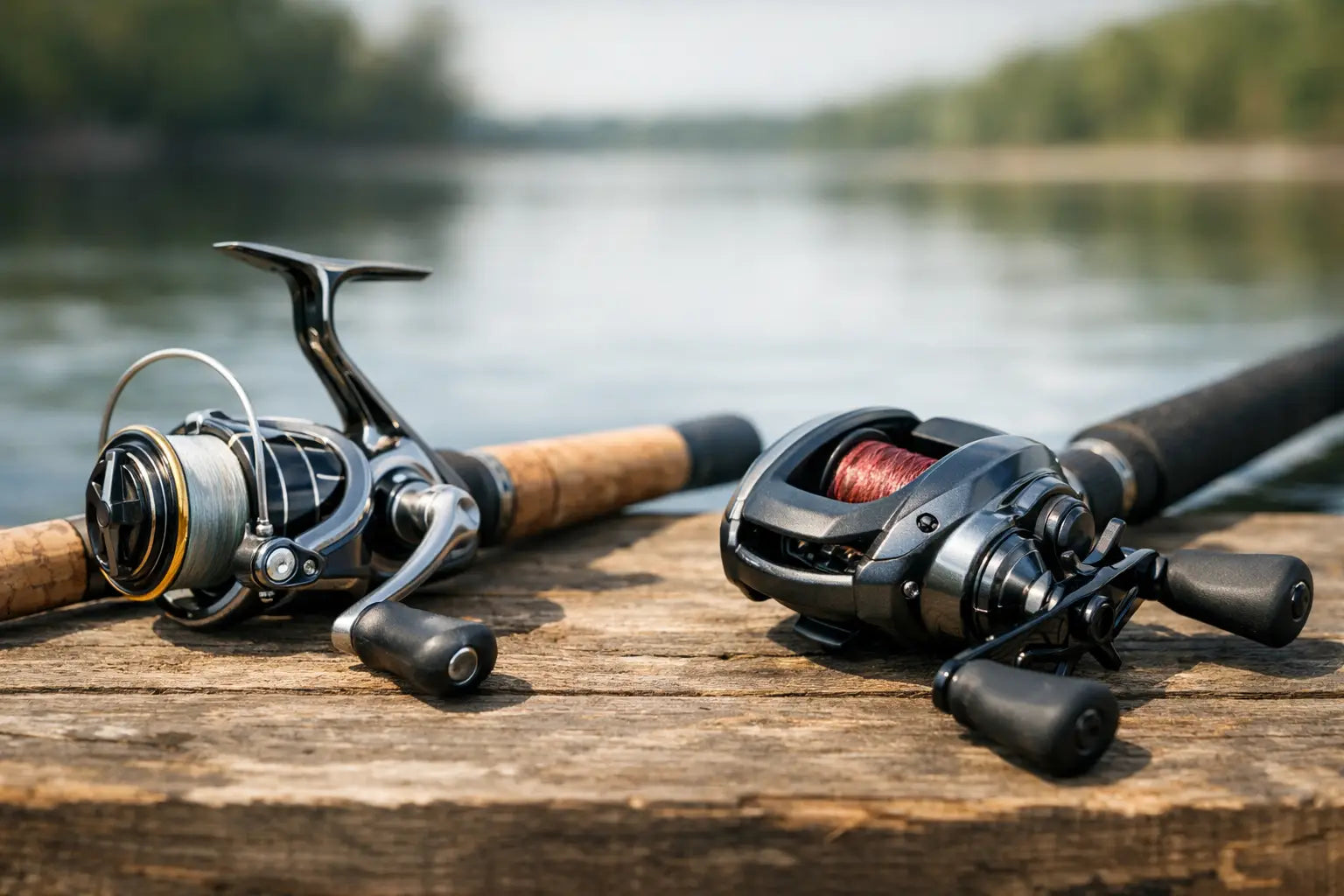

A reel can make your day on the water feel easy or frustrating fast. When anglers compare spinning vs baitcasting reels, they’re usually trying to answer one practical question: which setup will help me fish better right now, with the lures and techniques I actually use?
That answer depends less on hype and more on how you fish. Spinning reels are usually easier to learn, more forgiving, and a smart match for lighter lures. Baitcasting reels offer better control, stronger drag in many setups, and more precision once you know how to use them. Neither one is automatically better. The right choice is the one that fits your target species, lure weight, budget, and experience level.
The biggest difference is how the line leaves the reel. On a spinning reel, the spool stays fixed and the line peels off in coils during the cast. That design makes it easier to throw lighter baits and deal with changing wind conditions. It also reduces the learning curve for new anglers.
On a baitcasting reel, the spool rotates as you cast. That gives you more direct control over speed and line placement, but it also creates the classic problem every angler hears about - backlash. If the spool spins faster than the line can leave, you get a bird’s nest. Once you learn brake settings and thumb control, that trade-off starts to work in your favor.
In simple terms, spinning gear is usually more forgiving. Baitcasting gear is usually more precise.
If you’re newer to fishing, a spinning reel is often the fastest path to more fish and fewer headaches. You can rig it, cast it, and fish it well without spending half the day fixing line issues. That matters when you want to get outside more and make your time on the water count.
Spinning reels shine with lighter baits. Think small soft plastics, finesse worms, drop shots, small jigs, inline spinners, and lightweight live bait rigs. If you’re targeting bass with finesse presentations, chasing trout, panfish, walleye, or fishing inshore with lighter tackle, spinning gear is hard to beat.
They also tend to handle skipping and casting into the wind a little more easily for most anglers. You still need decent line management, but the setup is more forgiving when conditions are less than ideal.
There’s also a value angle here. For many anglers, a good spinning setup offers strong all-around performance without demanding a premium price or a long practice curve. If you want one combo that can cover a wide range of everyday fishing, spinning gear is often the practical buy.
Spinning reels are especially useful for finesse fishing and light line applications. They pair well with 4- to 10-pound test in many freshwater situations, though larger models can handle much heavier line for bigger species. They’re also a smart fit for anglers who fish from shore and need easy, repeatable casting without constant adjustment.
That said, spinning reels are not perfect. Heavier lures, thick cover, and power techniques can expose their limits. Twist can become an issue, and some anglers find they don’t get the same level of direct lure control as they do with a baitcaster.
Baitcasting reels come into their own when power and precision matter. If you’re pitching jigs into cover, working spinnerbaits, burning chatterbaits, throwing frogs over mats, or casting larger crankbaits and swimbaits, baitcasting gear often feels more efficient and more controlled.
The design supports heavier line and heavier lures well. It also gives you better leverage for winching fish out of weeds, timber, docks, or brush. That’s a big reason many bass anglers keep multiple baitcasting combos on deck.
Accuracy is another strong point. Once adjusted correctly, a baitcaster lets you make low, controlled casts and place a lure close to cover with a lot of precision. For anglers who fish structure all day, that control can lead to more bites.
And then there’s speed. Many baitcasting reels have gear ratios built for fast line pickup, which is useful when a fish runs toward you or when a technique demands quick recovery between casts.
The learning curve is real. Beginners often start too heavy on the spool, use poor brake settings, or try to cast into the wind without enough control. That usually ends with a backlash and a lot of muttering.
But baitcasting reels are not just for experts. They simply reward setup and practice. Start with a lure in the 3/8- to 1/2-ounce range, tighten the spool tension correctly, use the braking system, and practice smooth casts instead of trying to launch the bait across the lake. Once that clicks, a baitcaster becomes a very capable everyday tool.
For most people, spinning wins that round by a mile. If your goal is confidence, fewer mistakes, and a setup that works well across many conditions, start with spinning gear.
That doesn’t mean baitcasters are off-limits. It just means they ask more from you early on. If you’re committed to bass fishing, especially around cover or with heavier lures, learning a baitcaster is worth the effort. But if you want immediate usability, spinning is the better first reel.
A lot of experienced anglers eventually use both. That’s often the smartest move because each reel style covers the other’s weak spots.
Bass anglers ask this question more than anyone because both reel types work well, just in different situations. For finesse bass techniques like shaky heads, Ned rigs, wacky rigs, and drop shots, spinning gear usually gets the nod. It casts light baits more easily and helps present them naturally.
For power fishing, baitcasting usually takes over. Jigs, frogs, Texas rigs, spinnerbaits, crankbaits, and flipping presentations often feel better on a baitcaster because of the control, line capacity, and pulling power.
If you fish bass and can only buy one setup, think about how you fish most often. Bank anglers throwing mixed lures may get more value from spinning gear. Anglers fishing heavier cover or focusing on larger bass techniques may be happier with baitcasting gear.
Line matters more than many anglers expect. Spinning reels generally perform best with lighter mono, fluorocarbon, or braid paired with a leader. Very heavy line can reduce casting performance and create more management issues.
Baitcasting reels handle heavier fluorocarbon and braid especially well, which makes them a natural fit for techniques that demand sensitivity, hook-setting power, or abrasion resistance in cover.
This is where the reel choice becomes less about brand loyalty and more about matching the system. Your rod, line, lure weight, and target species all need to work together. A great reel on the wrong setup still fishes poorly.
If you’re buying your first reel or want one dependable all-around setup, a spinning reel is usually the safer pick. It covers more casual and mixed-use fishing situations, works well for a wide range of species, and gets you fishing fast.
If you already know you prefer heavier baits, fish thicker cover, or want more casting precision for bass techniques, go with a baitcaster and commit to learning it properly.
For many anglers, the best answer is not spinning or baitcasting forever. It’s spinning first, baitcasting next. That gives you a more complete setup for real-world fishing without wasting money on gear that doesn’t match how you actually fish.
The right reel should help you fish with more confidence, not just look good in the garage. Choose the one that fits your next trip, your target fish, and the way you like to cast - then get out there and put it to work.