Your Cart is Empty


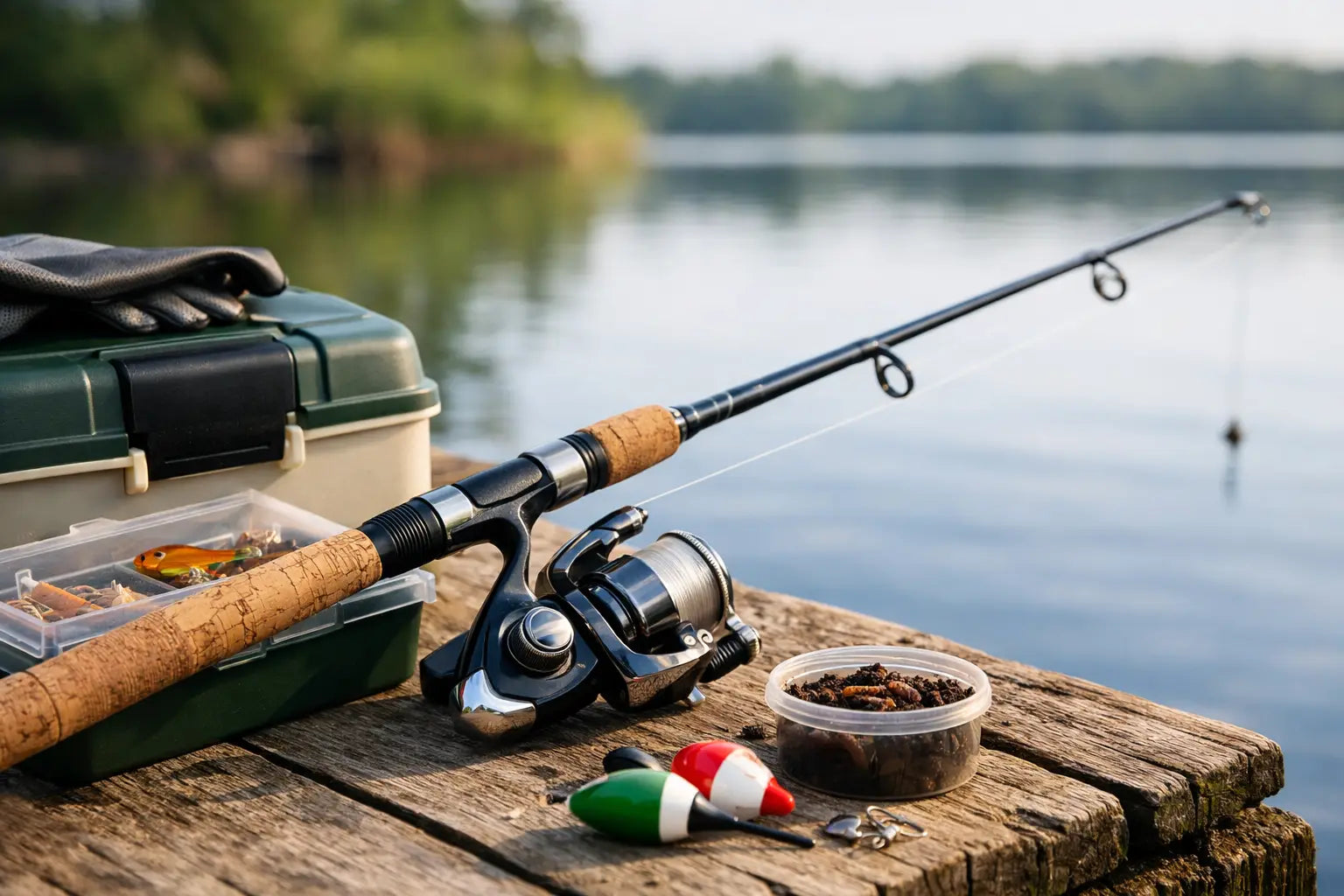

Your first fishing trip should not feel like a gear exam. If you are trying to find the best beginner fishing setup, the real goal is simple - choose a rod, reel, line, and a few basic tackle pieces that are easy to use, reliable on the water, and affordable enough that getting started feels fun instead of expensive.
A lot of new anglers get stuck because the fishing aisle makes everything look essential. It is not. You do not need a dozen rods, five tackle trays, or specialized lures for every species in the lake. You need one setup that can handle common freshwater fishing, cast without constant tangles, and give you room to learn.
For most people in the US, the best starting point is a medium-power spinning combo in the 6'6" to 7' range, paired with 8 to 10 lb monofilament line. That setup is popular for a reason. It is versatile, forgiving, and useful across ponds, small lakes, rivers, and even some light inshore situations.
The big advantage of a spinning setup is ease of use. Spinning reels are generally simpler to cast than baitcasters, and they tend to be less frustrating for first-timers. You can fish for bass, trout, panfish, and the occasional catfish with the same basic combo if your tackle is matched well.
That does not mean one size fits every angler. A shorter rod can feel easier around brushy banks or for younger adults with less casting confidence. A 7-foot rod gives you a little more casting distance and line control. But if you want one answer that works for the widest range of beginners, a 6'6" or 7' medium spinning combo is hard to beat.
A beginner setup has four main parts - rod, reel, line, and terminal tackle. Everything else comes after that.
Start with a medium-power rod with a fast or moderate-fast action. Medium power gives you enough backbone to handle larger fish without feeling too stiff for smaller ones. Fast action helps with sensitivity and hooksets, but moderate-fast can feel a little more forgiving if your timing is still developing.
Graphite rods are light and sensitive, while fiberglass rods are tougher and often more forgiving. Many beginner combos use a blend of both. That is a smart middle ground. You get decent feel without making the rod too delicate or too expensive.
A spinning reel in the 2500 or 3000 size range is usually the sweet spot for beginners. It balances well on a medium rod and holds enough line for most freshwater situations. It also handles lighter lures and live bait rigs better than many beginner baitcasting setups.
Look for a smooth drag and solid handle feel. You do not need a premium reel, but you do want one that feels consistent when you turn it. Cheap reels can work, but the lowest-end options often create more trouble than savings if they twist line or feel rough under pressure.
If you are brand new, monofilament is usually the best choice. It is affordable, easy to manage, and less finicky than braided line. Eight-pound mono is a great all-around starting point. Ten-pound works too if you expect slightly heavier cover or larger fish.
Braid has advantages - better sensitivity, smaller diameter, strong hooksets - but it can also be less forgiving when knots are poor or drag settings are off. Fluorocarbon can be useful, especially in clear water, but it tends to be stiffer and more frustrating for new anglers. Mono keeps things simple, and simple is good when you are still learning how to cast, tie knots, and detect bites.
Your first tackle selection should be small and practical. A few bait hooks, split shot weights, bobbers, and jig heads will cover a lot of basic fishing. Add a couple of soft plastic worms, inline spinners, and one or two small crankbaits or spoons, and you are in business.
This is where many beginners overspend. Tackle is fun to buy, but buying too much too early makes it harder to learn what actually works. Start with proven basics, then adjust to your local water and target species.
The best beginner fishing setup can shift a little depending on where and how you fish.
If you are fishing neighborhood ponds and small lakes for bass and panfish, a 6'6" medium spinning combo with 8 lb mono is ideal. You can throw worms under a bobber, cast small spinners, or work soft plastics along the bank.
If trout are your main target in streams or stocked lakes, a lighter rod can make sense. A 6' to 6'6" light or medium-light spinning combo with 4 to 6 lb mono gives you better control with smaller lures and bait. The trade-off is versatility. A lighter setup is great for trout but not as useful if you later decide to chase bass around weeds or docks.
If you want one combo for mixed freshwater use, stick with medium power. It gives you the broadest range. That matters when you are still figuring out what kind of fishing you enjoy most.
The biggest mistake is buying gear that is too specialized. A heavy rod built for big catfish or musky is not a good beginner choice for general freshwater fishing. Neither is an ultralight setup if you want to fish for a little bit of everything.
Another common mistake is starting with a baitcasting reel because it looks more advanced. Baitcasters are excellent tools, but they punish poor casting mechanics fast. Backlashes can wear out a new angler before the first fish bites. There is nothing wrong with learning baitcasting later. It just should not be your first hurdle.
It is also worth avoiding bargain-bin line and random tackle packs with a lot of filler. A few dependable pieces will help you learn faster than a pile of low-quality extras.
You do not need much to get rolling. A compact starter box should include a few sizes of hooks, split shot, bobbers, jig heads, barrel swivels, and soft plastics. Add needle-nose pliers or a multi-tool, line clippers, and a small landing net if you fish from shore around rocks or steep banks.
For lures, think confidence and coverage. Inline spinners are easy to use and catch multiple species. Soft stick worms rigged simply can catch bass almost anywhere. A small spoon can be useful in ponds and lakes when fish are active. That is enough to start learning retrieve speed, lure depth, and fish behavior without getting overwhelmed.
You can build a very solid starter setup without going high-end. For most anglers, the smart move is a quality entry-level or mid-range combo rather than the cheapest option on the rack. The lowest price is not always the best value if the reel feels rough or the rod guides wear quickly.
A little extra spent upfront often gets you better casting performance, smoother drag, and gear that lasts beyond one season. That matters because the best setup is one you will keep using after the learning phase. Outdoor Up shoppers tend to value practical gear over flashy branding, and that mindset works well here. Buy for reliability first.
If you want the short version, here it is. Choose a 6'6" to 7' medium spinning rod, a 2500 or 3000 spinning reel, and spool it with 8 to 10 lb monofilament. Add a few hooks, split shot, bobbers, jig heads, soft worms, and one or two simple lures like spinners or spoons.
That setup gives you room to fish from shore, try live bait, learn basic lure retrieves, and target several common freshwater species without rebuilding your gear every trip.
The right gear helps, but confidence comes from repetition. Practice casting in an open area before your trip. Learn one or two knots well instead of five badly. Fish simple baits long enough to understand how they move and when bites happen.
There is always a temptation to buy your way into being better prepared. Fishing does not work like that. The beginner who knows how to use a basic setup well will usually outfish the beginner carrying a cart full of gear they do not understand.
Start with a setup that is dependable, balanced, and easy to manage. Then get it on the water. The best first fishing gear is not the most advanced setup on the shelf - it is the one that gets you casting sooner, learning faster, and looking forward to the next trip.