Your Cart is Empty



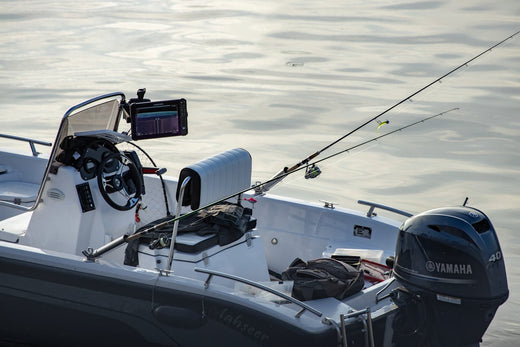
A bass breaks the surface 30 yards off the bow. You need to ease into casting range without spooking it, hold the boat against a light wind, and stay focused on the next cast. That is where the trolling motor vs outboard decision becomes real. One gives you quiet, controlled positioning. The other gets you across the lake, through current, and back to the ramp before the weather turns.
For many anglers and boaters, this is not an either-or choice. A trolling motor and an outboard do different jobs, and the best setup often uses both. The right answer depends on your boat, your waters, how far you travel, and whether your time onboard is about fishing precision, family cruising, or a little of everything.
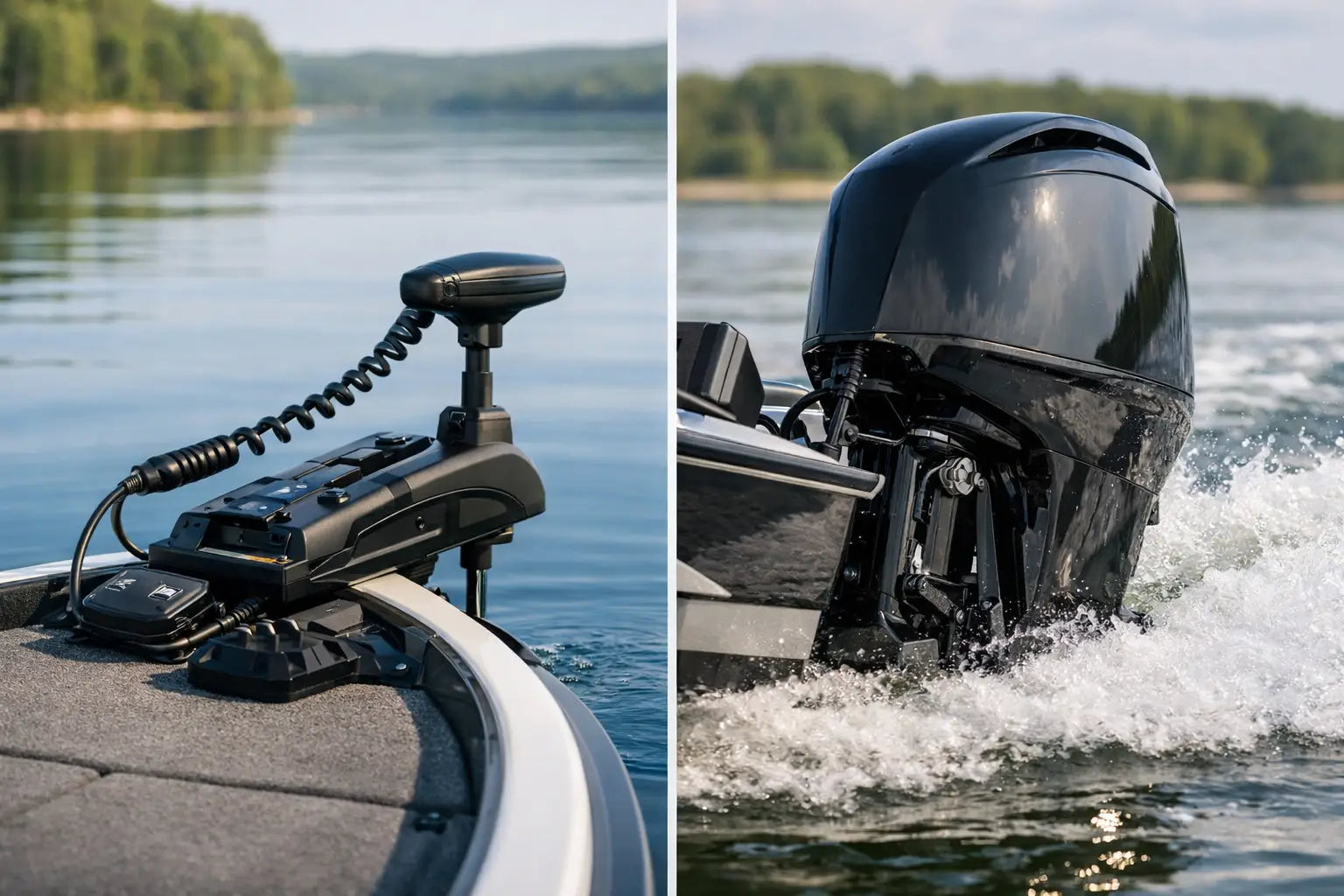
An outboard is your primary propulsion. Gas outboards deliver the speed, range, and power needed to plane a boat, carry passengers and gear, run long distances, and handle open water. Electric outboards can also serve as primary power on smaller boats and restricted waters, though their range depends heavily on battery capacity and throttle use.
A trolling motor is designed for slow, quiet, highly controlled movement. Most are electric and mounted on the bow, transom, or engine bracket. They let you creep along a shoreline, work a weed edge, hover over structure, or make small corrections while casting.
Think of the outboard as the motor that gets you to the fishing spot. Think of the trolling motor as the one that helps you fish it properly.
The biggest difference is speed. A typical trolling motor may move a small boat at roughly 2 to 5 mph, depending on hull shape, boat weight, wind, current, and battery charge. That is plenty for working a cove or moving between nearby points. It is not a practical way to cover five miles of open lake after sunset.
Outboards are made for travel. Even a modest outboard can push a light aluminum boat much faster than a trolling motor. Larger outboards provide the power needed for bigger fishing boats, pontoons, runabouts, and loaded utility boats. If you need to cross wide water, get on plane, or outrun an approaching storm, an outboard earns its place quickly.
Noise is the other major split. An electric trolling motor is exceptionally quiet, which matters in shallow water and around pressured fish. A gas outboard is louder and creates more disturbance, even at low throttle. That does not make an outboard a poor fishing tool. It simply means it is usually better to kill the main engine once you reach your area and switch to a trolling motor.
Control is where trolling motors shine. Foot pedals, hand controls, remote controls, and GPS-enabled features can help you steer while keeping a rod in hand. Advanced models can hold a position, follow a route, or maintain a heading. For anglers fishing wind-blown points, dock lines, timber, or ledges, that control can turn a frustrating day into a productive one.
A trolling motor is a smart first purchase if you fish small lakes, ponds, protected coves, or electric-only waters. It is also a strong choice for a jon boat, kayak, canoe, inflatable, or small utility boat where quiet operation and simple rigging matter more than speed.
It is especially useful when fishing style demands precision. Bass anglers working docks, crappie anglers staying on brush piles, and walleye anglers making controlled passes all benefit from slow, repeatable boat movement. A bow-mounted motor generally offers the best tracking and steering control because it pulls the boat rather than pushes it.
Battery planning matters. A 12-volt system is common for smaller boats and lighter use. Larger boats, rougher conditions, and all-day fishing may call for 24- or 36-volt systems. More voltage usually means more thrust and longer usable runtime, but it also means more batteries, more weight, and more charging needs.
Do not choose thrust by guessing. Match it to the loaded weight of your boat, including people, fuel, tackle, coolers, batteries, and the gear that always seems to multiply before launch. Wind and current should influence the decision too. Buying too little thrust can leave you fighting the motor all day at maximum power, which drains batteries fast.
An outboard is the right primary motor when distance, speed, and carrying capacity are part of the plan. It is the practical choice for larger lakes, rivers with current, coastal inshore use, and any trip where the ramp is miles from the areas you want to explore.
It also makes sense if your boat carries several people. A family fishing trip, a day of tubing, or a run to a remote campsite needs more power than a trolling motor can provide. Outboards are built to move a loaded hull efficiently at higher speeds, while trolling motors are built for low-speed maneuvering.
For many boaters, fuel range is the deciding factor. With adequate fuel onboard, a gas outboard can support long days and long runs with a refill that takes minutes. Electric primary propulsion is getting more capable, but battery range must be calculated honestly. High speed, rough water, cold temperatures, and heavy loads all reduce runtime.
An outboard also provides a valuable safety margin. If the wind rises, current strengthens, or a thunderstorm moves in, you want enough power to return safely. Always check local rules, weather, fuel or battery status, required safety gear, and the condition of your boat before leaving the dock.
A fishing boat with an outboard and a bow-mounted trolling motor is not overbuilt. It is purpose-built. The outboard gets you from the launch to the best water efficiently. The trolling motor lets you stay there quietly and fish with control.
This combination is common on bass boats, multi-species boats, bay boats, pontoons used for fishing, and aluminum rigs. It gives you flexibility when conditions change. Use the outboard for a long run, then switch to the trolling motor at the first shoreline, hump, or grass flat. If you need to move quickly, trim up, fire up the outboard, and go.
There are trade-offs. Adding a trolling motor means upfront cost, battery weight, wiring, charging equipment, and another system to maintain. But if fishing is the main reason you own a boat, the payoff in boat control is hard to beat.
Start with how you actually use the boat, not the biggest motor you have seen on the water. A small pond hopper may need only a transom-mounted trolling motor and a reliable deep-cycle battery. A 16-foot aluminum fishing boat may be best with a moderate outboard plus a bow-mounted 24-volt trolling motor. A larger bass boat may call for a higher-horsepower outboard and a 36-volt GPS trolling motor capable of holding position in wind.
Also consider where you launch. Some lakes restrict gas engines or limit boats to electric propulsion. Other waters are large enough that a trolling motor alone can create a real safety problem. Regulations can vary by lake, state park, reservoir, and access area, so check the rules before you buy or travel.
Mounting and charging deserve attention as well. Bow mounts offer superior fishing control but require a solid bow deck and proper wiring. Transom mounts are simpler and often more affordable. For batteries, use a charger matched to your battery type, secure every connection, and recharge after each trip. A fully charged battery is not a luxury when the fish are biting and the wind starts pushing.
If you need quiet movement and exact control, choose a trolling motor. If you need speed, range, and the muscle to move people and gear, choose an outboard. If fishing is your priority on bigger water, plan for both and let each motor do what it does best.
Gear up for the trips you want to take, not just the launch you make today. The right propulsion setup gives you more confidence to venture farther, fish longer, and make the most of every hour on the water.