Your Cart is Empty


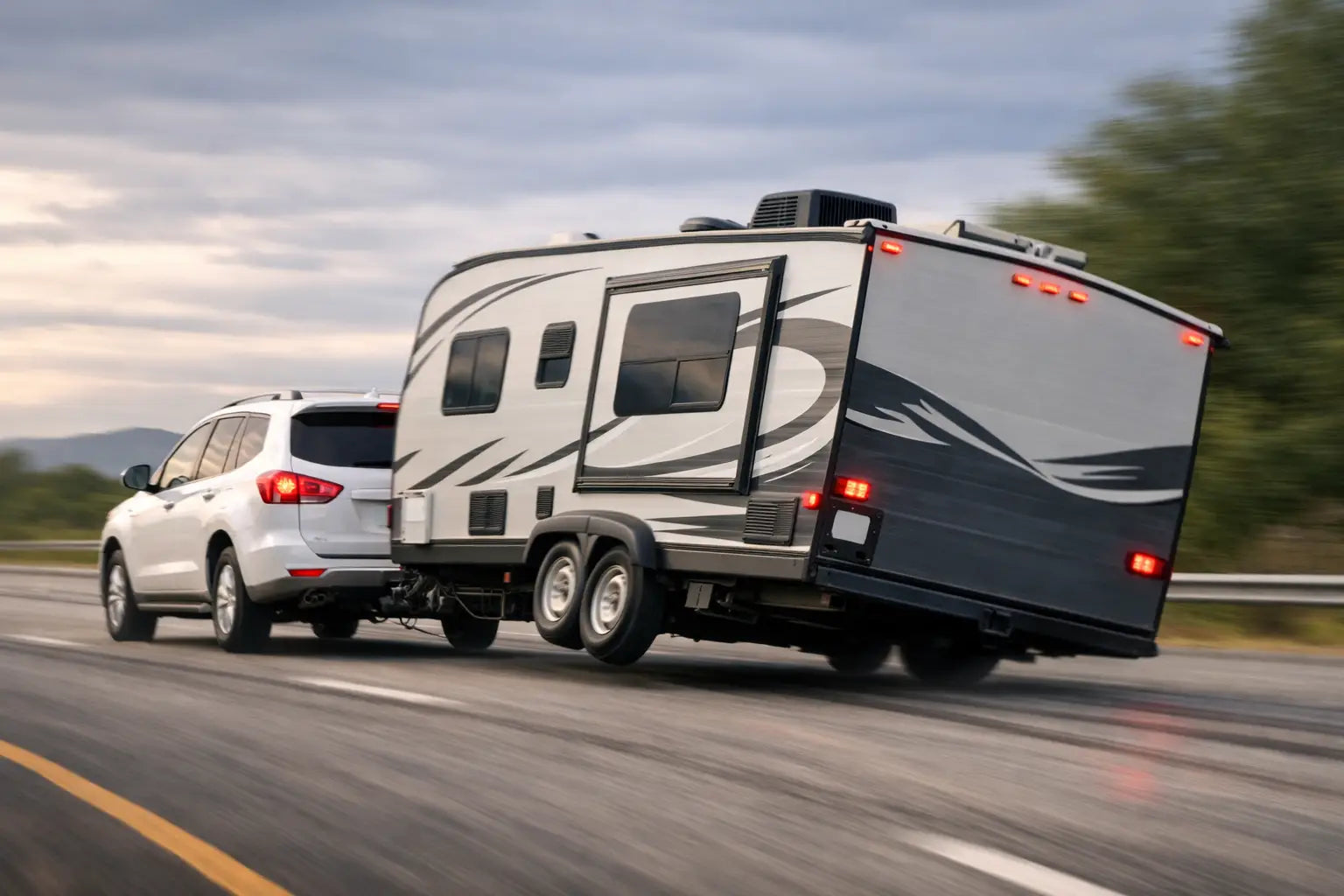

A calm trailer can turn into a white-knuckle problem fast. One moment you are rolling toward the campground, boat ramp, or trailhead, and the next the trailer is moving side to side behind the tow vehicle. Understanding what causes trailer sway gives you a better chance of preventing it before it interrupts a good trip.
Trailer sway is not usually caused by one single mistake. It is often a chain reaction involving load balance, vehicle setup, road conditions, speed, and equipment condition. The good news is that most causes are easy to identify and correct with a more deliberate pre-trip routine.
Trailer sway happens when a trailer begins to move from side to side independently of the tow vehicle. Small movements are normal on uneven pavement, in wind, or when a large vehicle passes. Trouble starts when those movements build instead of settling down.
A properly loaded, properly matched trailer naturally tracks behind the tow vehicle. When the trailer has too little weight on its tongue, too much weight in the wrong place, soft tires, or an unstable towing setup, it can start steering itself. Once that motion begins, a quick steering input or extra speed can make it worse.
Tongue weight is the downward force the trailer applies to the hitch. For most conventional bumper-pull trailers, a common target is roughly 10% to 15% of the loaded trailer weight on the tongue. The right figure can vary by trailer design and manufacturer guidance, but the principle stays the same: the front of the trailer needs enough weight to stay planted.
Too little tongue weight is one of the most common sources of sway. It often happens when coolers, generators, firewood, water containers, cargo boxes, or other heavy gear are loaded behind the trailer axle. That rear-heavy load acts like a pendulum. A bump, crosswind, or passing truck can start it swinging.
Too much tongue weight creates a different problem. It can overload the rear axle of the tow vehicle, lighten the front steering axle, and reduce control. A trailer can feel stable at low speeds yet still handle poorly when braking or turning. The goal is balanced weight, not simply piling gear at the front.
Even a trailer loaded with the right overall balance can sway if the load moves. A strapped-down ATV, fishing gear, camping totes, or a boat that is not properly positioned can change the trailer's center of gravity during travel.
Secure gear so it cannot slide forward, backward, or side to side. Place the heaviest items low and close to the trailer axle, with slightly more weight forward of the axle than behind it. Avoid stacking heavy cargo high, especially in an enclosed trailer. Height adds leverage, and leverage makes sudden movements harder for the suspension and hitch to control.
Speed amplifies every weakness in a towing setup. A trailer that feels fine at 55 mph may become unsettled at 70 mph, particularly if it is lightly loaded or catches wind easily. Travel trailers, cargo trailers, and boats can present a large side surface to crosswinds.
A gust of wind or the air pressure from a passing semi can push the trailer sideways. In a stable setup, it should straighten out quickly. In an unstable one, the first push can become a growing back-and-forth motion. Slowing down is often the most effective immediate response because it reduces the force feeding the sway.
Roads matter, too. Grooved pavement, uneven shoulders, bridge joints, and downhill grades can all start trailer movement. You cannot control the road, but you can leave more room, choose a sensible speed, and make sure the towing system is ready for the conditions.
A trailer and tow vehicle work as one system. A capable truck or SUV does not automatically make every trailer combination safe. Ratings, hitch equipment, wheelbase, suspension, and brake setup all affect how confidently the rig handles.
An undersized tow vehicle may have enough advertised towing capacity for a trailer's dry weight but still struggle with the real-world loaded weight. Passengers, fuel, coolers, cargo, accessories, and water all count. So does the payload placed on the vehicle by the hitch.
Short-wheelbase vehicles can also be more sensitive to trailer movement than longer, heavier tow vehicles. That does not mean they cannot tow safely. It means the trailer must be appropriately sized, correctly loaded, and operated within every rating on the vehicle, hitch, and trailer.
A trailer should generally ride level or very close to level when connected. If the nose is noticeably high, the trailer may transfer too much weight rearward. If it sits too low in front, it can overload the front axle and reduce clearance. Either condition can affect stability and braking.
Check hitch ball size, ball rating, coupler fit, safety chains, and the hitch pin before every trip. A loose or worn connection introduces play right where you need control. For heavier trailers, a correctly sized weight-distribution hitch can help return weight to the front axle of the tow vehicle and improve handling. It must be set up correctly for the specific trailer, not simply tightened until it looks right.
Sway control equipment can help resist side-to-side movement, but it is not a substitute for proper loading. Friction sway controls and integrated weight-distribution systems are useful for many travel trailers and utility trailers, especially when wind and highway travel are part of the plan.
The trade-off is that these systems need correct installation and adjustment. An overly tight or improperly configured setup can affect turning and handling. Follow the equipment instructions and trailer manufacturer recommendations, and do not assume sway control will fix a rear-heavy trailer.
Tires are the trailer's connection to the road. Underinflated tires flex more, run hotter, and can allow the trailer to feel vague or unstable. Mismatched tires, uneven wear, cracked sidewalls, and damaged belts can all contribute to poor tracking.
Check tire pressure when the tires are cold and use the pressure listed for the trailer tire and load requirement. Do not rely on a quick glance. Also inspect the tire age, tread condition, valve stems, lug nuts, and spare before a long trip. Trailer tires may age out before the tread wears out, especially on trailers that sit between seasons.
Brake problems can make sway more dangerous. If trailer brakes are weak, delayed, or improperly adjusted, the tow vehicle has to do too much of the stopping work. If one trailer brake grabs harder than another, it may pull the trailer off line. Test the brake controller at low speed in a safe area before heading onto the highway.
Worn suspension components, bent axles, loose wheel bearings, or an improperly aligned trailer can also cause wandering that feels like sway. If the trailer consistently pulls to one side, wears one tire faster, or feels unsettled despite a balanced load, it is time for a professional inspection.
Your first instinct may be to jerk the wheel or slam on the brakes. Resist both. Sudden steering and hard braking can make the swing more aggressive.
If sway begins, keep your hands steady and ease off the accelerator. Hold the steering wheel straight and let the tow vehicle slow gradually. If your trailer brake controller has a manual override and you know how to use it safely, applying the trailer brakes gently can help pull the trailer back into line. Do not apply the tow vehicle brakes aggressively while the trailer is swinging.
Once the rig is stable, pull over somewhere safe. Do not keep driving and hope it was a one-time event. Check cargo placement, tie-downs, hitch connection, tire pressure, and any visible suspension or tire damage before continuing.
The best defense against trailer sway happens before you leave the driveway. Load heavy gear low and slightly forward of the axle. Verify tongue weight instead of guessing. Make sure the trailer sits level, the hitch is correctly rated, and all cargo is secured.
Before each trip, inspect the essentials: