Your Cart is Empty


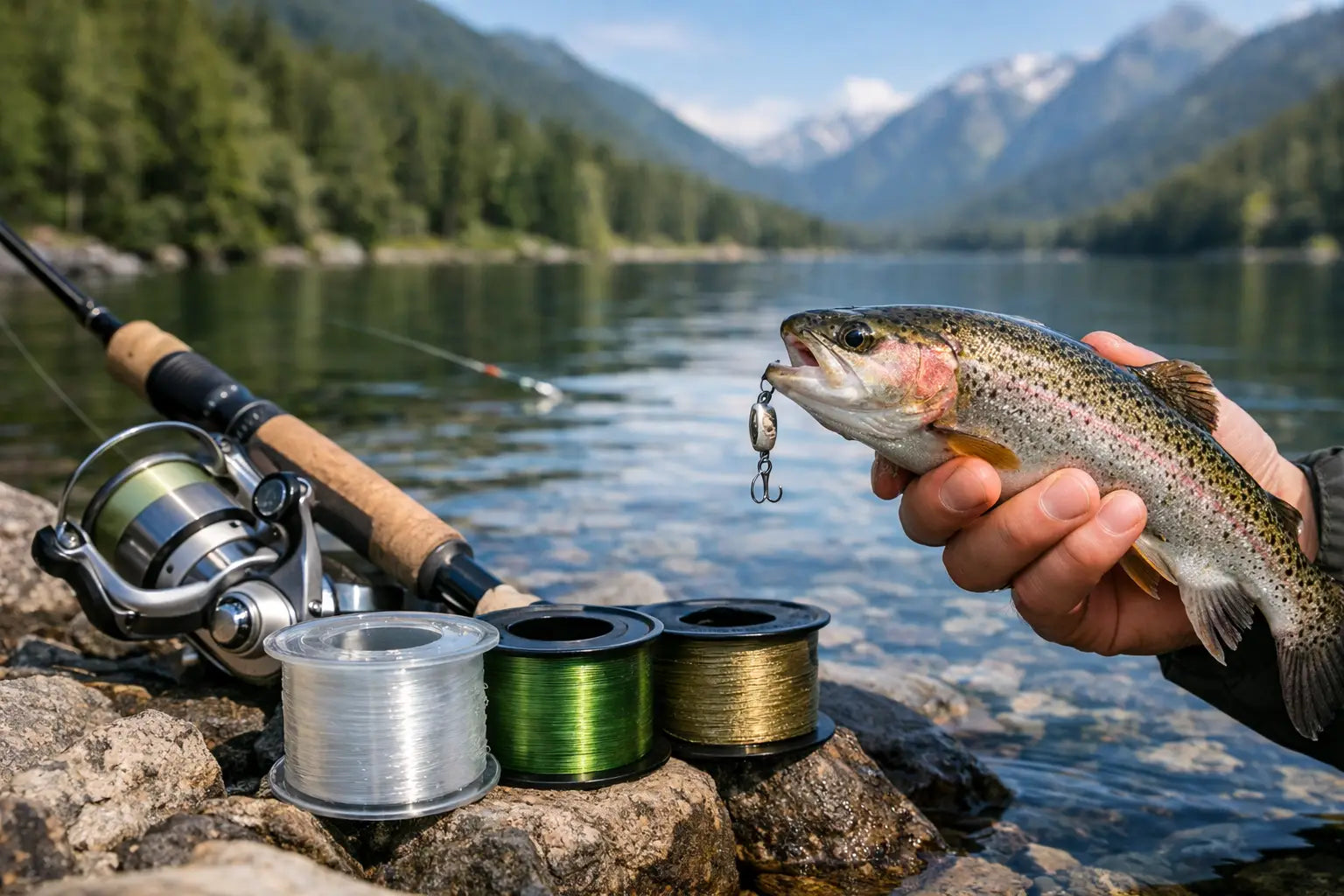

A trout hits a small spinner, races downstream, and suddenly every weak point in your setup matters. If you are asking what fishing line for trout to use, start with the water and the presentation you plan to fish. Trout can be line-shy in clear streams, yet a light line that casts beautifully may not hold up around rocks, brush, or bigger fish.
For most anglers, 4- to 6-pound test monofilament or fluorocarbon is the dependable starting point. The best choice changes with water clarity, current, trout size, cover, and whether you are casting lures, drifting bait, or fly fishing. Gear up for the conditions you actually expect, not just the biggest fish you hope to catch.
There is no single line that wins in every trout situation. Monofilament is easy to handle and forgiving. Fluorocarbon is harder for fish to see underwater. Braid is thin, sensitive, and long-casting, but it is usually best paired with a clear leader.
If you are heading to a local lake or a small creek with one spinning rod, spool 4- or 6-pound monofilament and go fish. It is affordable, knots well, and has enough stretch to help keep a trout from throwing a small hook during a fast head shake. For stocked trout, casual bait fishing, and many spinner setups, mono is hard to beat.
Fluorocarbon is a strong upgrade when water is clear and trout are pressured. It sinks faster than mono and is less visible underwater, which can help with small jigs, bait rigs, nymphs, and subtle presentations. Its trade-off is stiffness. Fluorocarbon can be less pleasant to manage on a spinning reel, especially in cold weather or at very light diameters.
Braid gives anglers excellent casting distance and a direct feel for light bites. A 10-pound braid has a very small diameter, so it can launch a lightweight lure farther and cut through wind better than thicker mono. But braid is highly visible and has almost no stretch. Use a 4- to 8-pound fluorocarbon or monofilament leader between the braid and your lure, bait rig, or swivel.
Pound test matters as much as line material. Going too heavy can reduce casting distance and make a natural drift harder. Going too light can lead to break-offs when a good trout uses current, rocks, or submerged timber to its advantage.
For small wild trout in clear moving water, 2- to 4-pound test is often the sweet spot. Light line lets tiny spinners, spoons, and natural bait move naturally. It also makes a big difference when you need to cast into tight pockets behind boulders or under overhanging brush.
Choose 4-pound fluorocarbon for a low-visibility leader, especially when fishing clear pools where trout have time to inspect your offering. If the stream has lots of sharp rock, woody cover, or surprise brown trout, moving up to 6-pound test is smart insurance.
Current adds pressure fast. A 14-inch trout in moving water can feel much stronger than the same fish in a still pond. For general river fishing, 6-pound mono or fluorocarbon is a capable all-around choice. It handles common trout lures, gives you room to steer fish away from cover, and still looks natural enough for most conditions.
Use 8-pound test when targeting larger brown trout, fishing deep runs with heavy structure, or expecting mixed catches that may include bass, salmon, or steelhead. You may give up some subtlety, but reliability matters when you are fishing water where a single break-off can end your best opportunity of the day.
Trout in lakes and stocked ponds often respond well to small baits, dough baits, floating rigs, spoons, and spinners. Four-pound mono is a classic choice because it casts easily and works with lightweight terminal tackle. Six-pound mono is better if you are fishing around docks, weeds, or larger stocked fish.
For deep, clear reservoirs, consider a braid main line with a fluorocarbon leader. The thin braid helps with long casts and keeps you connected when fishing deeper water. A 10-pound braid paired with a 6-pound fluorocarbon leader is a practical setup for casting spoons, small swimbaits, and jigs from shore or boat.
Your line should support the way your lure or bait behaves in the water. A setup that works for drifting a salmon egg is not always the right choice for throwing a small crankbait across a windy lake.
For inline spinners and small spoons, 4- to 6-pound mono is simple and effective. Mono's stretch helps when a trout strikes hard at close range, and it is easy to retie after bumping rocks. If you need extra casting distance, use 10-pound braid with a 4- to 6-pound fluorocarbon leader.
For bait fishing, fluorocarbon leaders are especially useful. Whether you are drifting a worm, fishing a floating bait rig, or using a small hook below a split shot, the leader is close to the fish and deserves extra attention. A 2- to 4-pound leader is great for clear water and smaller trout, while 6-pound is the practical choice around cover or for larger fish.
For jigs, soft plastics, and deeper presentations, fluorocarbon shines because it sinks. It also transmits a more direct feel than mono, helping you detect light pickups. If you fish a lot of tiny jigs, braid with a fluorocarbon leader offers the most sensitivity, but only if you are comfortable tying a dependable line-to-leader knot.
Fly anglers usually think in terms of tippet rather than pound test, but the same rule applies: clear, calm water often calls for finer tippet, while fast water and larger flies allow heavier material. Do not go lighter than necessary just because trout are selective. A fish hooked on a tiny fly still needs to be landed safely.
Trout line selection comes down to three factors: how visible it is, how much it stretches, and how well it resists abrasion.
Fluorocarbon leads on visibility and abrasion resistance. It is the best choice when fish are wary or the bottom is rocky. Mono offers more stretch, which acts like a shock absorber and makes it easier for beginners to fight trout without pulling hooks free. Braid has the best sensitivity and diameter-to-strength ratio, but it needs a leader in most trout situations and demands a smoother drag setting.
Line color also matters. Clear mono and clear fluorocarbon are safe choices when you are uncertain. High-visibility braid can help you watch a drifting line or spot subtle bites, but keep the visible section away from the trout by adding a long clear leader. In very clear water, a 4- to 8-foot leader is common. In stained water or fast current, a shorter leader is usually fine.
A light or ultralight spinning rod paired with a smooth spinning reel makes trout fishing more enjoyable. Match the reel to the line instead of overfilling the spool. Too much line causes loops and tangles, while old, twisted line can cost you distance and turn a good morning into a frustrating one.
For a straightforward setup, spool your reel with 6-pound monofilament. This covers most beginner and all-purpose trout fishing. For a more performance-focused setup, spool 10-pound braid and add a 6-pound fluorocarbon leader. If you are fishing tiny streams with wary trout, go lighter with 4-pound mono or fluorocarbon.
Check the first few feet of line often. Trout water is full of rock, gravel, branches, and rough shorelines that nick light line quickly. Run the line between your fingers after a snag or a fish, then retie if it feels rough. A fresh knot is cheap. Losing a lure, fish, or both is not.
The right trout line should give you confidence to cast closer to the current seam, work that shaded bank, and let a small lure do its job. Pick a sensible strength, keep your leader fresh, set your drag light, and get outside more. The trout will tell you the rest.