Your Cart is Empty



A dead battery at the ramp is annoying. A dead battery after sunset with the wind picking up is a real problem. That is why the best boat safety accessories are not just nice extras to toss in a storage hatch. They are the gear that keeps small issues from turning into long, expensive, or dangerous days on the water.
If you run a fishing boat, pontoon, center console, kayak, or jon boat, your safety setup should match how and where you actually boat. A calm inland lake demands something different than a tidal bay or nearshore run. Still, the goal is the same every time - stay visible, stay afloat, stay in control, and stay ready when conditions change fast.
Good safety gear earns its space. It solves a real problem, works when you need it, and does not require a complicated setup when your hands are wet and your attention is split.
That is also where a lot of boaters get tripped up. They focus on the big-ticket item, like a life jacket, and overlook the supporting gear that makes a bigger difference in an actual emergency. A throwable flotation cushion, a sound-producing device, a waterproof light, or a simple first aid kit may not be exciting to buy, but they are the pieces you reach for when the day goes sideways.
The best approach is practical. Cover the legal basics first, then build around your boat size, passenger count, water type, and trip length.
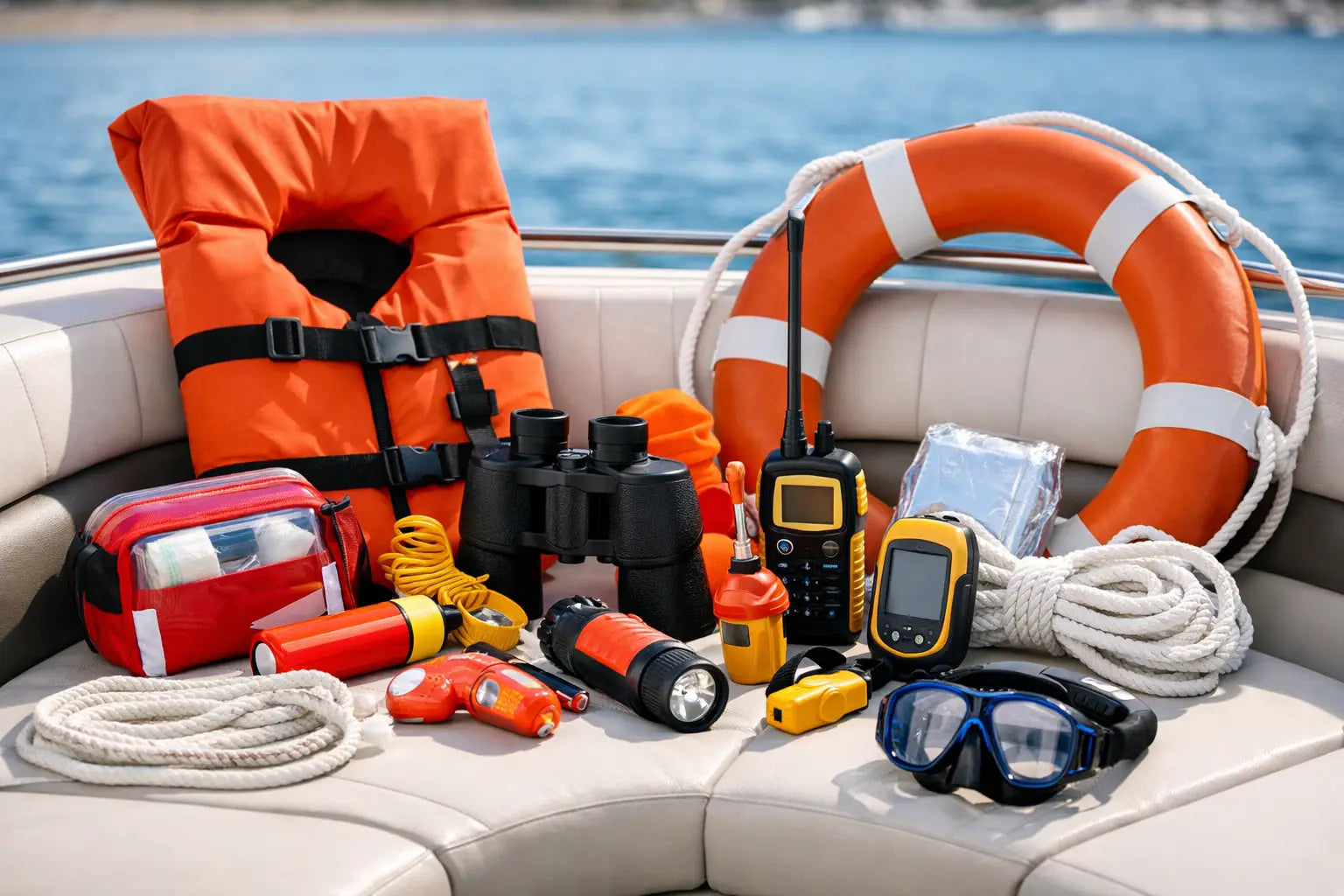
This is still the first item for a reason. A wearable life jacket for every person on board is the foundation of boat safety, and fit matters as much as having one. Kids need youth-specific sizing. Anglers often prefer slimmer styles that allow better movement. Paddlers and small-boat users usually benefit from low-bulk designs they will actually keep on.
A cheap vest stuffed under a seat checks a box. A comfortable, well-fitted life jacket worn when conditions get rough does the real work.
On many boats, this is required, but even when it is not, it is smart to carry. If someone falls overboard, a throwable cushion or ring buoy gives them immediate support while you maneuver back safely.
The trade-off is storage. Ring buoys are easy to spot and grab, but they take up more room. Cushions are compact and easy to stash, though they can be less visible in rough water. For smaller recreational boats, many owners prefer the cushion because it fits the boat better.
Fuel, heat, wiring, and enclosed storage spaces can create fire risk fast. A marine-rated fire extinguisher belongs within quick reach, not buried under gear.
This is one of those accessories that boaters often forget to inspect. Check pressure levels, mounting condition, and expiration guidance before the season starts. If your boat has an engine compartment or onboard fuel system, this is not optional thinking.
When visibility drops or you need help beyond shouting distance, visual signals matter. Flares are the classic example, but they are not the only option. Signal flags and electronic distress lights can also play a role depending on where you boat.
For occasional lake users, the basic legal requirement may be enough. For boaters running larger water, coastal areas, or low-light conditions, adding multiple signal types gives you better backup. Flares expire, and weather can affect visibility. Redundancy is a good call here.
A whistle seems small until you need to get attention in wind, fog, rain, or darkness. Horns and whistles help you signal nearby traffic and call for assistance when voice alone will not carry.
This is one of the best low-cost additions you can make. It weighs almost nothing, takes up almost no space, and covers a basic but critical part of emergency communication.
If your trip runs late, a reliable waterproof light becomes more than convenience. It helps with docking, reading equipment, checking lines, signaling, and spotting floating debris.
A compact waterproof flashlight is the minimum. If you boat at night more often, a stronger handheld spotlight is worth the extra size. Just remember that more power usually means more battery demand, so keep spare batteries or a charging plan on board.
Hooks in fingers, scraped knees on docks, rope burns, sun exposure, and minor cuts are common boating problems. A marine first aid kit helps you deal with the small stuff before it ruins the trip.
The right kit depends on your crew and trip length. A short family outing might only need basic wound care, motion sickness relief, and sunscreen backup. Longer fishing trips or remote runs call for a more complete setup. Water-resistant packaging is a big plus because soggy bandages are not much help.
Water gets in boats. Rain, spray, leaks, and bad plugs all happen. If your bilge system fails or your boat does not have one, a manual pump or bailing device gives you a simple backup.
This accessory rarely gets attention until the moment it becomes urgent. That alone makes it worth carrying. Smaller boats especially benefit from low-tech backup because electronics and switches do fail.
An anchor is not just for lunch stops and swimming breaks. If your motor quits near current, wind, rocks, or traffic, anchoring can stop a bad situation from getting worse.
The mistake is carrying an anchor that does not match the bottom conditions or enough line for the water you run. Mud, sand, rock, and weeds all behave differently. If you move between lakes and rivers, choose a setup with enough versatility instead of buying the smallest option just to save storage space.
Even on a powered boat, a paddle is smart insurance. It can help you maneuver at the dock, correct your angle in shallow water, or make slow progress if propulsion fails close to shore.
No one wants to think about paddling a fishing boat back against the wind, and in many cases it will not be realistic for long distances. But for short corrections and emergency control, it is a simple accessory that punches above its price.
A basic marine tool kit and a sharp safety knife solve all kinds of problems - cut tangled line, tighten battery terminals, handle hose clamps, or free snagged gear. These are not dramatic rescues, but they are exactly the kind of issues that can turn a smooth day into a frustrating one.
Choose corrosion-resistant tools if possible. Standard tools can work, but they tend to age fast in a wet marine environment.
Cell phones help, but they are not a complete boating safety plan. Coverage can be spotty, batteries die, and wet phones are not always dependable when you need them most. A VHF radio is a stronger option for larger water and coastal use, while a waterproof phone case and power bank can improve your backup plan on inland trips.
This is where it really depends on how you boat. A bass boat on a small local lake may not need the same communication setup as a center console running offshore. But every boater should think through one question before launch - if the engine fails or someone gets hurt, how do you call for help?
Start with your boat type and your risk level, not just a generic checklist. Small open boats need compact gear that is easy to grab. Family pontoons benefit from accessible flotation and first aid supplies for more passengers. Anglers who launch before daylight should put extra focus on lighting, communication, and emergency repair items.
Then think about storage and access. The best boat safety accessories do no good if they are hard to reach. Keep the most time-sensitive gear where it can be grabbed fast - life jackets, throwable flotation, fire extinguisher, horn, and flashlight should never be packed under a pile of tackle or beach bags.
Finally, inspect your gear like you mean it. Batteries die. Flares expire. Straps wear out. Zippers corrode. A quick pre-season check catches a lot of problems before they show up at the worst time.
There is a difference between buying safety gear and being ready. Ready means your equipment fits the trip, your passengers know where it is, and you can use it without stopping to read the label in a stressful moment.
That is why affordable, practical gear matters so much. You are more likely to outfit the whole boat properly when the cost feels realistic, and you are more likely to replace worn-out items on time. For everyday boaters, that mindset usually matters more than chasing the most premium option on the shelf.
A smart kit does not need to be fancy. It needs to be dependable, easy to access, and matched to the water ahead. Gear up before the forecast changes, before daylight fades, and before minor trouble has a chance to grow into something bigger.