Your Cart is Empty


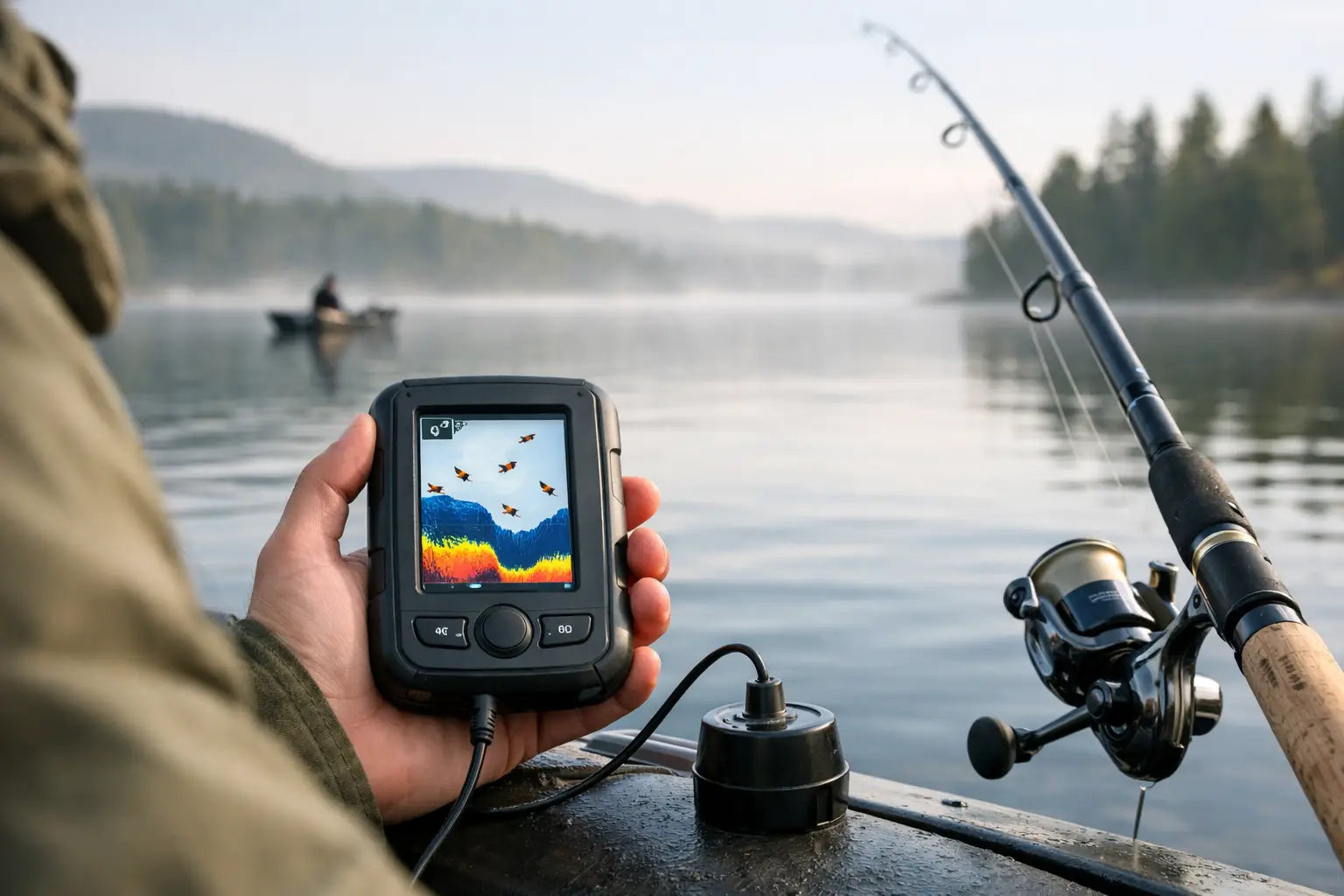

A productive spot can be 20 yards from where you are casting. The difference is often knowing where the drop-off, bait school, brush pile, or suspended fish actually sits. The best portable fish finders give anglers that information without requiring a permanent boat install, a dedicated electronics panel, or a complicated setup before first light.
For shore anglers, kayak fishermen, ice fishermen, and small-boat crews, portable sonar is one of the most useful upgrades you can pack. The right unit helps you spend less time working empty water and more time fishing the structure that holds fish. The best choice depends on how you fish, where you fish, and whether you want to use a phone, a mounted display, or a simple flasher-style screen.
Portability is more than a small screen. A truly portable fish finder should be quick to deploy, easy to recharge or power, and simple to move between a kayak, jon boat, dock, ice hole, or shoreline. It also needs a transducer setup that makes sense for your style of fishing. A castable sonar unit is excellent from the bank, for example, but it is not the same tool as a battery-powered display unit for a small boat.
Start with sonar performance. Traditional 2D sonar gives a dependable view of depth, bottom contour, cover, and fish targets. CHIRP sonar sends a range of frequencies for better target separation, which can make it easier to distinguish fish from bait or structure. Down imaging adds a more detailed picture directly under the transducer, while side imaging scans outward from each side of the boat. These advanced views are valuable, but they also raise the cost and can be unnecessary for a casual pond trip.
Screen visibility matters too. A bright, readable display is worth paying for if you fish in open sun. Phone-based units save space and can provide a large map-like view, but your phone battery, screen glare, and weather protection become part of the equation. Dedicated displays are generally more convenient for longer trips, especially when your phone is also handling navigation, photos, or emergency communication.
A castable unit such as the Garmin STRIKER Cast is built for mobility. Tie it to a rod, cast it beyond the first break, and view sonar returns on a compatible mobile device. This approach is especially useful for bank anglers trying to learn a new lake, locate a channel edge, or check whether a likely-looking point has depth and bait nearby.
Its biggest advantage is reach. You can scout water that is difficult to access from shore without hauling a battery box, display mount, or transducer arm. The trade-off is that casting and retrieving sonar takes a little practice, and a phone screen is less convenient in rain, cold, or harsh sunlight. It is a strong fit for anglers who fish ponds, public lakes, docks, and riverbanks with a light, mobile setup.
The Deeper CHIRP 2 is another proven castable option for anglers who want more detail from a compact package. Its multiple beam options and CHIRP capability make it useful for identifying bottom changes, cover, bait, and fish targets in a range of conditions. It can work from shore, a dock, a kayak, or through the ice with the right approach.
This is the kind of portable sonar that rewards anglers who like learning water. Use it to check the depth of a cove before committing to it, trace the edge of submerged weeds, or find the deeper water near a fishing pier. It is not the lowest-cost route into fish finding, but the extra detail can be worthwhile when you fish unfamiliar water often.
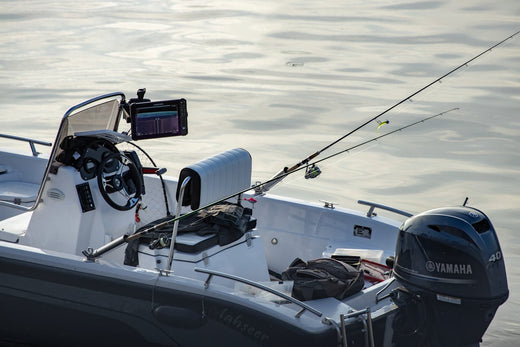
A portable display unit is often the better call for a jon boat, canoe, rental boat, or simple aluminum fishing rig. Portable Humminbird PiranhaMAX configurations pair a compact screen with a battery and portable transducer arrangement, giving you a self-contained setup that can be moved from trip to trip.
This style is practical because you can watch the sonar continuously as you travel and fish. Instead of casting a transducer ahead, you see what is passing beneath the boat in real time. For crappie, bluegill, catfish, and bass anglers working small lakes, it is a straightforward way to find depth changes and fish-holding cover without permanently wiring electronics into the boat.
The limitation is that portable display bundles take up more space than a castable pod. You will need to manage a battery, secure the transducer, and protect the screen during transport. For boat-based fishing, though, the added convenience is usually worth it.
Ice fishing calls for fast feedback. A portable flasher, such as a Vexilar setup, is designed to show your jig, fish movement, and bottom depth with minimal delay. That immediate response is the reason many serious hard-water anglers prefer flashers over a standard scrolling sonar display.
A flasher is not as useful for mapping a shoreline from a bank, and it may look unfamiliar to anglers used to conventional screens. But in a shelter, over a drilled hole, it is hard to beat for watching fish react to your presentation. If you fish through the ice several times each winter, a dedicated portable flasher can be a better investment than trying to make one general-purpose unit do every job.
A fish finder is only portable if it is ready when you are. Check how it is powered before buying. Castable units usually rely on rechargeable internal batteries. Display-based systems may use a rechargeable battery pack, which provides longer runtime but adds weight and requires charging before each trip.
Also consider transducer mounting. Kayak anglers often use an arm mount or a scupper-compatible setup. Small-boat anglers may use a clamp-on transom bracket. Ice anglers need an ice transducer and a stable way to keep it centered in the hole. Shore anglers need a durable connection point for casting. Match the mounting method to your actual fishing routine, not the trip you hope to take once a year.
GPS is one of the most valuable upgrades for boat and kayak anglers. Marking a brush pile, drop-off, or productive point lets you return to it instead of trying to remember a shoreline reference. Mapping capability becomes even more useful on larger reservoirs, where finding the right creek channel or offshore hump can take time.
A higher-resolution screen is helpful when you spend long days interpreting sonar, but it is not mandatory for every trip. For basic depth readings and finding obvious structure, a compact entry-level display can do the job. Spend more on imaging, mapping, and screen quality when those features will help you make better decisions on the water.
Water resistance deserves attention as well. Rain, spray, wet hands, and freezing conditions are normal parts of fishing. A unit built for outdoor use will handle those conditions better than relying on an unprotected phone at the edge of the boat.
The most common mistake is buying more fish finder than your setup can support. Side imaging is impressive, but it offers limited value if you only fish from a crowded bank or a small pond. On the other hand, a basic castable unit may feel limiting if you regularly run a kayak across large lakes and need GPS waypoints.
Another mistake is expecting sonar to identify every fish with certainty. Fish finders show returns, not a guaranteed species label. Learn to read the bottom, watch for bait, notice how fish relate to cover, and compare what you see on the screen with what happens at the end of the line. The more you use the unit, the more useful it becomes.
When you are ready to gear up, choose portable sonar that fits the water you fish most. A simple unit used on every trip will put you ahead of an advanced model that stays in the garage. Pack it, charge it, and use the first hour on the water to find the spots that deserve your best casts.