Your Cart is Empty



Burnt hot dogs, missing fuel, and one lonely fork - that’s usually how people learn they needed a better camp cooking equipment checklist. Good camp meals do not require a truck full of gear, but they do require the right setup for how you actually camp. A weekend at a drive-up campground needs one kind of kit. A hunting camp, RV site, or family basecamp needs another.
The easiest way to get this right is to think in layers. Start with how you will cook, then what you will cook in, then what you need to prep, serve, clean, and store. That approach keeps you from overpacking cheap extras while still covering the gear that makes meals easier, faster, and a lot less frustrating.
Before you toss cookware into a bin, ask three practical questions. How many people are you feeding? How many meals will you cook at camp? And are you car camping, RV camping, or setting up a longer basecamp?
Those answers change everything. A solo overnight trip might only call for a compact burner, one pot, a mug, and a spoon. A family campground weekend usually needs a larger stove, more cookware, a cooler with organized food storage, and enough utensils to keep people from eating eggs with serving tongs.
Weather matters too. Windy conditions can make a small stove slower and more fuel-hungry. Rain can turn food prep into a mess if you do not have a stable surface and a simple shelter plan. If you are cooking for kids or a group, convenience matters more than saving a pound or two.
Every camp kitchen starts with a reliable heat source. For most car campers, a two-burner camp stove hits the sweet spot. It gives you enough room to boil water on one side and cook on the other, which is a big upgrade from trying to do everything in one pot. If your meals are simple, a single-burner stove can still work, but it leaves less room for error.
If your campground allows fire cooking and you enjoy the process, a grill grate or campfire tripod can expand your options. Still, campfires are less predictable than stoves. They are great for atmosphere and certain meals, but they are not always the fastest or cleanest way to get breakfast on the table.
Fuel is where many checklists fail. Bring the right fuel for your stove, and bring more than you think you need if you are cooking multiple meals. Running out halfway through dinner is a fast way to turn a good trip into a snack-bar night. It also helps to pack a lighter and waterproof matches instead of relying on one ignition source.
A simple fire-safe glove or pot gripper earns its place too. Hot handles, shifting grates, and full pots are a bad mix when you are cooking outdoors.
A good camp cooking equipment checklist should not read like a home kitchen inventory. You want pieces that cover the most jobs with the least bulk.
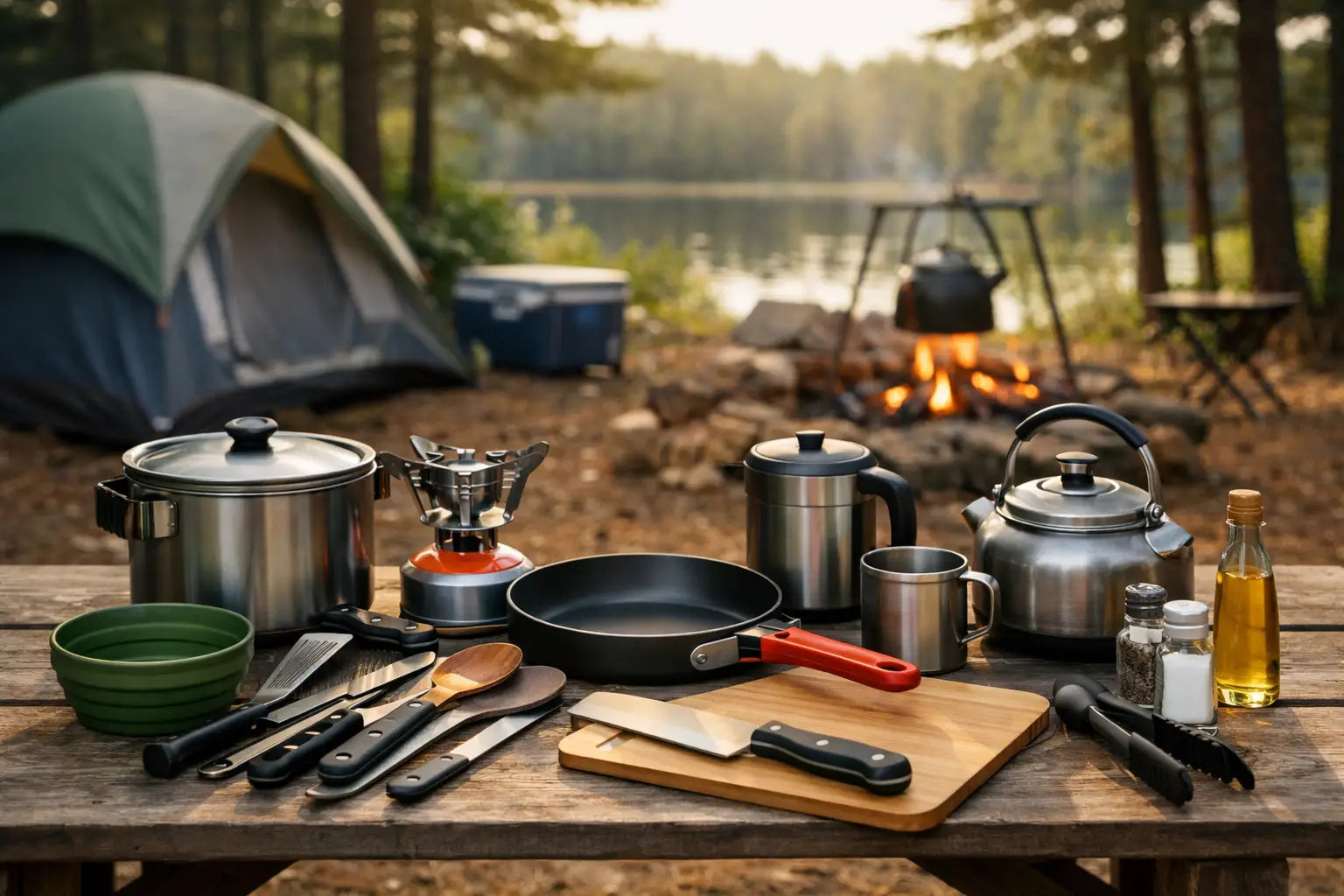
For most campers, one medium pot, one skillet, and one kettle or small saucepan handle nearly everything. That setup lets you boil water, fry breakfast, heat soup, cook pasta, and handle basic one-pan dinners. Nonstick cookware is convenient, but it can scratch easily if it gets bounced around in camp bins. Stainless steel and hard-anodized options tend to hold up better over time, though they can be a little less forgiving during cleanup.
Lids matter more than people expect. They speed up boiling, help food cook evenly, and keep ash or debris out when you are working around a fire ring. Nesting cookware also makes a real difference if storage space is tight.
If you mostly reheat prepared meals, you can go lighter. If you cook real breakfasts, chili, tacos, foil packets, or fish at camp, your cookware needs to be ready for more than boiling water.
This is where smart packing beats overpacking. A cutting board, a sharp knife with a sheath, and a basic cooking utensil set usually cover the essentials. Think spatula, large spoon, and tongs. Add a can opener if any of your meal plan depends on canned food, because forgetting that one item is almost a camping tradition.
A small prep bowl or collapsible mixing bowl helps more than it seems. It gives you a place for chopped ingredients, pancake batter, or washed produce without turning your table into a pile of loose food.
If coffee is non-negotiable, pack that gear on purpose. Whether that means a percolator, French press, pour-over setup, or just instant coffee, decide before the trip. Morning camp morale can hang on that one choice.
A lot of campers remember the stove and forget the fork. Your checklist should cover plates or bowls, mugs or insulated cups, and a full utensil set for every person. If you are feeding a group, serving gear helps too. One serving spoon and one pair of tongs go a long way.
Reusable camp tableware is usually worth it for car camping because it is sturdier and creates less trash. Disposable options can make sense for large groups or quick overnights, but they are less reliable in wind and tend to create more mess.
A tablecloth with clips is not essential, but it can make a campground picnic table cleaner and easier to use. That matters when you are prepping food where other campers may have left dirt, grease, or splinters behind.
Food storage is part of cooking gear, not a separate issue. A dependable cooler keeps perishables safe and expands what you can cook. If you want meat, dairy, eggs, or cold drinks, cooler performance matters. So does organization.
Use separate containers or zip bags for meal ingredients instead of tossing everything into one icy pile. It saves time and keeps the cooler closed more often, which helps ice last longer. Dry food also needs its own system. A tote or camp kitchen box for bread, snacks, spices, oil, and cooking staples keeps supplies clean and easy to find.
Do not forget trash bags and food-safe storage containers for leftovers. In many camp areas, especially where wildlife is active, clean storage is not optional. It is part of camp safety.
Cleanup is never the fun part, but skipping the right gear makes it much worse. Your camp cooking equipment checklist should include biodegradable dish soap, a sponge or scrubber, a dish towel, paper towels, and a wash tub or collapsible sink if your site does not have an easy cleanup station.
A quick-dry towel helps keep your cooking area under control, especially on multi-day trips. So does a small drying rack or a clean tote where washed items can air out. If you cook greasy foods like bacon, burgers, or fresh-caught fish, bring a plan for dealing with oily pans and food scraps.
Water matters here too. Some campgrounds have potable water nearby. Others do not. If your site is dry camping or more primitive, you will need enough water not just for drinking but also for cooking and washing up.
Some gear is not mandatory, but it earns a permanent place after one or two trips. A folding camp table gives you prep space when the site table is crowded or dirty. A lantern or headlamp makes evening cooking far easier. Spice kits, oil bottles, and a small condiment caddy can make simple meals taste like real meals instead of survival food.
Cooler thermometers, wind screens, and cast iron are more situational. They can be excellent additions, but they depend on your setup. Cast iron is durable and cooks well, but it is heavy and takes more care. Wind screens improve stove efficiency, but you need to use them safely with your specific stove design.
That is the real theme of a strong checklist - not more gear, just better-matched gear.
If you want a practical packing framework, make sure your kit covers these categories: stove and fuel, cookware, prep tools, eating gear, food storage, water, and cleanup supplies. For most campers, that means a stove, fuel canisters or propane, lighter and matches, one pot, one skillet, utensils, cutting board, knife, plates, cups, cooler, food containers, dish soap, towels, and trash bags.
From there, adjust based on your menu and trip style. Add a coffee setup if you need it. Add a grill grate if you cook over the fire. Add a larger cooler and more cookware if you are feeding a crowd. Outdoor Up shoppers often get the best results by building around real meals instead of buying random camp kitchen extras they may never use.
The best camp kitchen is the one that is ready before the next trip. Store your cooking gear in one dedicated bin, restock basics after every outing, and keep a written checklist inside the lid. That turns packing from a last-minute scramble into a quick gear check.
You do not need a fancy setup to cook well outdoors. You need reliable basics, enough capacity for your group, and a system that fits the way you camp. Get that right, and dinner at camp stops feeling like a chore and starts feeling like one of the best parts of the trip.