Your Cart is Empty



A dead battery has a way of showing up at the worst possible moment - right when the livewell needs power, the trolling motor matters most, or the engine should fire on the first turn. Good marine battery maintenance tips are not about babying your gear. They are about avoiding lost time on the water, protecting your electronics, and getting more life out of batteries that are not cheap to replace.
For most boat owners, battery care comes down to a handful of habits done consistently. You do not need to turn every trip into a maintenance project. You just need to know what actually matters, what changes by battery type, and where small mistakes turn into expensive ones.
The first rule is simple: know what battery you have. Flooded lead-acid, AGM, gel, and lithium batteries do not all want the same care. A flooded battery may need water checks and more ventilation. AGM batteries are more forgiving on maintenance but still hate chronic undercharging. Lithium batteries are lighter and often longer-lasting, but they usually need a battery management system and a charger that matches the manufacturer’s specs.
That means one of the best marine battery maintenance tips is also the least exciting - read the battery label and charging guidance before you hook up a charger, top off fluid, or put the boat into storage. Guessing is where damage starts.
Marine batteries last longer when they are stored and used near a full state of charge. Letting them sit partially discharged encourages sulfation in lead-acid batteries, which cuts capacity over time. If you use your boat hard on Saturday and park it until next month without recharging, you are shortening battery life even if everything still seems fine.
A quality onboard charger or smart charger is the easiest fix. It helps maintain proper voltage without overcooking the battery. This matters even more if your boat powers graphs, pumps, lights, stereos, and other accessories that create a steady drain.
Not every charger is right for every battery. This is where people get tripped up. A charger designed for standard flooded batteries may not be the best option for AGM or lithium. Charging profile matters - bulk, absorption, and float stages need to fit the battery chemistry.
If your charger has selectable modes, use the correct one every time. If it does not, check compatibility before trusting it. The trade-off here is cost. Smarter chargers usually cost more up front, but they help batteries last longer and perform better, which is usually the cheaper path over a few seasons.
Corrosion builds resistance. Resistance creates poor charging, weak starts, and frustrating electrical issues that can look like a bad battery when the real problem is the connection.
Inspect terminals regularly for white, green, or bluish buildup. Clean them with a battery-safe cleaner or a mix recommended for marine electrical use, then dry them thoroughly. After reconnecting, apply a terminal protectant or corrosion inhibitor made for marine conditions. Saltwater environments make this even more important, but freshwater boats are not immune.
A battery can test fine and still perform badly if the cables are loose, frayed, or undersized for the load. Vibration on the water does real damage over time. A slightly loose terminal can become an intermittent problem that is hard to diagnose once you are away from the dock.
Look for cracked insulation, heat damage, or discoloration near the ends. Tug gently on connections to make sure they are secure. If you are upgrading electronics or adding a trolling motor, it is worth confirming that the cable gauge is still appropriate. More gear means more demand.
Off-season storage is where a lot of marine batteries lose ground. The boat may be parked, but the battery is still aging. Parasitic draws from bilge pumps, memory settings, and onboard electronics can quietly drain it.
If the boat will sit for weeks, isolate the battery with a switch or disconnect it if appropriate for your setup. This reduces slow drains that can leave the battery deeply discharged by the time you are ready to launch.
For longer storage, a maintenance charger helps, but only if it is a true smart charger designed for the battery type. Constant charging with the wrong unit can do more harm than good. If shore power is not available, periodic manual charging may be the better move.
Heat is rough on batteries. Extreme cold is less damaging to a fully charged battery than many boaters think, but a discharged battery in freezing weather is far more vulnerable. In general, cool and dry is better than hot and damp.
If you remove the battery from the boat for winter, store it upright in a ventilated area away from direct heat sources. For flooded batteries, make sure caps are secure and the case is clean before storage. Dirt and moisture on the case can create a weak surface discharge over time.
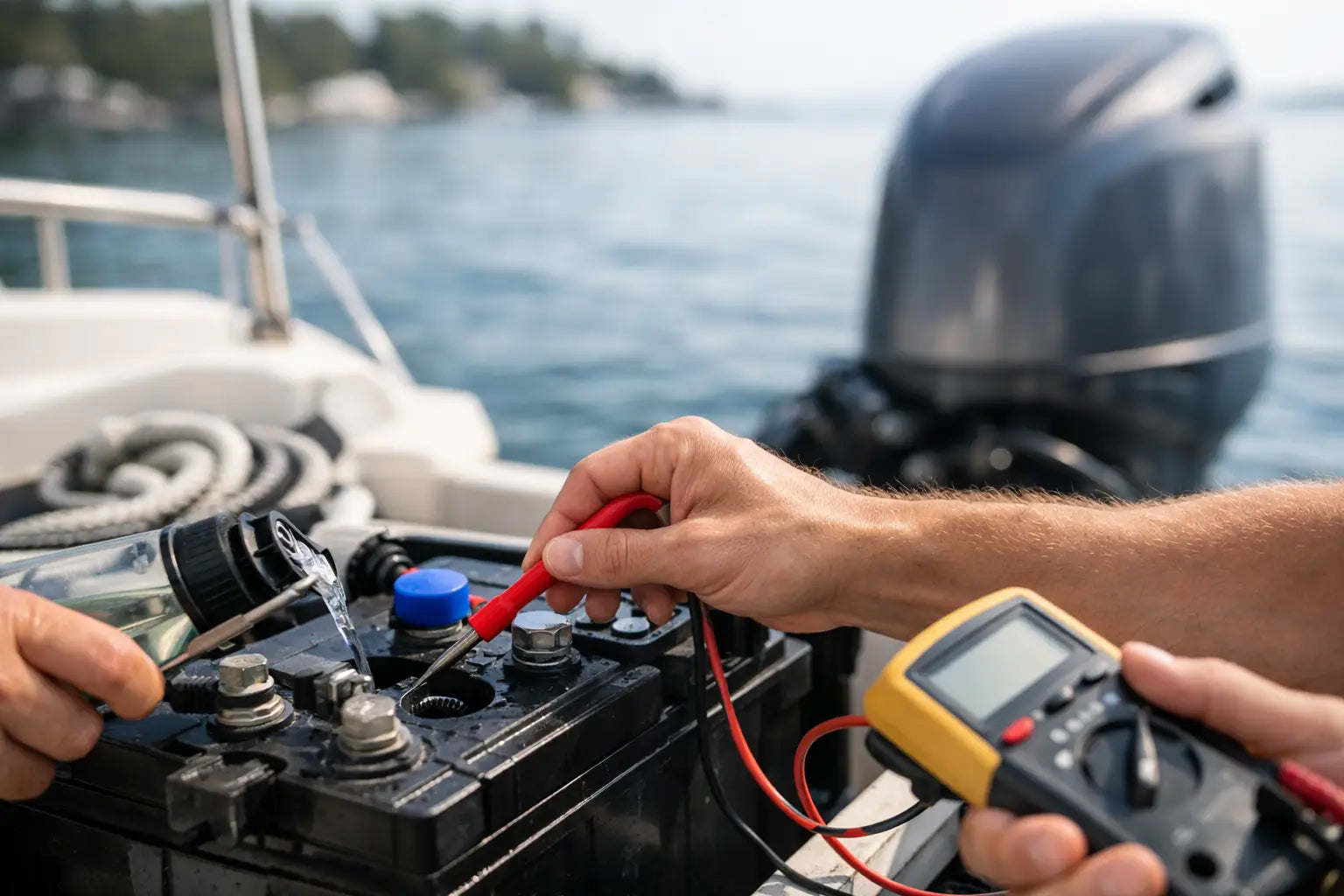
This one only applies to serviceable flooded lead-acid batteries, not AGM, gel, or most lithium models. If your battery has removable caps, inspect electrolyte levels regularly, especially during hot weather or after heavy charging cycles.
Use distilled water only, and do not overfill. The plates need to stay covered, but the battery also needs room for expansion during charging. It is a small task, but neglecting it can permanently reduce battery performance.
You do not need a full electrical lab to stay ahead of trouble. A few basic checks can tell you a lot.
A digital multimeter is one of the most useful tools you can keep in the garage or boat box. Resting voltage can help you spot a battery that is undercharged or losing strength. It will not tell you everything, but it gives you an early warning.
Also pay attention to real-world signs. If the engine cranks slower than usual, electronics dim under load, or the trolling motor seems to fade faster than normal, do not brush it off. Batteries often decline gradually before they fail all at once.
A load test can give a clearer picture, especially for starting batteries. If a battery is several seasons old and acting questionable, testing it before peak season is a smart move.
Boats pound. Even on a calm day, batteries take more abuse than they do in many other vehicles. A loose battery can suffer internal damage, cracked cases, and stressed terminals.
Make sure hold-down straps, trays, and mounting hardware are in good shape. This is especially important if you run rough water, tow long distances, or launch often on uneven ramps. Battery security is not just about protecting the battery - it also helps protect the rest of the electrical system.
Some battery problems are really setup problems. If your battery bank is too small for your electronics, trolling motor, or overnight loads, you will keep draining it deeper than intended. That shortens lifespan and hurts reliability.
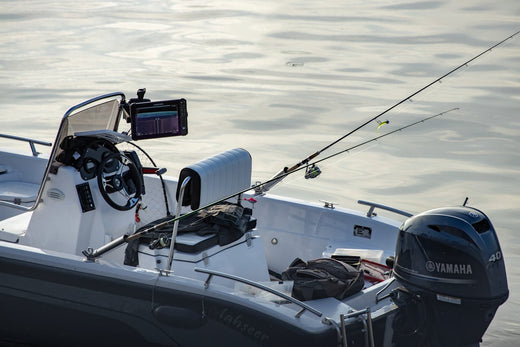
Starting batteries, deep-cycle batteries, and dual-purpose batteries each have a role. A bass boat with multiple fish finders and a trolling motor has different needs than a simple runabout. If your boating habits have changed, your battery setup may need to change too. Buying the cheapest battery that fits the tray is not always the bargain it looks like.
The biggest mistake is treating all marine batteries the same. The second is waiting until something fails. Maintenance works best when it is routine, not reactive.
It also helps to avoid mixing old and new batteries in the same bank unless the manufacturer says it is acceptable and the specs match closely. Mismatched batteries charge and discharge unevenly, which can drag down overall performance. The same goes for mixing battery types in systems not designed for it.
And be careful with quick fixes. If a battery keeps going dead, the issue may be the alternator, charger, wiring, or a hidden electrical draw. Replacing the battery without finding the cause can put you right back where you started.
A reliable boat starts with reliable power. Put a little time into charging, cleaning, testing, and storing your batteries the right way, and you will spend less time troubleshooting and more time doing what the boat is for in the first place - getting outside more.