Your Cart is Empty



A manual crank is easy to ignore until you are leveling a loaded camper in the rain, backing a boat trailer in at dawn, or trying to get rolling after a long weekend. This electric trailer jack review focuses on what makes a powered jack worth the upgrade: enough lifting capacity, the right fit for your trailer, dependable operation, and features that help you hitch up with less effort.
For most RV and trailer owners, an electric tongue jack is not about adding another gadget. It is about making the start and finish of every trip quicker, safer, and less hard on your back. The right one turns a repetitive chore into a push-button task. The wrong one can be slow, underpowered, poorly matched to the trailer, or vulnerable to weather and road grime.
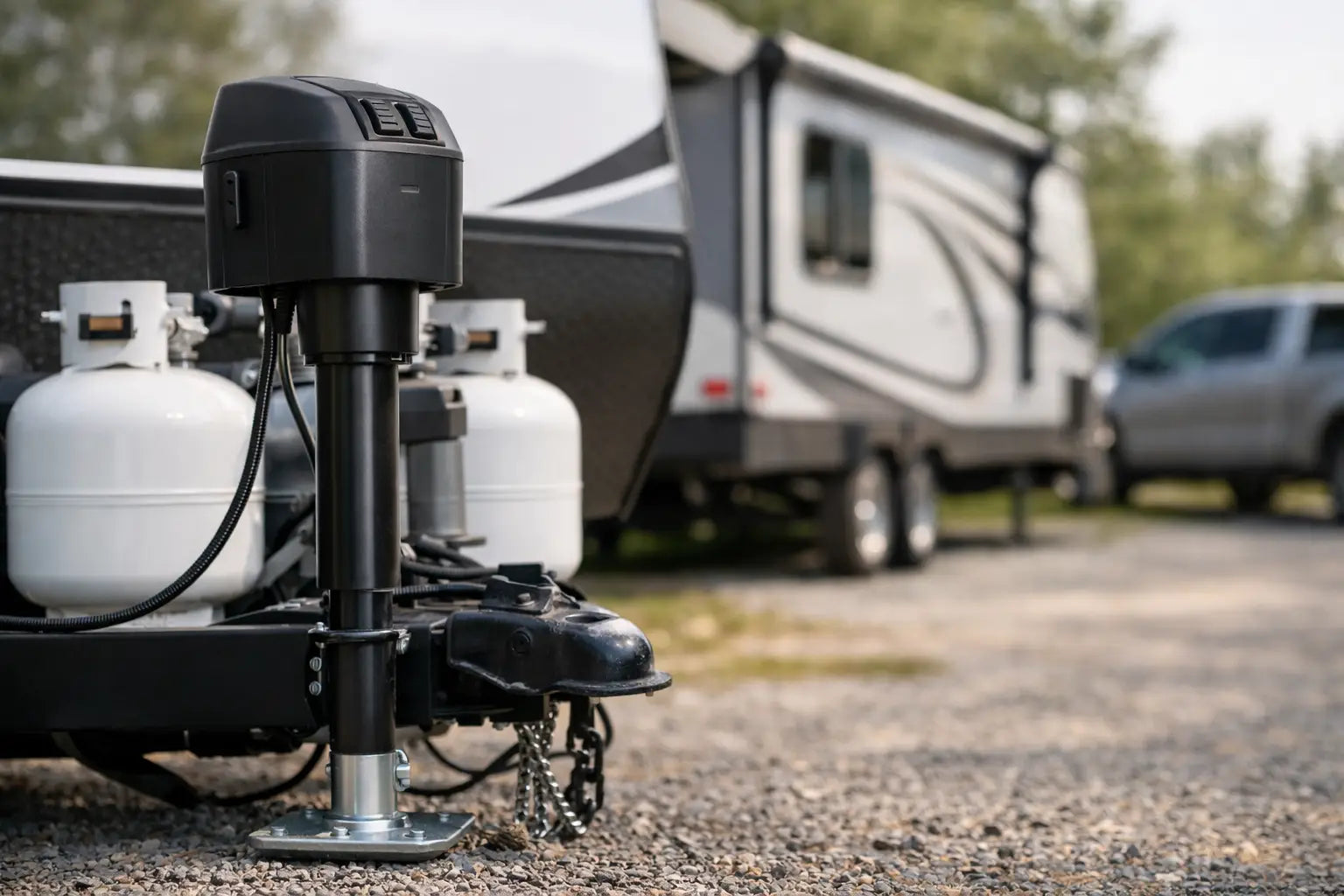
An electric trailer jack raises and lowers the front of a bumper-pull trailer using a 12-volt motor. It helps you lift the coupler off the tow vehicle's hitch ball, lower it back into place, and make small height adjustments for leveling at camp. Many models include an integrated work light, a weather-protected control head, and a manual override for those rare times when power is unavailable.
It does not replace safe hitching habits. You still need wheel chocks before uncoupling, a stable jack foot, and a level, firm surface whenever possible. A powered jack also should not be used to lift the whole trailer for tire service or suspension work. Its job is supporting and lifting the tongue within its rated limits.
The biggest benefit shows up when the trailer is loaded. A fishing boat with a full cooler, a utility trailer carrying an ATV, or a travel trailer packed for a family trip can put serious tongue weight on a jack. A good electric model takes that weight in stride and gives you more control than a hand crank when conditions are less than perfect.
Marketing claims can make most electric jacks look alike. Focus on the numbers and design details that affect daily use instead.
Do not choose a jack based on your trailer's gross vehicle weight rating alone. What matters most is tongue weight: the downward load carried at the coupler. It is commonly around 10% to 15% of a conventional trailer's loaded weight, though boat trailers, cargo trailers, and specialized setups can vary.
A 3,000-pound-rated electric jack is a sensible fit for many small and midsize campers, utility trailers, and boat trailers. A 3,500-pound model is a popular all-around choice because it provides a little more headroom without moving into oversized equipment. Heavier travel trailers may call for a 4,000- to 5,000-pound jack.
More capacity is not automatically better. Larger jacks can cost more, weigh more, and may not provide a meaningful advantage for a light trailer. The smart move is to measure your loaded tongue weight or use the trailer manufacturer's guidance, then select a jack with a comfortable safety margin. Avoid operating any jack at its maximum rating on every trip.
A jack can have plenty of lifting power but still frustrate you if it lacks enough travel. Look at total lift range, plus the retracted and extended height. This tells you whether the jack can clear your hitch ball on a sloped driveway or reach the coupler when your tow vehicle sits higher than average.
A drop leg can be especially useful. Instead of running the motor through the entire distance to the ground, you manually extend the inner leg close to the surface, pin it in place, and use the powered jack for final adjustment. That saves time and reduces motor run time. It is a practical feature for taller trailers and uneven sites.
Most A-frame electric trailer jacks use a standard triangular mounting pattern, which makes replacement straightforward on many travel, utility, and cargo trailers. Still, verify the bolt pattern, center hole size, and available clearance before ordering. Check that the jack head will not interfere with the propane tank cover, battery box, or trailer frame.
Also measure ground clearance when the jack is fully retracted. A jack that hangs too low is more exposed to curbs, steep driveways, rocks, and rough campground roads. This is particularly relevant for off-road-capable campers and boat trailers that see uneven launch ramps.
Electric jacks are not race equipment, but a very slow unit can test your patience when you are trying to beat a storm or clear a busy boat ramp. Look for a jack designed for steady, controlled lifting rather than chasing the highest advertised speed.
Stability comes from more than the jack itself. Use a wide jack pad or block under the foot when parked on softer ground. It reduces sinking, shortens the extension needed, and keeps the trailer more stable. A footplate is convenient on firm ground, while a removable foot or compatible jack block can be more flexible for changing terrain.
An LED work light is one of those features that sounds minor until you are hitching in the dark. It helps you line up the coupler, safety chains, and breakaway cable without juggling a flashlight. A top-mounted switch or clearly labeled controls are also easier to use when wearing gloves.
Weather protection deserves equal attention. Trailer jacks live outside, where they deal with rain, sun, road spray, dust, and winter storage. Look for a sealed or well-covered motor housing and durable exterior finishes. A fitted jack cover can add another layer of protection when the trailer is parked for extended periods.
Manual override capability is not optional in practical terms. A dead trailer battery, damaged wiring connection, or failed switch should not leave you stranded at the campground or launch ramp. Most quality electric jacks include a crank point or manual socket. Make sure you know where it is and keep the required handle or tool with the trailer.
Some jacks add a bubble level, power indicators, or memory settings. These can be handy, but they should not outweigh core performance. Give priority to capacity, lift range, construction, mounting fit, and manual backup before paying extra for convenience features.
Most electric tongue jacks run from the trailer's 12-volt battery. That means battery condition matters. A healthy, fully charged battery gives the motor the current it needs; a weak battery can make a perfectly good jack seem sluggish or unreliable.
Before your first trip, inspect the wiring route and connections. Wires should be protected from pinching, abrasion, and exposed terminals. Keep battery terminals clean and tight, and confirm the trailer's charging system is working if you depend on the tow vehicle to replenish the battery between stops.
Cold weather can slow battery performance and thicken grease inside mechanical components. Heavy rain and road salt add their own challenges. If you store a trailer outside, cycle the jack periodically, inspect the housing for damage, and clean off mud or corrosive residue. A few minutes of maintenance before the season can prevent a frustrating breakdown when you are ready to head out.
An electric jack is an easy upgrade for travel trailer owners, frequent boaters, and anyone who hitches more than a few times a season. It is especially helpful if you manage a heavier tongue load, deal with uneven parking areas, or have shoulder, wrist, or back limitations that make cranking uncomfortable.
For a very light trailer used a few times each year, a manual jack remains a simple, affordable option with fewer electrical components. But if your trailer supports regular camping weekends, fishing runs, hunting trips, or work around the property, the time and effort saved quickly become noticeable.
The best choice depends on the trailer you actually tow, not the biggest capacity number on the box. Match the jack to your loaded tongue weight, confirm its travel and mounting dimensions, and choose weather protection and manual override you can count on. Then hitch up with confidence, spend less time at the coupler, and get outside more.