Your Cart is Empty



A trailer sitting in a driveway, campsite, marina lot, or storage yard can disappear faster than most owners expect. The right lock will not make your trailer impossible to steal, but it can make it far less attractive to the opportunist looking for an easy target. If you're wondering how to choose a trailer hitch lock, the smart move is to match the lock to your trailer, your towing setup, and the way you actually use it.
Some buyers make the mistake of grabbing the cheapest lock on the shelf and calling it done. Others overspend on a heavy-duty model that does not fit their coupler properly or becomes a hassle every time they hitch up. A good hitch lock should do three things well - fit correctly, slow down tampering, and hold up in real weather.
The first question is not brand or price. It is what exactly you are trying to secure. Trailer hitch locks cover a few different jobs, and they are often confused with one another.
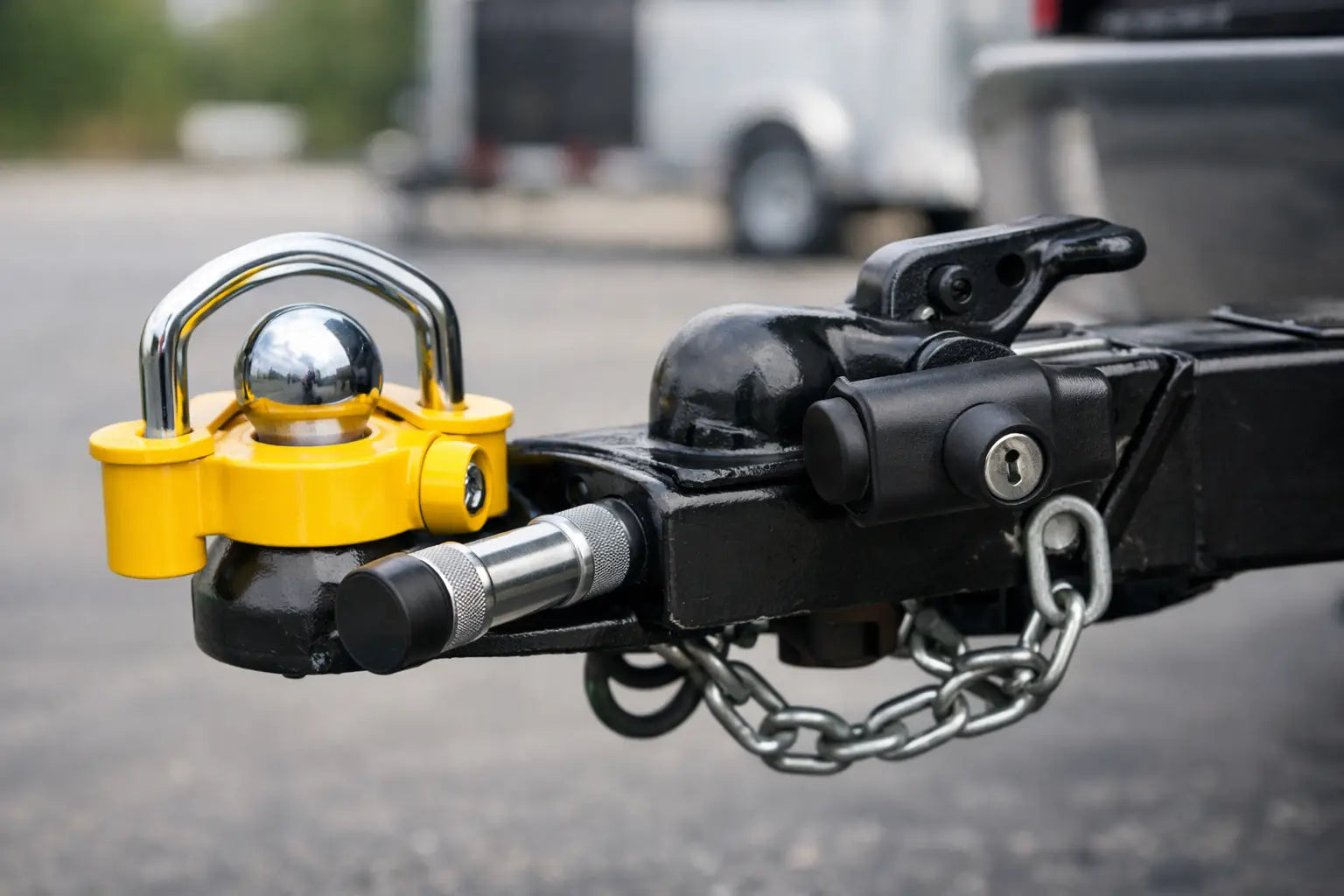
A coupler lock secures the trailer's coupler so someone cannot easily drop it onto a hitch ball and tow it away when the trailer is parked. A hitch receiver lock replaces the standard pin on your tow vehicle's receiver so the ball mount or hitch accessory cannot be pulled out. A latch lock secures the coupler latch itself when the trailer is connected. Some trailer owners need one of these. Many need more than one.
If your main concern is theft while the trailer is sitting unhitched, start with a coupler lock. If your concern is keeping your ball mount, bike rack, or hitch accessory from being stolen off the truck, you are looking for a receiver lock. If you want better security while towing or parked with the trailer attached, a latch lock can add another layer.
That distinction matters because the best lock for a travel trailer in storage is not always the best one for a utility trailer used every weekend.
Before you compare materials, finishes, or lock cylinders, confirm the coupler style and size. This is where many bad purchases happen.
Most trailer couplers are designed for a specific hitch ball size, commonly 1-7/8 inch, 2 inch, or 2-5/16 inch. The lock has to fit that coupler shape and size correctly. A universal lock can be convenient, but universal does not always mean tight-fitting. If there is too much play, the lock may still work, but it can be easier to pry, hammer, or work around.
Look closely at whether your trailer uses a straight coupler, an A-frame coupler, or a lunette ring style setup. A lock designed for one style may not secure another effectively. A compact utility trailer and a heavier RV trailer can also call for very different lock designs.
If possible, measure the coupler opening and compare it to the lock's fit range rather than relying only on a product title. The goal is simple - enough compatibility to install easily, but not so much extra room that the lock leaves obvious weak points.
Universal-fit locks are popular because they work across multiple trailers. That makes sense if you own more than one trailer or might upgrade later. The trade-off is that a broader fit can mean less precise coverage.
Trailer-specific or closely matched locks usually provide a tighter fit and better resistance to casual theft. If you only have one trailer and plan to keep it for years, a more exact fit is usually the better buy.
Two hitch locks can look similar online and perform very differently in the real world. Design matters as much as material.
A basic pin-style coupler lock is compact and affordable. It works by blocking the latch or coupler mechanism. For lighter-duty use, that may be enough. But if the coupler body is still exposed or there is enough room for tools, it may not offer as much deterrence as you want.
A shielded or box-style coupler lock covers more of the coupler and makes access harder for pry bars, bolt cutters, and other tools. These are often better for trailers stored outdoors, parked at marinas, or left unattended for longer stretches. They tend to be bulkier, but that extra coverage is often the whole point.
Receiver hitch locks are a little more straightforward, but size still matters. You need to match the lock pin diameter and usable span to your receiver, usually 1-1/4 inch or 2 inch. Too loose, and it can rattle. Too tight, and installation becomes a fight every time.
Not every trailer needs the same lock. A small lawn trailer parked behind a locked fence may not need the heaviest coupler lock available. A boat trailer parked near a launch ramp overnight or an RV trailer stored in a public lot deserves more protection.
Think in terms of exposure. The more visible, valuable, and mobile the trailer is, the more secure your lock should be. If a thief can back up quickly, hook up, and leave in minutes, a stronger lock is worth it.
Trailer gear lives outside. Sun, rain, road salt, mud, and freeze-thaw cycles can ruin a lock long before someone tries to break it.
Look for hardened steel or solid steel construction where security matters most. That helps resist cutting and forced entry. A corrosion-resistant finish is also worth paying for, especially if your trailer sees coastal air, winter roads, or regular boat ramp use.
The lock cylinder deserves extra attention. A weather cap or covered keyway helps keep out grit and moisture. Without that protection, even a strong lock can become frustrating fast. A seized lock on a cold morning before a trip is the kind of problem that turns a five-minute hookup into a wasted half hour.
Stainless components can help in wet environments, though the exact build still matters. Powder coating, chrome plating, and painted finishes can all add protection, but none of them compensate for poor fit or weak construction.
Security always matters, but convenience matters too. If a lock is annoying to use, some owners stop using it consistently. That defeats the whole purpose.
One practical feature is keyed-alike compatibility. If you use a coupler lock, receiver lock, and maybe a latch lock, having one key for all of them can make life easier. That is especially helpful for RV owners, boat owners, and anyone managing multiple pieces of gear.
You should also consider the key mechanism itself. Some locks use a standard flat key, while others use tubular or more specialized keys. A better key design can improve tamper resistance, but replacement key availability matters too. Losing the only key to your hitch lock right before a trip is not a fun test of patience.
If multiple people tow the trailer, think about how many keys are included and whether extras can be ordered. Simple details like that tend to matter more after purchase than before.
The best trailer hitch lock is the one you will actually use every single time. That means installation should be straightforward, especially if you hitch and unhitch often.
A heavy shielded coupler lock may offer excellent protection, but if it is awkward to line up in the dark or frustrating with gloves on, it may be less practical for frequent use. On the other hand, if your trailer stays parked for weeks at a time, a little extra effort during installation is usually worth the added security.
This is one of those it-depends decisions. Weekend utility trailer users often want speed and simplicity. RV travelers and boat owners may care more about stronger coverage during storage and overnight stops.
You do not need to buy the most expensive lock to make a smart choice. But the cheapest option is often a false bargain if it rusts quickly, fits poorly, or offers minimal resistance.
A better approach is to match the price to the trailer's value and theft risk. If you are protecting a trailer carrying a side-by-side, a fishing boat, or a camper loaded with gear, spending more for a stronger lock is easy to justify. If the trailer is low-value and stored in a controlled space, a simpler lock may be enough.
For many buyers, the sweet spot is a mid-range lock with a solid fit, hardened construction, weather protection, and easy operation. That gives you dependable security without paying for features you do not need.
The most common mistake is buying based on appearance instead of fit. A tough-looking lock is not much help if it leaves the coupler exposed or does not seat correctly.
Another mistake is thinking one lock solves every problem. A coupler lock protects an unhitched trailer. A receiver lock protects the hitch accessory on your vehicle. If you need both kinds of protection, buy both.
Finally, do not wait until the night before a trip to test fit your lock. Install it ahead of time, check clearance, and make sure the key turns smoothly. That small step can save a lot of frustration when you are trying to get on the road.
Choosing the right trailer hitch lock comes down to real-world use, not guesswork. Fit your coupler correctly, buy for the places you park, and pick a lock that stands up to weather and routine use. Get that part right, and you spend less time worrying about your trailer and more time getting outside.