Your Cart is Empty


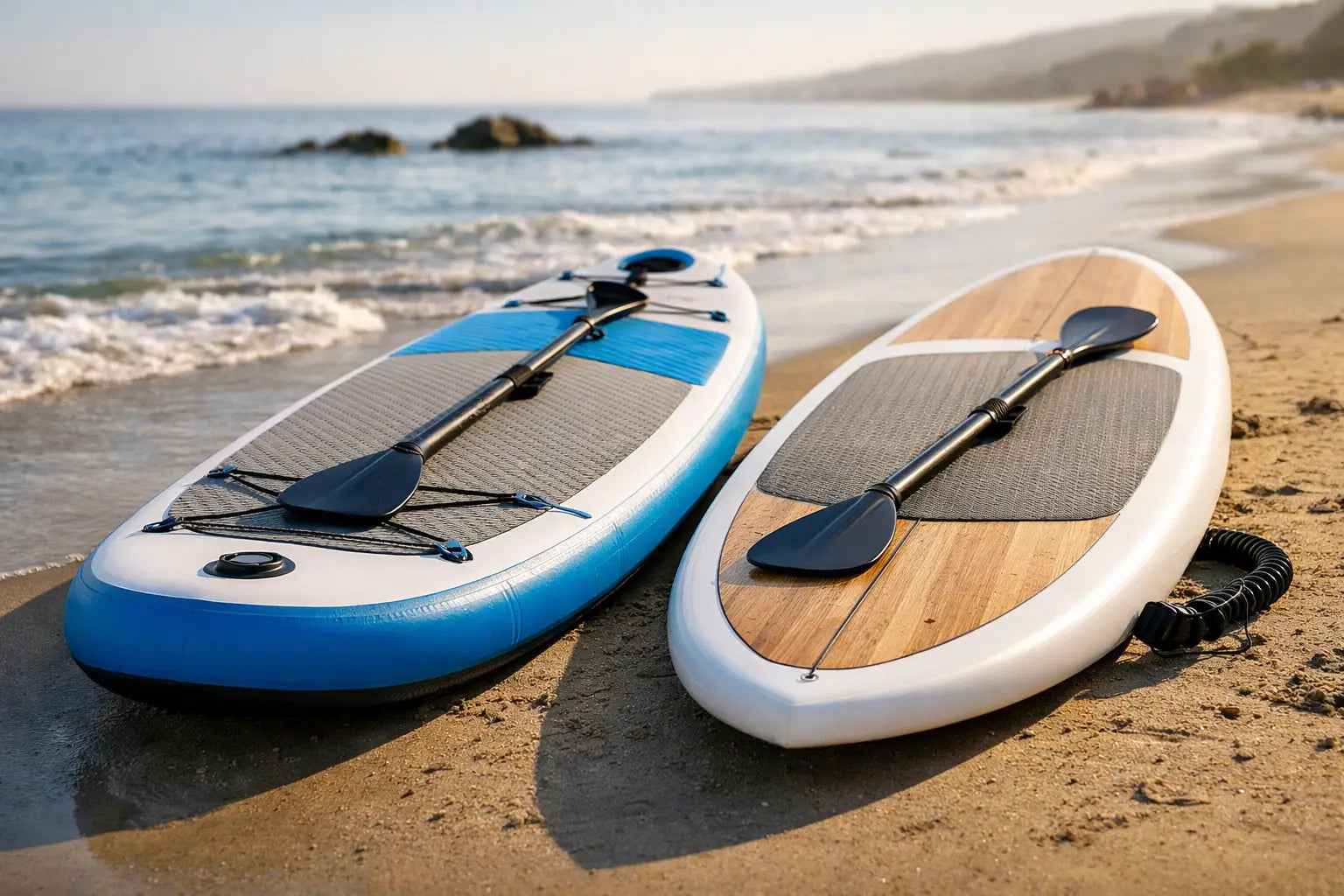

You feel it before you buy it - where the board will live, how far you’ll carry it, and what kind of water you actually paddle most. That’s why inflatable vs hard paddleboards is not just a gear debate. It’s a real-world decision about convenience, performance, and whether your board makes it to the water often or ends up collecting dust in the garage.
For some paddlers, the best board is the one that packs into a trunk and is ready for a weekend lake trip. For others, it’s the board that tracks straighter, glides faster, and feels more precise underfoot. Both styles can be a great fit. The better choice depends on how you use your gear, how much space you have, and how much performance matters to you once you’re on the water.
The simplest way to think about it is this: inflatable paddleboards favor portability and convenience, while hard boards favor on-water performance. That sounds clean and easy, but there is overlap.
Modern inflatables are far better than many first-time buyers expect. Quality drop-stitch construction and higher recommended PSI have made them stiffer, more stable, and more capable for casual paddling, light touring, and even some fishing use. At the same time, hard boards still hold a real edge in speed, efficiency, and responsiveness.
If you mostly want relaxed sessions on calm lakes, slow rivers, and vacation water, an inflatable can do the job extremely well. If you care about covering distance, carving cleaner turns, or getting the crispest feel possible, a hard board still has advantages that are hard to ignore.
An inflatable earns its keep before you even launch it. It rolls into a bag, fits in a closet, and travels far easier than a rigid board strapped to a roof rack. If you live in an apartment, drive a smaller vehicle, or want a board you can take on road trips without turning transport into a project, that matters.
This is also where inflatables tend to win for beginners. They’re usually forgiving, wide, and stable. Many have a softer deck and rails, which can feel less intimidating when you’re still figuring out balance, remounting, or how to handle a wobbly launch from a dock or shoreline.
Families often prefer inflatables for the same reason. They’re easier to pack for a day at the lake, simpler to store between trips, and generally less stressful around kids, dogs, and crowded launch areas. If your goal is to get outside more without adding hassle, an inflatable is often the practical answer.
Durability is another area where inflatables deserve more credit. They can bounce off rocks, docks, and rough landings better than many people assume. A hard board can get dings, chips, or cracks that need repair. An inflatable can still be damaged, especially by sharp objects or poor storage habits, but it usually handles everyday bumps well.
Hard boards reward paddlers who notice the details. They usually glide farther with each stroke, accelerate more efficiently, and hold their line better across open water. That means less energy wasted and a smoother, faster feel, especially on longer paddles.
If you paddle for fitness, cover miles regularly, or enjoy more technical water skills, a hard board often feels more connected and predictable. The shape stays rigid without relying on inflation pressure, which helps with edge control and responsiveness. You can feel the difference when turning, tracking, and carrying momentum.
Hard boards also come in more specialized shapes for specific uses. Touring, racing, surfing, and performance-focused all-around models often have more refined hull designs than inflatables. That opens the door for paddlers who want gear that matches a clear purpose instead of one board that tries to do everything reasonably well.
The trade-off is obvious. Storage is tougher, transport is tougher, and accidental damage during travel is more of a concern. If your board has to ride on a roof year-round or squeeze into limited garage space, ownership becomes less simple.
This is where hard boards usually pull ahead. A rigid shell creates a cleaner feel through the water, and that often translates to better glide and efficiency. If two boards have similar dimensions, the hard model will usually feel faster and easier to paddle over distance.
Inflatables can still be plenty fun and capable, especially for casual use. But they often feel a little slower and less crisp. For many buyers, that gap won’t matter. For paddlers chasing distance or pace, it will.
Stability is more nuanced than many comparisons suggest. A wide inflatable can feel extremely stable, sometimes even more confidence-building for new paddlers because of its softer platform and generous deck area. That makes it a strong option for beginners, recreational paddlers, and anglers who want a forgiving setup.
Hard boards can also be very stable, especially in wider all-around designs. The difference is that their stability often feels firmer and more direct, while inflatables can feel slightly cushioned or lively depending on PSI and construction.
Hard boards generally track better and respond more precisely to paddle input. You notice it most in wind, on longer flatwater routes, or when trying to hold a clean line without switching paddle sides constantly.
Inflatables can track well too, especially with good fin setups and quality construction, but they usually give up some precision. For laid-back paddling, that’s rarely a dealbreaker. For efficiency-minded paddlers, it can be.
This is where the inflatable board often wins by a mile.
A hard board demands real storage space. You need a garage, wall rack, shed, or at least a reliable spot where the board stays protected from sun and impact. Then there’s transport. If your vehicle doesn’t have roof capacity or you simply don’t want to load and unload a long board every trip, a hard board adds friction before the fun starts.
An inflatable cuts through most of that. Toss the bag in the trunk, keep it in a closet, or pack it with camping gear for a weekend trip. That flexibility is a big reason many people actually use their inflatable more often.
The catch is setup time. You do have to inflate it, and while modern pumps make the job manageable, it still adds a few minutes before launch and after paddling. Some buyers don’t mind that at all. Others quickly realize they prefer grabbing a board and heading straight to the water.
For many buyers, budget is part of the inflatable vs hard paddleboards decision.
Inflatables often offer strong value because they usually come in complete packages with a paddle, pump, bag, and leash. That lowers the barrier to entry and makes them appealing for first-time buyers who want everything in one purchase.
Hard boards can cost more once you factor in accessories and transport needs. But value is not just about the sticker price. If you paddle often and care about performance, paying more for a board you truly enjoy can be worth it. On the other hand, if convenience is what gets you on the water, the more practical board may deliver better value even if it gives up some speed.
Quality matters in both categories. A cheap inflatable with weak construction or a low-quality hard board with poor durability can turn a good deal into a frustrating one. Reliable materials, a shape that matches your use, and a board from a trustworthy outdoor retailer matter more than chasing the lowest price.
If your paddling is casual, flexible, and built around weekend fun, an inflatable is hard to beat. It suits lake days, campground trips, mellow rivers, and mixed-use outings where easy transport matters as much as on-water performance.
If you want fitness paddles, better glide, or a board that feels sharper and more capable as your skills grow, a hard board may be the better investment. It asks more from your storage and transport setup, but it gives more back on the water.
If you fish from your paddleboard, the answer depends on how mobile you are and where you launch. Inflatables make transport and storage easier, while hard boards can offer a more direct, efficient paddling feel between spots. For yoga, beginner use, and family recreation, inflatables often make life simpler.
There is no universal winner in inflatable vs hard paddleboards. There is only the board that fits your habits. The right board is the one that matches your water, your vehicle, your storage, and how often you realistically paddle.
If convenience is the difference between paddling twice a year and paddling twice a month, choose the inflatable. If performance is what keeps you motivated and progressing, choose the hard board. Gear Up for Better Adventures means buying for the trip you’ll actually take, not the one you imagine once in a while.
Before you buy, be honest about your routine. Think about where you’ll store the board, how you’ll carry it, and what kind of water you paddle most. The best paddleboard is not the one that wins every category on paper. It’s the one that gets you outside more, with less hassle and more confidence every time you launch.