Your Cart is Empty


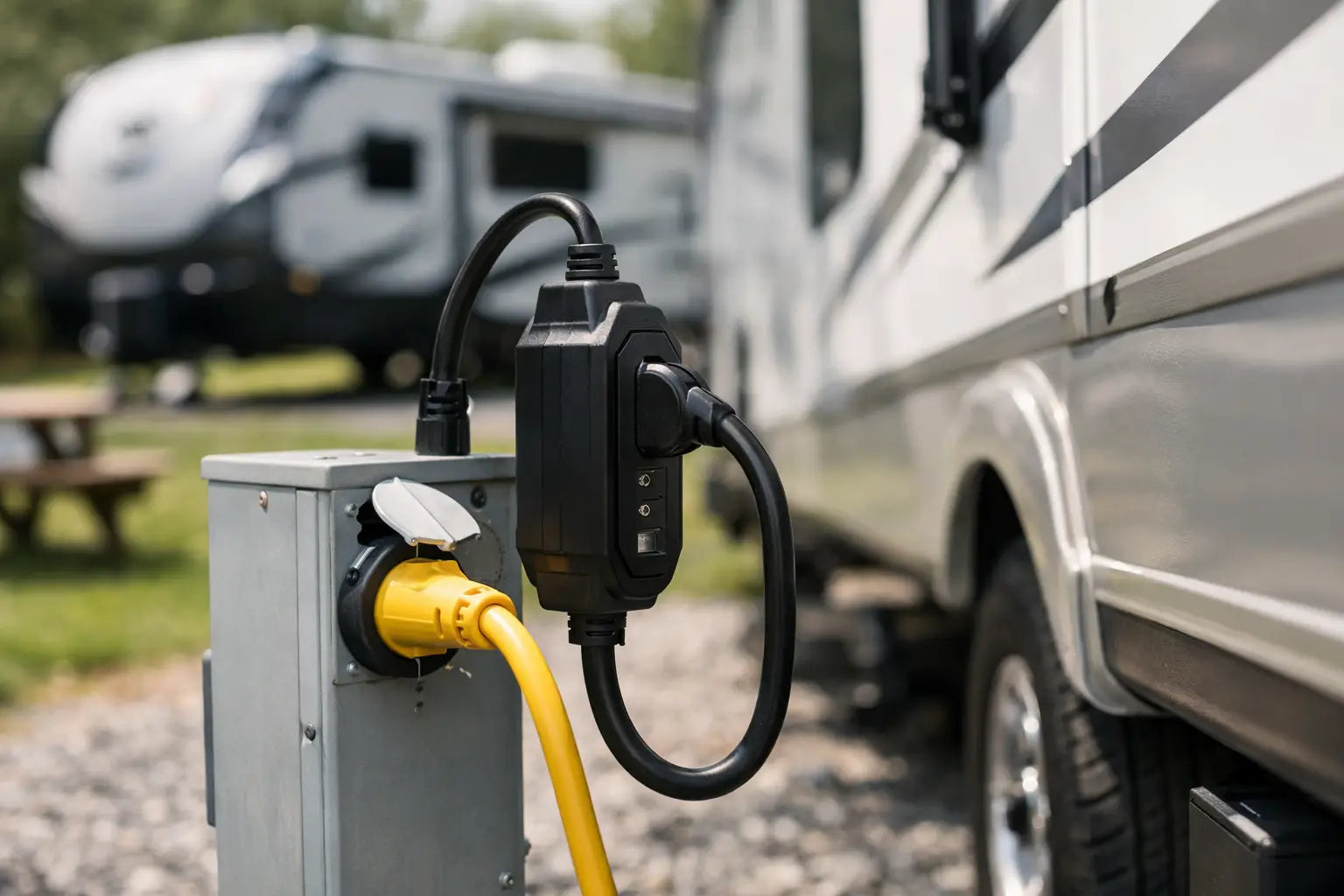

That sick feeling usually hits right after you plug in. The pedestal looks worn, the campground wiring is a mystery, and suddenly your fridge, AC, converter, and microwave are all trusting a power source you know nothing about. A solid rv surge protector review matters because one bad hookup can ruin a trip fast and leave you paying for repairs that cost far more than the device meant to prevent them.
If you camp often, this is not gear you buy for fun. It is gear you buy because shore power is unpredictable. Some campgrounds are well maintained. Others are old, overloaded, or wired incorrectly. The right surge protector helps you spot those problems before they reach your RV, and the better models do much more than stop one quick spike.
A lot of shoppers hear “surge protector” and picture the same thing they use behind a TV at home. RV units can be far more capable than that. Basic models mainly absorb voltage spikes. Better models, often called EMS units or electrical management systems, monitor incoming power and cut it off when conditions are unsafe.
That difference matters. A quick surge is one risk, but low voltage can be just as damaging, especially for air conditioners and other motor-driven appliances. Miswired pedestals, open neutrals, reverse polarity, and frequency issues can also create trouble. In a real-world rv surge protector review, the best units are usually the ones that combine surge protection with active monitoring.
If you want the short version, do not shop by price alone. The cheapest option may offer some protection, but it may not catch the problems that actually show up at campgrounds. A better buy is the unit that matches how often you travel, where you stay, and how much electrical equipment you depend on.
This is usually listed in joules. More joules generally means more capacity to absorb surges before the unit is spent. It is not the only spec that matters, but it gives you a rough idea of how much punishment the device can take. For frequent RV travelers, higher capacity usually makes sense.
This is the big one. An EMS-style protector monitors voltage and wiring conditions and shuts off power when something is wrong. If you run an air conditioner in summer heat or rely on residential-style appliances, this feature is worth serious attention.
Match the protector to your RV service. A 30-amp trailer needs a 30-amp unit. A 50-amp fifth wheel or motorhome needs a 50-amp unit. Adapters can help you connect in different situations, but they do not replace buying the correct surge protector for your rig.
This device lives outside, often on the ground, in rain, dust, and heat. A rugged housing, weather-resistant seals, and a solid plug connection all matter. The best protector on paper is a bad buy if it falls apart after one season.
A clear display is more useful than many buyers expect. Voltage readouts, wiring fault codes, and status lights make it easier to understand what is happening before you blame your RV. Good diagnostics can save time and avoid a lot of guesswork.
Portable units are easy to use, but they can also walk away. Some models include a locking ring or a way to secure them with a cable lock. That may sound minor until you camp at a busy park and leave for the day.
This is where an rv surge protector review gets more practical. There is no perfect choice for everyone.
Portable units plug into the pedestal before your shore cord connects. They are simple, fast, and easy to move from one RV to another. They also let you check pedestal power before it reaches your coach. That is a real advantage for many campers. The downside is exposure to weather, dirt, and theft.
Hardwired units install inside the RV, usually near the power inlet or transfer switch. They are better protected from the elements and harder to steal. Some also include remote displays inside the coach, which makes monitoring easy. The trade-off is installation. If you are comfortable working with RV electrical systems, that may be no big deal. If not, you may need professional help.
For weekend campers who want a simple setup, portable often wins. For heavy travelers or full-timers, hardwired can be the cleaner long-term solution.
The strongest products tend to do three things well. First, they respond quickly to unsafe power. Second, they provide clear information instead of vague blinking lights. Third, they hold up through repeated campground use.
A forgettable unit usually cuts corners in one of those areas. Maybe it has limited fault detection. Maybe the casing feels cheap. Maybe the display is hard to read in daylight. Maybe replacement support is weak when the protection module eventually takes a hit. That last point matters because some surge events can permanently damage the protector while saving your RV. In that case, the device did its job, but you still want a brand that makes the next step easy.
If you camp a few times a year at newer parks, a well-built portable surge protector with a decent joule rating may be enough. You still want polarity and voltage checks, but you may not need every advanced feature.
If you travel in older campgrounds, fairgrounds, state parks, or seasonal sites with questionable infrastructure, an EMS unit is the safer move. Those locations are exactly where wiring issues and voltage drops show up.
If you run two AC units, a residential fridge, or work remotely from the road, lean toward stronger protection and better monitoring. Your electrical load is too important to trust to the cheapest option on the shelf.
If you are shopping on a tighter budget, do not skip protection entirely. Buy the best unit you can reasonably afford, but understand what you are giving up. Lower cost often means fewer safeguards, lower surge capacity, or reduced durability.
One of the biggest mistakes is buying a basic surge protector and assuming it protects against every electrical issue. Many do not. They may stop a spike but do nothing for low voltage or miswired power.
Another mistake is ignoring amp rating. A mismatched unit is not a workaround. It is a setup problem.
Some RVers also overlook ease of use. If the display is confusing or the unit is awkward to connect, it becomes one more frustration at check-in. Good gear should help you get set up faster, not slow you down.
Then there is the temptation to go without one “just this once.” That is usually how expensive lessons start. Shore power problems are not always obvious until something inside the RV stops working.
Not always, but there is a reason premium models stay popular. They often offer stronger protection, faster shutoff, better diagnostics, and better support. That said, paying more only makes sense if the features match your use.
A casual camper may be perfectly happy with a mid-range portable unit that covers the main risks. A full-time RVer or anyone traveling through mixed campground conditions will usually get more value from a higher-end EMS model. It depends on how much you rely on your RV systems and how much uncertainty you face at the pedestal.
This is one of those categories where “good enough” is personal. The right choice is the one that protects your rig without overspending on features you will never use.
The best pick is rarely the flashiest one. It is the unit that matches your RV’s amp service, monitors more than just surges, and stands up to repeated use in real campground conditions. If you want the safest bet, prioritize EMS protection, durable construction, and clear diagnostics. Those features do more for trip-ready reliability than fancy packaging ever will.
When you are gearing up for the next run, think of a surge protector the same way you think about wheel chocks or a water pressure regulator. It is not the star of the trip, but it helps keep the trip on track. And when the pedestal turns out to be the weak link, you will be glad you planned ahead instead of gambling with your RV’s electrical system.