Your Cart is Empty


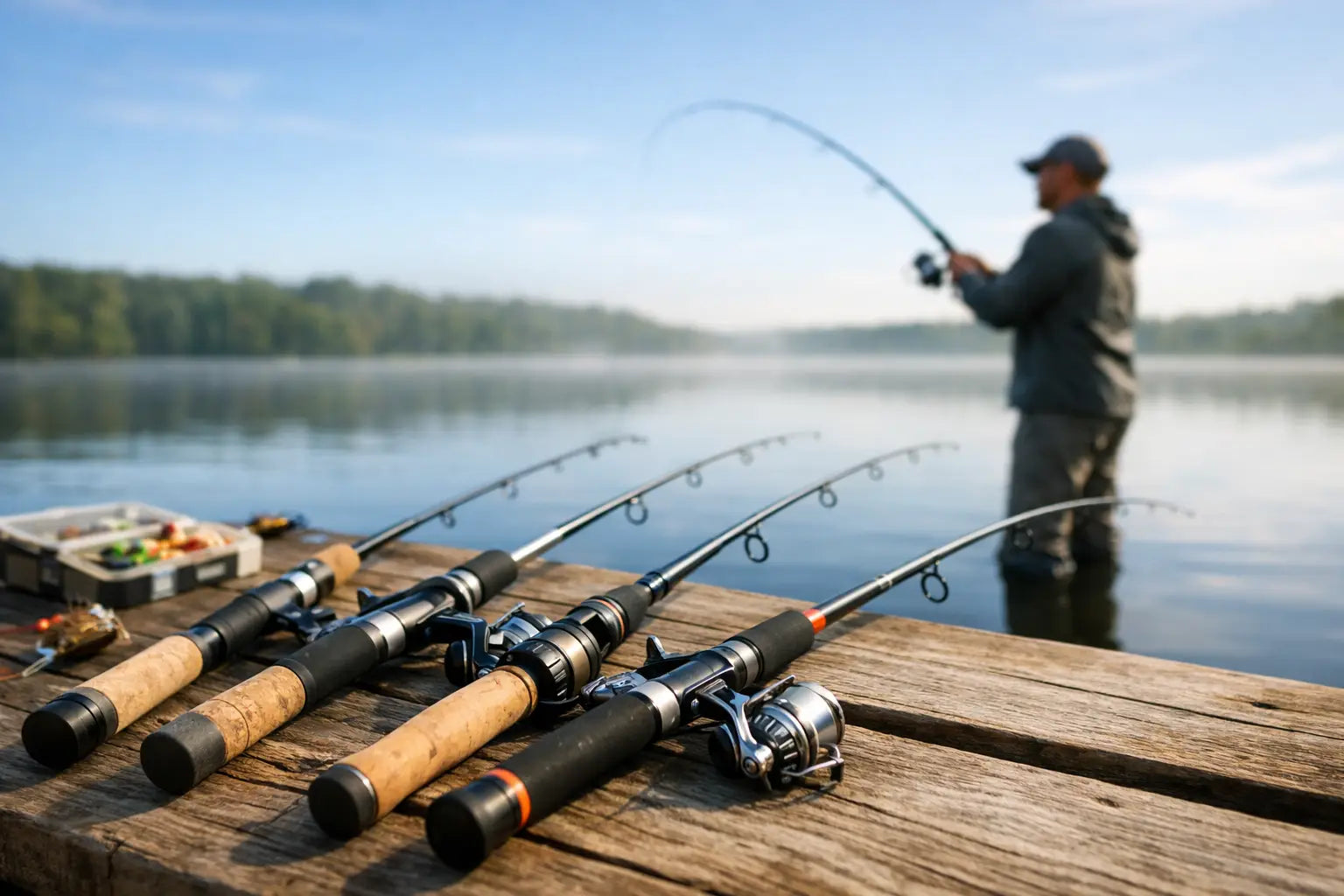

A rod can look perfect on the rack and still feel completely wrong once you start casting. That usually comes down to action. If you’ve been wondering which fishing rod action makes the most sense for your setup, the answer depends on how you fish, what you throw, and how you want the rod to behave when a fish hits.
Rod action describes where the rod bends under pressure. It does not mean power, and that mix-up causes a lot of bad rod choices. Action is about flex location. Power is about resistance. A fast action rod bends mostly near the tip. A moderate action bends deeper into the blank. A slow action bends through much more of the rod. Those differences change casting feel, hook-setting speed, lure control, and how forgiving the rod is once the fish is on.
On paper, rod action sounds simple. On the water, it affects nearly everything. A fast action rod usually feels crisp and responsive. It can help with accurate casts, stronger hooksets, and better feel when you’re working bottom contact baits. A moderate or slow action rod feels smoother and more forgiving, which can help keep treble-hooked fish pinned and make moving baits easier to cast.
That is why there isn’t one best answer to which fishing rod action you should buy. The right pick depends on whether you need sensitivity, distance, forgiveness, or versatility. A rod that is excellent for jigs can be a poor match for crankbaits. A rod that helps with light finesse presentations may feel underpowered for heavy cover.
Fast action rods bend mostly in the upper third, sometimes even closer to the tip. They recover quickly after the cast, which gives them a sharp, controlled feel. Many anglers like fast action for single-hook techniques because the rod transfers power quickly during the hookset.
This action shines with worms, jigs, Texas rigs, shaky heads, and many spinnerbaits. It is also a common choice for bass fishing because it offers strong sensitivity. If you want to feel a light tap on the bottom or detect subtle changes in cover, fast action helps.
The trade-off is forgiveness. A rod that snaps back quickly can pull treble hooks free if you set too hard or fight fish too aggressively. It can also be less ideal for beginners who are still learning timing and pressure.
Moderate action rods bend farther down the blank. They load more deeply on the cast and usually feel smoother. That deeper bend helps launch moving baits and keeps fish connected during the fight, especially when using treble hooks.
This is a strong choice for crankbaits, chatterbaits, many topwaters, and some live bait setups. If you fish reaction baits often, moderate action deserves a close look. The rod cushions sudden runs and head shakes better than a faster rod.
The trade-off is speed. You usually do not get the same quick, direct hook-setting feel you get from a fast action rod. For bottom-contact lures where sensitivity matters most, moderate action can feel less precise.
Slow action rods flex through much more of their length. They are the most forgiving and often the softest-feeling option in use. This action can work well for lighter presentations, smaller fish, and techniques where a gentle load helps rather than hurts.
You will often see slower actions in certain panfish, trout, and specialty rods. They can make small fish more fun and help protect light line. But for many mainstream bass applications, slow action is less common because it reduces sensitivity and delays power transfer on the hookset.
If you mostly fish soft plastics and jigs, start with fast action. These techniques reward feel and fast response. You need to notice small bites, move the lure with control, and drive a single hook home. A fast action rod gives you that cleaner connection.
If you throw crankbaits, jerkbaits, or topwaters with treble hooks, moderate action is often the safer call. It loads better on the cast and gives fish a little room before they tear free. That extra flex can be the difference between landing a fish boatside and watching it shake loose.
If you fish live bait, trout streams, or ultralight setups, slow to moderate can make more sense. These rods help cast lighter rigs and protect thin line. They also make lighter species more enjoyable to fight.
For anglers who want one rod to do a little of everything, a medium power fast action rod is often the practical middle ground. It is not perfect for every technique, but it covers a lot of water. That matters if you are building a setup without buying a different rod for every lure category.
A medium-heavy fast action rod and a medium fast action rod are not the same tool. They may share action, but power changes how much force it takes to bend the rod. Power matters for lure weight, line strength, cover, and fish size. Action matters more for how the rod casts, responds, and fights fish.
Think of it this way. Power tells you how strong the rod is. Action tells you how quickly it engages. You need both to match the job. If you pick the right action but the wrong power, the rod can still feel off. Too light, and you may struggle in heavy cover. Too heavy, and lighter lures stop performing the way they should.
Start with your most-used lure, not your occasional one. A lot of anglers shop for an all-purpose rod, then realize they spend 70 percent of the season throwing the same two baits. Match the rod to the technique you use most, and you will get more value out of it.
Next, think about hook style. Single-hook lures usually pair better with faster action because you want direct control and a stronger hookset. Treble-hook lures usually pair better with moderate action because the rod needs to absorb shock and keep smaller hooks pinned.
Then consider experience level. Beginners often do better with more forgiving rods for moving baits. A rod that gives a little can help with timing mistakes. More experienced anglers may prefer a faster, more sensitive rod because they know how to manage drag, pressure, and hooksets.
Water and cover matter too. In open water, you can often get away with a more forgiving action. Around grass, wood, docks, or heavier structure, a faster action can help move fish quickly and maintain control.
One mistake is buying the fastest action available because it sounds more advanced. Fast action is useful, but it is not automatically better. If you mainly throw crankbaits or topwaters, a rod that is too stiff can cost you fish.
Another mistake is trying to solve every problem with one rod. If you only want one setup, that is fine, but be realistic. A versatile rod is always a compromise. It may do several jobs pretty well without being ideal for any single one.
The third mistake is ignoring how the rod feels in your hands. Two rods labeled the same can still fish differently depending on the brand, material, and taper. If possible, pay attention to how quickly the tip recovers and how the rod balances with your reel.
If you want a quick answer to which fishing rod action to buy, use this starting point. Choose fast action for jigs, worms, and most single-hook techniques. Choose moderate action for crankbaits and treble-hook moving baits. Choose slow to moderate for ultralight, trout, and situations where lighter line and softer presentations matter more.
If you are buying your first general-purpose rod, a medium or medium-heavy fast action rod is usually the most useful place to start. It gives you enough sensitivity for many common techniques and enough versatility to learn what you actually like to fish.
The best rod action is the one that helps you fish with confidence, not the one with the flashiest label. Pick the rod that matches your real-world water, your favorite lures, and the way you like to fish, and your next trip will feel a whole lot more dialed in.